

Ukrainian drones hit Novokuybyshevsk refinery in Russia's Samara region, setting it ablaze
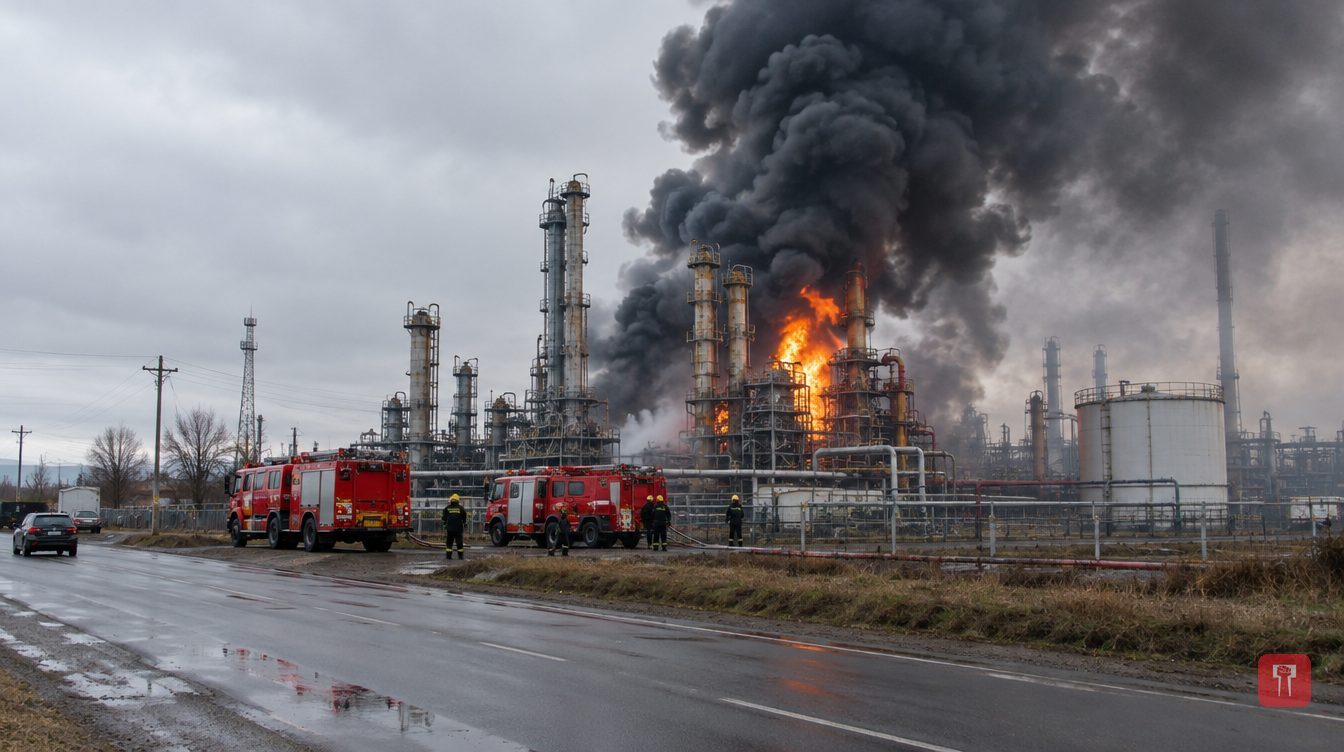 Images are not validated/verified
Ukrainian drones struck the Rosneft-owned Novokuybyshevsk oil refinery in Samara region on the morning of October 30, causing explosions, a major fire and thick smoke.
The war between Russia and Ukraine has flared up again. Ukrainian forces carried out a drone attack on the Novokuybyshevsk Oil Refinery in Russia's Samara region. After the attack, huge flames rose from the refinery premises and black smoke spread across the sky. Several videos and photos of the incident are going viral on social media.
According to the information available, long-range kamikaze drones targeted the refinery's main processing units. Successive explosions followed in the area and a fierce fire broke out. A 16-second dashcam video posted on social media clearly shows smoke and flames billowing towards the refinery from a car moving along a road.
According to local eyewitnesses, the sound of the blast was so powerful that the surrounding area shook. Russian air defence has claimed it shot down some drones, but several drones hit sensitive sections of the refinery directly. Fire tenders reached the spot promptly and strenuous efforts are under way to bring the blaze under control.
Social media posts after the attack, which took place in the early hours of October 30, said smoke was rising from at least 11 places at the refinery. Another post said a video showed at least six separate plumes of smoke from inside the refinery compound.
The refinery is wholly owned by Rosneft, Russia's largest state-run oil company. The plant is considered extremely valuable to the Russian economy and military. It can process about 8.8 million metric tonnes of crude oil a year. It produces Euro-5 standard petrol, diesel, jet fuel, lubricants, bitumen and petroleum coke. Special fuel needed for the Russian air force's fighter aircraft is also supplied in large quantities from this plant, so the attack is being seen as a major blow to the combat capability of the Russian military.
For the past several months Ukraine has been carrying out continuous drone attacks on oil depots, power plants and refineries deep inside Russia. The main aim is to completely disrupt the supply of diesel and aviation fuel to Russian troops at the front. Ukrainian forces had targeted this refinery in August as well. At that time, Ukrainian President Volodymyr Zelenskyy said in an official statement that his forces had successfully destroyed Russian oil facilities located 1,000 kilometres from the border. Zelenskyy also said firmly that the aim of the operation was to choke off the billions of dollars in revenue Russia earns from oil exports and cut the financial supply for its war.
It is being said that this is the first such major attack by Ukraine on Russian oil processing centres in nearly two weeks. Political analysts around the world are watching the attack against the backdrop of political developments around the US elections and rising global fuel prices. To keep global fuel prices and inflation in check, the US administration had advised Ukraine not to attack Russian energy infrastructure. International experts have expressed fear that such attacks on Russian oil facilities could send crude oil prices in the global market soaring.
Russian officials are assessing how much financial loss the attack has caused the refinery. According to preliminary estimates, if the refinery's main processing unit is shut down, Russia will have to bear losses of millions of dollars every day. The world is watching how Russia responds to the attack in the coming days.
Reach readers on the ward they actually live in.
Advertise with Prime Time 24Reach readers on the ward they actually live in.
Advertise with Prime Time 24Reach readers on the ward they actually live in.
Advertise with Prime Time 24
Comments
No comments yet. Be the first.