

Tulsi plant wilting again and again? Experts share tips to keep it green through winter
Gardening experts say attention to climate, water, soil, pot and pruning helps keep the tulsi plant green and dense.
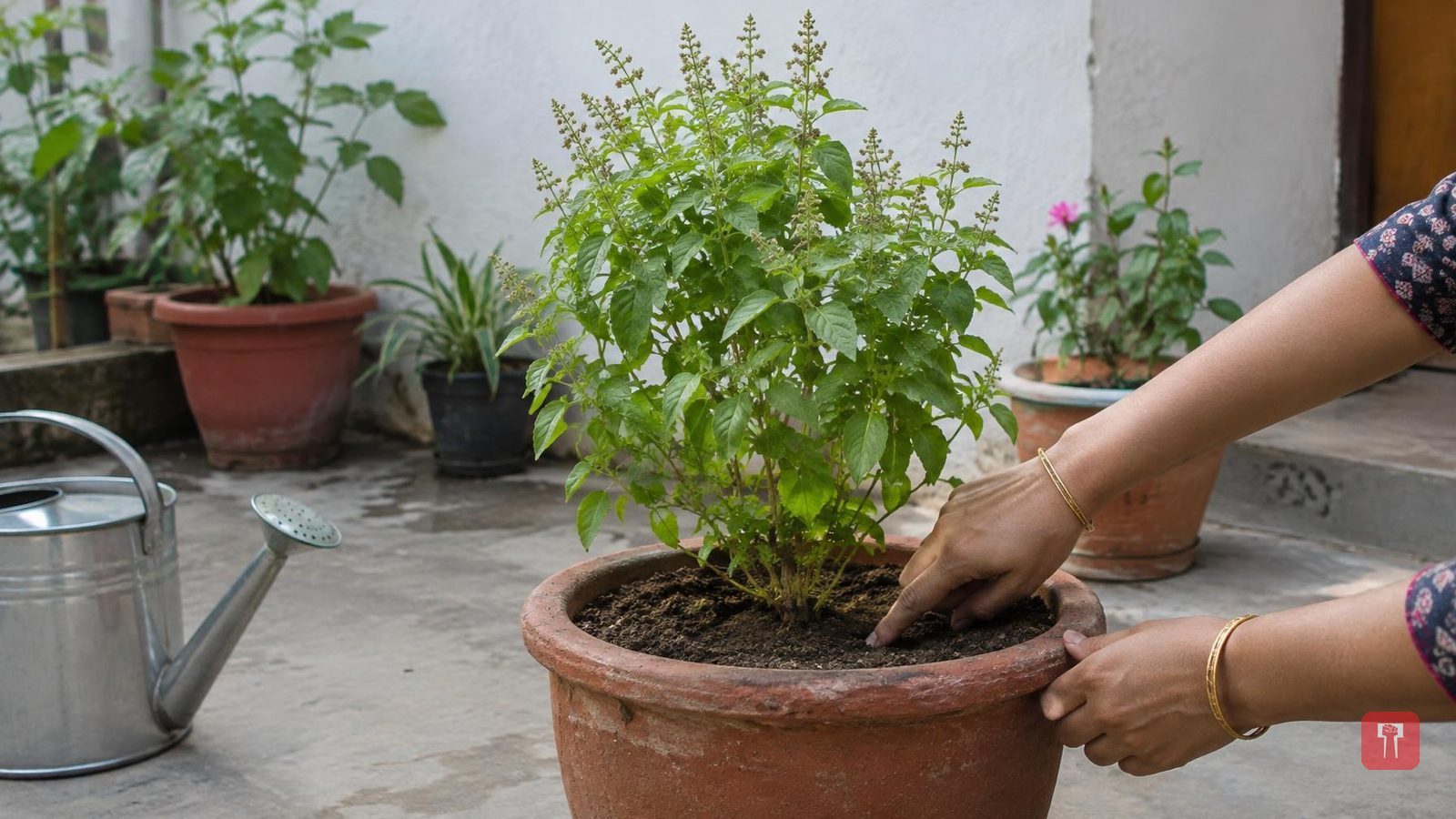
The tulsi plant is seen in almost every home. Tulsi is considered religiously important, and its leaves are also believed to be good for health. That is why people prefer to grow it at home. However, many complain that their plant wilts repeatedly or does not grow well. Here is what to do, according to experts.
According to gardening experts, tulsi grows well in warm weather. It needs little care in summer but more attention in winter. Especially after October and November, it is important to protect the plant from cold winds, dew and direct rain. If you want to keep the plant green through the year, protect it from extreme cold. Cover the plant on winter evenings.
Tulsi does not need much water. Do not water the plant every day. Always touch the soil before watering, and water only if the soil feels completely dry. Overwatering can make the plant wilt. It is therefore better to be sparing with water.
The type of soil also matters. The soil for tulsi should not be too loose. If the soil feels very loose or cracks easily, mix in some compost, cow dung manure and sand. When the soil drains water well, the roots spread properly and the plant stays green and dense.
On the pot, experts say tulsi should never be planted in a small pot. It should always be planted in a large pot filled with soil. In a large pot, the plant spreads and grows well.
To make the plant denser, experts recommend carefully loosening the soil from time to time. This lets water reach the roots easily and keeps air circulating in the soil. Prune the plant regularly as well. Pruning produces new branches and makes the plant denser. Remove any bud that appears on the tulsi at once, so that the plant grows better.
By paying attention to such small things, you can save tulsi from drying up and make it denser. Experts say the plant stays green when attention is paid to all five factors: climate, water, soil, pot and pruning.
