

Supreme Court: Son cannot claim birthright share in land father got from grandfather
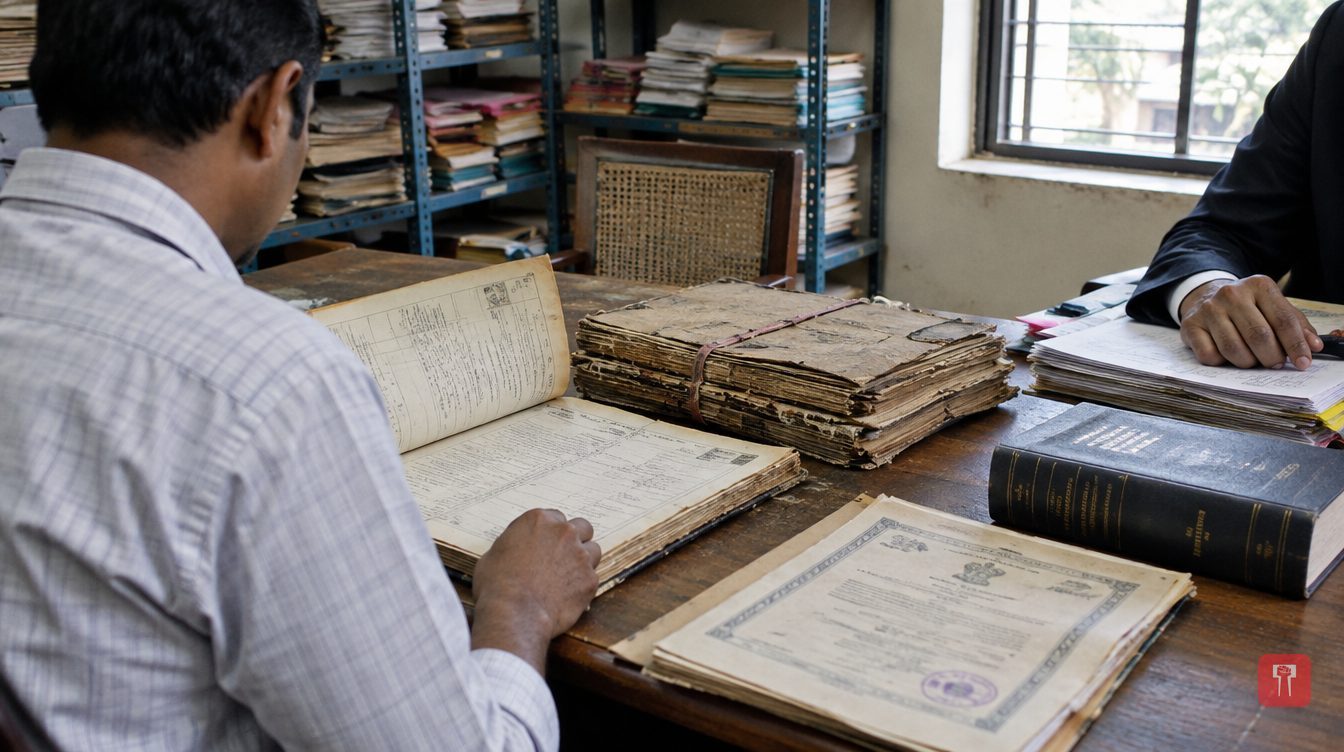 Images are not validated/verified
The Supreme Court has held that property a father inherits under Section 8 of the Hindu Succession Act can be his separate property, in which his son has no share by birth.
Many families believe a grandson gets a share in his grandfather's property by birth. The Supreme Court has made clear that this rule does not apply in every case. Under Section 8 of the Hindu Succession Act, property a father inherits after his own father's death can be his separate property. A son cannot claim a share in such property by birth. The ruling once again clarifies the difference between ancestral property and privately inherited property.
The case concerned a son who claimed rights over land that his father received in the partition of the grandfather's property. A daughter of the family had filed a suit in court in 1993 for partition of this land. Under a compromise reached in 1994, the land came to the share of the son's father.
In 1997, the father sold the land to two other people. The son, then a minor, filed a suit through his mother seeking half of the land. He argued that the land was joint Hindu family property and that he therefore had a right to it by birth.
Section 8 of the Hindu Succession Act was a key issue in the case. Under the law, if a Hindu man dies without leaving a will, his property goes to his Class I heirs.
Property a father inherits is therefore not always joint family or coparcenary property. It can be that person's separate property. Merely because the property came from the grandfather, a grandson cannot claim a share in it by birth.
The Madras High Court dismissed the son's claim on this ground. The son then challenged that decision in the Supreme Court.
A bench of Justice Augustine George Masih and Justice Sunita Agarwal heard the case. The bench did not accept the son's argument that the share received by the father was part of coparcenary property.
According to the court, if property passed by inheritance after the grandfather's death and was then partitioned, the heir can acquire separate ownership of the property that fell to their share. In such a case, a grandson does not get a right by birth in that property merely on the basis of the relationship.
The ruling also underlines how important it is to examine where a property came from and what its legal character is. There is a legal difference between coparcenary property of a joint Hindu family and property inherited under Section 8.
The court also said that Section 6 and Section 29-A, added by the Tamil Nadu amendment, do not apply in this case. In this situation, the land that fell to the father's share was treated as his separate property.
The Supreme Court dismissed the son's appeal and upheld the Madras High Court's decision. The son therefore cannot claim a share by birth in the land that came to his father's share.
The ruling does not mean a grandson can never have a right in any property of the grandfather. The right depends on whether the property belongs to a joint family or is separate inherited property. A will, partition and other legal factors also matter. In an actual case, it is necessary to examine the documents and take legal advice.
Reach readers on the ward they actually live in.
Advertise with Prime Time 24Reach readers on the ward they actually live in.
Advertise with Prime Time 24Reach readers on the ward they actually live in.
Advertise with Prime Time 24Choose primetime24.com as a preferred source on Google Google shows more stories from your preferred sources in Top Stories.
Reach readers on the ward they actually live in.
Advertise with Prime Time 24
Comments
No comments yet. Be the first.