

Foreign divorce not automatically valid in India, Supreme Court rules
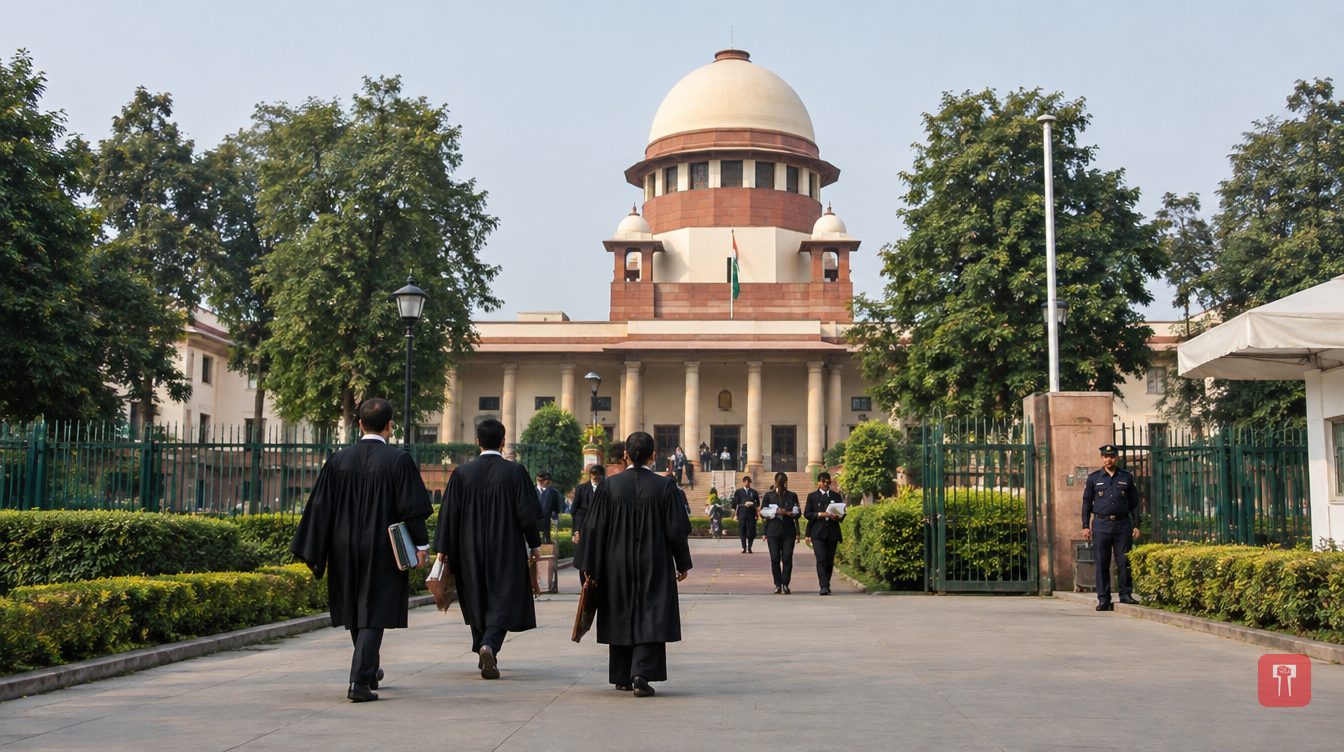 Images are not validated/verified
A Supreme Court bench held that a divorce from a foreign court does not end a marriage solemnised in India unless it meets the conditions of Indian law.
The Supreme Court has delivered an important ruling on divorces obtained from foreign courts by people who married in India. The question was whether a divorce would be treated as valid in India if a person married here, went abroad some years later, obtained a divorce from a court there and then wished to remarry in India.
A bench of Justice Prashant Kumar Mishra and Justice Chandrashekhar held that a divorce granted by a foreign court does not automatically become valid in India. Under Indian law, the foreign court's decision must also conform to Indian legal norms for the marriage to be dissolved. The conditions laid down in Section 13 of the Code of Civil Procedure must also be met.
The court said that for a marriage solemnised under the Hindu Marriage Act, 1955, a foreign court's divorce must rest only on grounds recognised in Indian law. A divorce granted merely on the ground that the marriage has broken down irretrievably cannot be accepted in India automatically.
A person who obtains a divorce from a foreign court therefore cannot assume that the first marriage has ended in India too. What must be examined is whether the ground on which the divorce was granted is recognised in Indian law.
According to the judgment, a foreign divorce cannot be used as a defence in a case of bigamy. If a person remarries relying only on a foreign divorce, without having the first marriage in India dissolved under Indian law, criminal proceedings can be initiated against them.
The court said the rule can apply even if the person has taken citizenship of another country after the marriage. Remarrying after a divorce abroad does not automatically end the first marriage in India, so under Indian law the first marriage may remain valid.
According to the Supreme Court's judgment, certain conditions must be met for a foreign court's divorce to be recognised in India.
First, the decision must have been given in accordance with the principles of natural justice.
Second, the divorce must not have been obtained by fraud.
Third, the divorce must have been granted on grounds such as cruelty, desertion, adultery or mutual consent, which are recognised in Indian law.
Fourth, the decision must not be ex parte. If the other spouse did not accept the foreign court's jurisdiction and did not take part in the proceedings, an ex parte decision may not be binding on them.
On these tests, merely obtaining a divorce decree from a foreign court is not enough. The decision will gain legal recognition in India only when the standards of Indian law are met.
Reach readers on the ward they actually live in.
Advertise with Prime Time 24Reach readers on the ward they actually live in.
Advertise with Prime Time 24Reach readers on the ward they actually live in.
Advertise with Prime Time 24Choose primetime24.com as a preferred source on Google Google shows more stories from your preferred sources in Top Stories.
Reach readers on the ward they actually live in.
Advertise with Prime Time 24
Comments
No comments yet. Be the first.