

Villages await poll dates for zilla parishad, panchayat samiti after Diwali, as drought and SIR raise doubts
 Images are not validated/verified
With the Supreme Court clearing the long-pending rural body elections, villagers ask when the schedule will come, fearing drought, SIR and census work may delay the polls again.
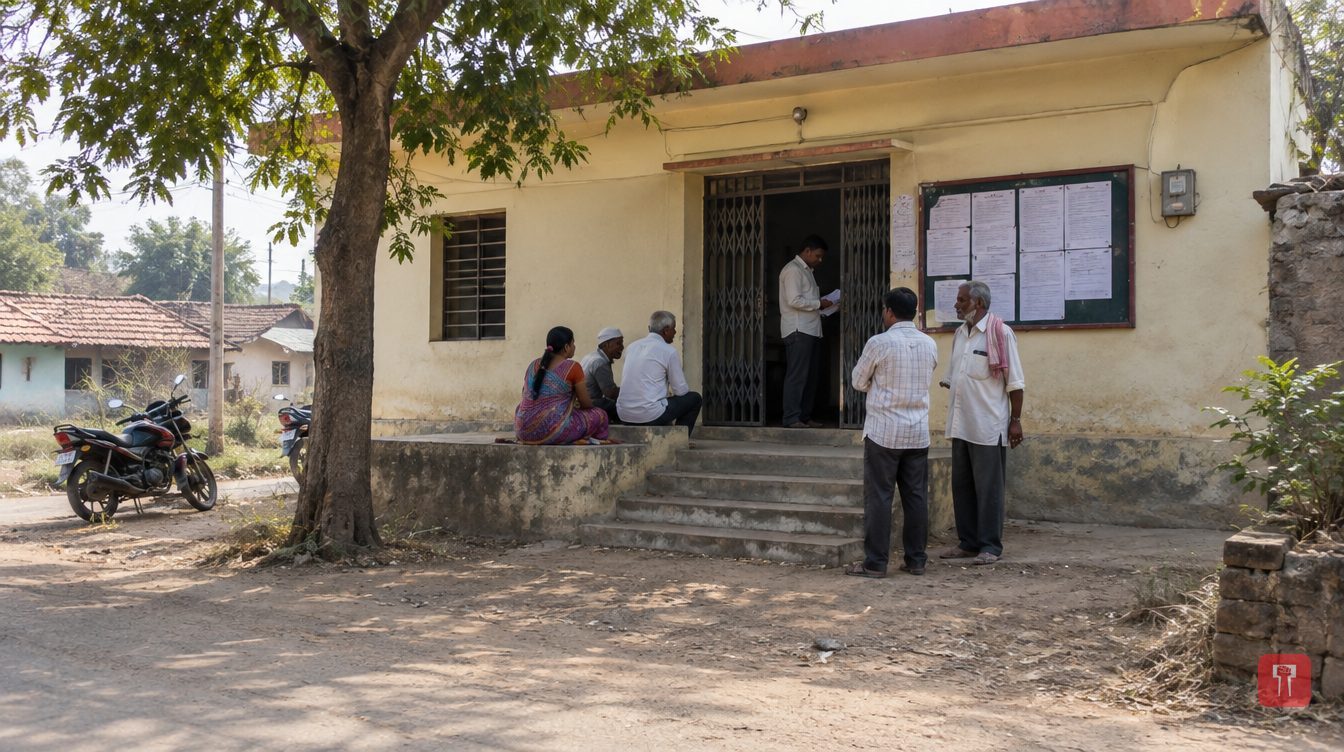
Dhaba: Now that the Diwali rush is over, political talk is picking up again in rural areas. The question of elections to local self-government bodies, stalled for several years, has returned to the fore.
The Supreme Court has cleared the way for the long-pending zilla parishad and panchayat samiti elections. Yet a question is now being asked: could the polls be postponed again because of drought conditions in the state, the Special Intensive Revision (SIR) of electoral rolls, administrative work for the census and other reasons? That is why villagers are asking when the elections will be held, now that Diwali is done.
Local self-government bodies are considered the backbone of rural development. They play an important role in village roads, water supply, sanitation, drains, street lights, health, education and the implementation of government schemes. In many places, however, administrators are running affairs after the terms of elected representatives ended. Many local bodies, including gram panchayats, have no elected representatives. As a result, people no longer have the forum they once had to put their problems directly and demand answers from the administration.
Many villagers feel that administrator rule in gram panchayats has affected the planning of village development work and the process of decision-making. Elected representatives know the needs, local issues and priorities of villagers more closely. In some places there are complaints of delays in proposals for development work, availability of funds, sanction of work and actual implementation. For basic matters such as internal village roads, drinking water problems, repair of drains, sanitation and street lights, people have to make repeated rounds of offices.
This year's drought has already made life difficult in rural areas. Villagers are struggling with crop losses for farmers, water scarcity, the question of employment and economic distress. Holding elections will require the administration to deploy manpower and arrangements on a large scale. The administration also has other responsibilities, including drought relief work, implementing government schemes, the census and revision of the electoral rolls.
The court has permitted the elections, but uncertainty remains over when the actual election programme will be announced. Rural areas are watching whether the polls will be pushed back further on the grounds of drought, or whether the administration will make full preparations and move the democratic process forward. The delay has also left the political careers of many aspirants waiting.
Some aspirants have stepped up public outreach village by village, while others have begun working out political equations ahead of the polls. At the party level too, discussion has begun on probable candidates, the arithmetic of reservation and political strength in constituencies.
Reach readers on the ward they actually live in.
Advertise with Prime Time 24Reach readers on the ward they actually live in.
Advertise with Prime Time 24Reach readers on the ward they actually live in.
Advertise with Prime Time 24Choose primetime24.com as a preferred source on Google Google shows more stories from your preferred sources in Top Stories.
Reach readers on the ward they actually live in.
Advertise with Prime Time 24
Comments
No comments yet. Be the first.