

SpaceX's Starship returns from orbit and is caught by launch tower arms in a world first
 Images are not validated/verified
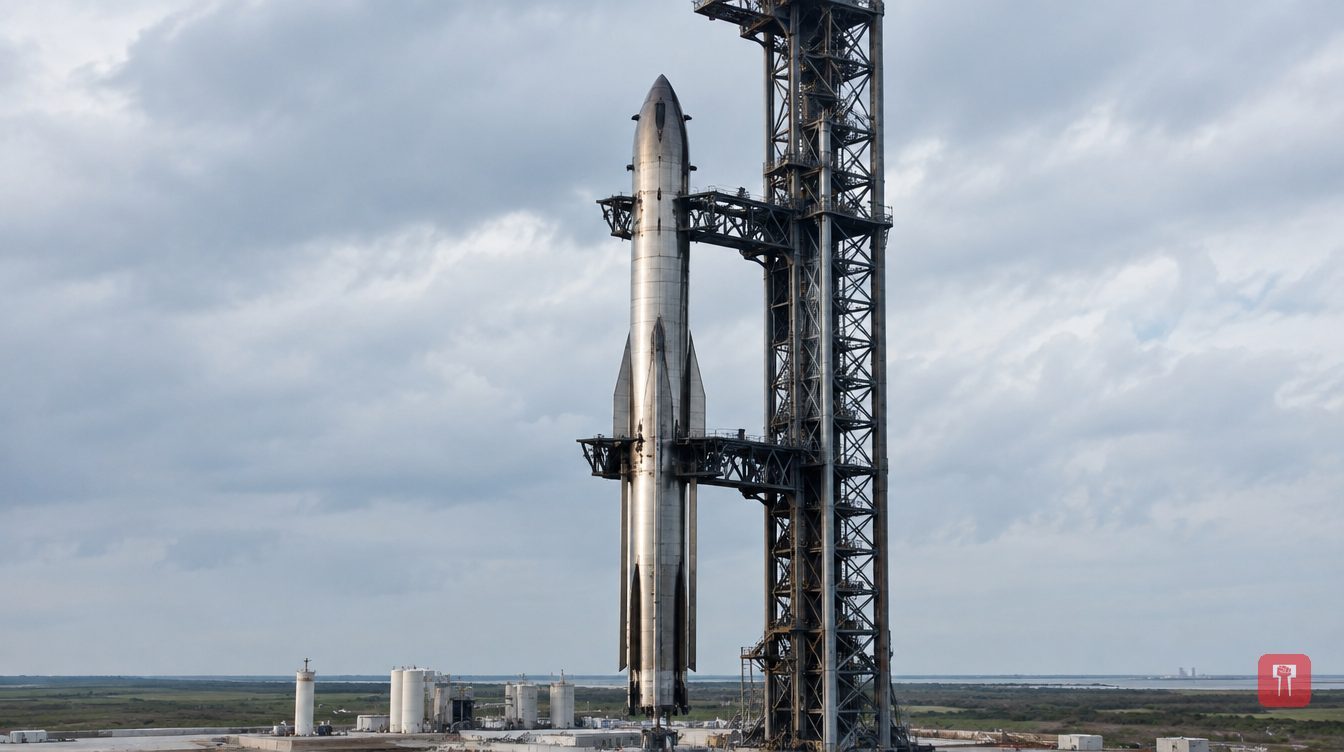
SpaceX's Starship returned from Earth orbit to Starbase in Texas and was caught by the tower's "chopsticks" arms, the first such catch of a spacecraft back from orbit.
SpaceX achieved a milestone in rocketry on Saturday, 14 November 2026, when its Starship spacecraft came back from Earth orbit to its Texas base and was snatched out of the sky by the launch tower. No orbital spacecraft had ever been recovered in this manner before.
The flight began on Friday from Starbase, and the vehicle was back over the same site roughly 22.5 hours later. As it descended on Saturday afternoon, it emerged from a layer of cloud, and the two giant steel arms of the tower at Pad 2 closed around it. The arms are nicknamed "chopsticks" by many and "Mechazilla" by the company. Staff at SpaceX headquarters erupted in cheers.
Elon Musk, the company's chief, thanked the team online. He wrote, "Congratulations to the amazing SpaceX team!!!" He also said, "Now everything is going to change." The company's own post read, "Mechazilla has caught Starship! Congratulations to the entire SpaceX team on this remarkable achievement!"
NASA Administrator Jared Isaacman also saluted Musk and the crew. He called the moment almost magical and said it could widen the circle of people who have faith in what space missions can achieve. His post said, "Congratulations to Elon Musk and the SpaceX team! It was almost magic. New people are starting to believe every day... one step closer to the Moon."
This was the 15th Starship test flight since trials began in 2023, but only the second to reach orbit. Earlier missions had managed just one or two circuits of the planet. This time the ship, identified as Ship 42, went round 14 times at about 265 km (165 miles) above the surface, spending more than 20 hours in space.
The launch used the Super Heavy booster, powered by 33 Raptor engines at liftoff. Starship split away through hot-staging and carried on upward with six Raptor engines. It then released 26 Starlink V3 satellites. SpaceX said it made contact with every one of them soon after release, and the ship began lifting their orbits so they could join the Starlink network.
The booster did not have a clean day. SpaceX had hoped to catch both halves of the rocket, but a fault appeared minutes after liftoff. The booster turned around and relit 32 of its 33 engines for the boostback manoeuvre. That burn stopped sooner than planned. One filing blames lighter fuel load, while the other says the engines shut down earlier than expected. Kate Tice, a SpaceX official, spoke about the early shutdown. The company says it does not yet know the exact cause, and engineers are studying it.
The guidance, navigation and control system began an abort by itself after detecting that the booster was in poor shape and might be dangerous if it reached the tower. It steered the booster to a second landing zone at sea over the Gulf of Mexico. The company says the booster did complete its landing burn there before the flight termination system was triggered. The booster was destroyed when it hit the water.
For the ship, the plan went through. When the time came to head home, it fired a Raptor sea-level engine for the deorbit burn. It then dropped into the atmosphere at about 27,000 km an hour (17,000 miles an hour), a stage regarded as the toughest of any mission, as friction pushes temperatures to thousands of degrees Celsius. The new heat shield and other key systems did their job, and the vehicle came back undamaged. In the last stretch it turned toward the Texas coast, made a final turn over the Gulf, and then three Raptor engines fired for the landing flip and the slow drop into the arms.
SpaceX has previously caught the Super Heavy booster three times, but this was the first catch of the upper stage coming back from orbit. On conventional launches, the used rocket usually falls into the ocean and is lost, so a fresh one has to be built for each mission, at a cost running to crores of rupees. SpaceX has already reused first-stage boosters. It wants to recover and reuse both stages of Starship. If it manages that, the price of reaching space should drop steeply, and rockets might be refuelled and flown again within hours, much as aircraft are.
Starship stands about 124 metres (407 feet) high and is the biggest, strongest rocket ever built. Musk designed it to take people to the Moon and Mars one day. NASA, which has given SpaceX a contract worth billions of dollars, plans to use it under the Artemis programme to put astronauts on the Moon by 2028.
SpaceX now intends to move faster. Besides Texas, it is getting ready to launch Starship from the Kennedy Space Center in Florida, with new missions due to start there in the coming months.
Reach readers on the ward they actually live in.
Advertise with Prime Time 24Reach readers on the ward they actually live in.
Advertise with Prime Time 24Reach readers on the ward they actually live in.
Advertise with Prime Time 24Choose primetime24.com as a preferred source on Google Google shows more stories from your preferred sources in Top Stories.
Reach readers on the ward they actually live in.
Advertise with Prime Time 24
Comments
No comments yet. Be the first.