

Sleeping with eye makeup on can raise risk of eye problems, doctors warn
Kajal, eyeliner and mascara left on overnight can cause irritation, dryness, allergies and infections, and removing them properly before bed is advised.
 Images are not validated/verified
After a tiring day, a hectic round of festivals and functions, or a late-night party, it is tempting to go to sleep without removing makeup. But the habit can prove harmful to eye health. If kajal, eyeliner, mascara and eyeshadow stay on the eyes all night, they can cause irritation, dryness, allergies and infections. It is therefore very important to remove eye makeup properly before sleeping.
The eyes are a very delicate organ, and the skin around them is thin and sensitive. The edges of the eyelids have meibomian glands. The oil produced by these glands helps keep the tear film stable and the eyes moist.
Residue from kajal, eyeliner and mascara can block the openings of these glands. This can worsen dryness of the eyes, make them red in the morning, cause a burning sensation, or make it feel as though something is stuck in the eye.
If makeup is not removed properly, the oil glands at the lid margins are more likely to get blocked. This can lead to styes or small lumps on the eyelids. If makeup residue collects near the roots of the eyelashes, conditions can become favourable for bacteria to grow.
This can cause blepharitis, or inflammation of the eyelid margins. Symptoms can include itching, burning and redness of the eyelids and crusting near the roots of the lashes. The problem can also keep coming back.
Fine particles of makeup can get into the eyes during sleep. The risk rises further for those who apply kajal or eyeliner on the inner edge of the eyelid. Such particles can cause discomfort, trigger an allergic reaction, or risk injuring the cornea, the transparent outer layer of the eye. Flakes of dried mascara can also fall into the eyes.
Those who wear false eyelashes or eyelash extensions should also be careful. If they are not cleaned properly, dust and makeup residue can collect. Carelessness while removing false lashes can also damage the natural lashes.
For contact lens wearers, sleeping without removing eye makeup can be even riskier. If hygiene rules are not followed while using lenses, the risk of eye infections rises. Sleeping with lenses on can also increase the chance of a corneal infection. If symptoms such as eye pain, severe redness, sensitivity to light or blurred vision appear, an eye specialist should be consulted at once.
People with dry eyes, eye allergies or blepharitis, those who wear contact lenses, those who use glitter eyeshadow or waterproof makeup, and those who apply kajal and eyeliner on the inner edge of the eyelid have been advised to take special care with eye makeup. Waterproof makeup lasts longer, so it is important to use the right product to remove it.
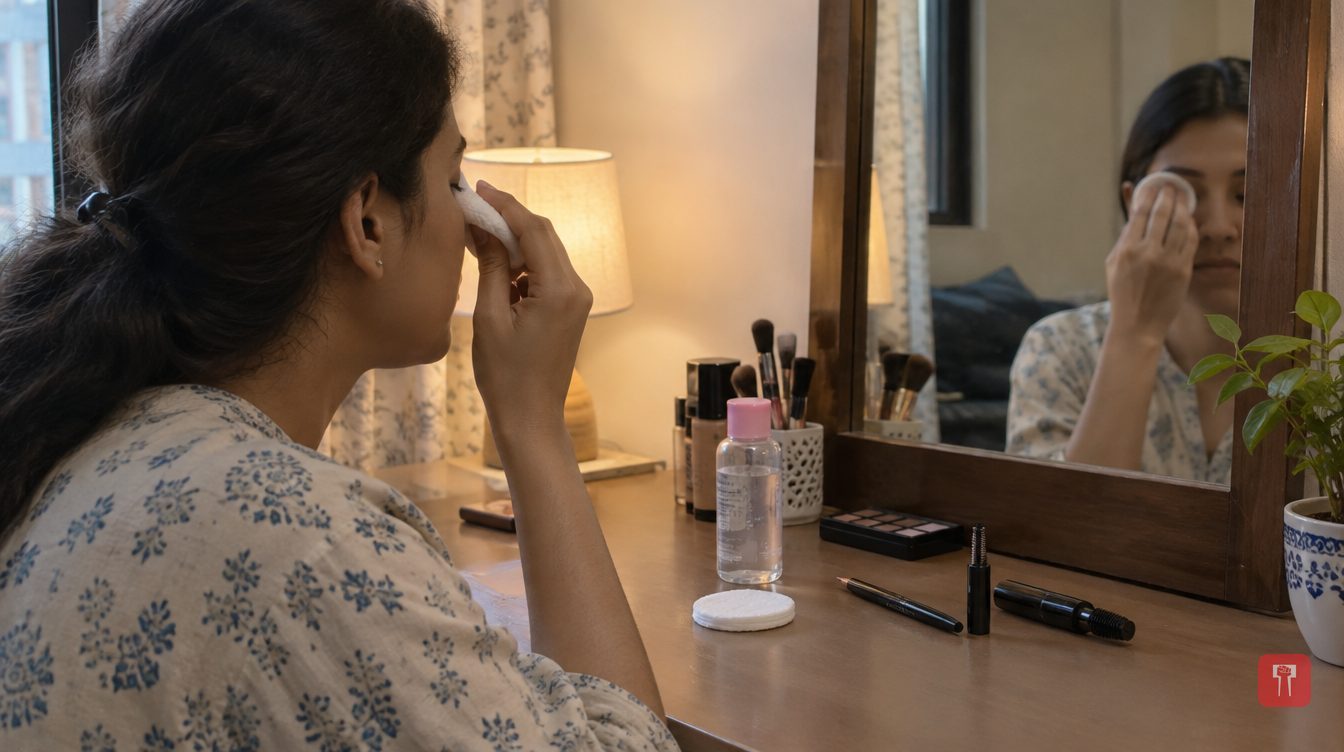
To remove makeup, first wash your hands thoroughly and, if you wear contact lenses, take them out properly. Choose a remover made for the eyes, preferably fragrance-free and suited to sensitive skin. Hold a soft cotton pad with remover gently on closed eyelids for a few seconds, which helps the makeup dissolve easily. Do not rub the eyes, and avoid scrubbing or pulling the skin of the eyelids hard. For waterproof makeup, an oil-based or bi-phase remover that is suitable for the eyes can be used, as long as it does not get into the eye. Use a clean cotton pad for each eye and wash the face with clean water after removing the makeup.
Do not use eye makeup products that have become old or have changed in quality. Mascara is recommended to be replaced about three months after opening. For liquid eyeliner, follow the period printed on the product and the company's instructions. Do not share makeup products with others, keep brushes and applicators clean, and stop using at once any product that irritates the eyes or causes an allergy.
If redness or swelling of the eyes persists after the makeup is removed, or if there is pain, discharge, sensitivity to light or blurred vision, consult an eye specialist. Dr Varun Gupta, cataract and refractive surgeon at Dr Agarwals Eye Hospital in Thane, said that if these symptoms appear, especially in contact lens wearers, an immediate medical examination is necessary. People have also been advised to avoid using eye drops or home remedies on their own when the eyes are troubled.
