

Russia votes amid Ukrainian drone strikes, Putin's party leads with 56% turnout
United Russia held a commanding lead in parliamentary elections held under record Ukrainian drone attacks and cyberattack claims
In the first parliamentary election held in Russia since the full-scale war against Ukraine began, President Vladimir Putin's party United Russia did what was expected of it, reasserting its dominance. Voting ran for three days, from September 18 to 20, in a tense atmosphere, yet 56.66 percent of voters cast their ballots. According to preliminary figures from Russia's Central Election Commission, counting has been completed at more than 58 percent of polling stations, and United Russia has won about 58 percent of the vote on party-list seats. The party's candidates are also leading in most single-member seats.
The election was seen as significant because it would determine control of the 450-seat lower house of Russia's parliament, the State Duma. The Kremlin used the occasion to show that its decisions on the war in Ukraine have the full backing of the Russian public. In the 2021 election, United Russia had won 324 of the 450 seats, and early results indicate the party has maintained the same dominance this time.
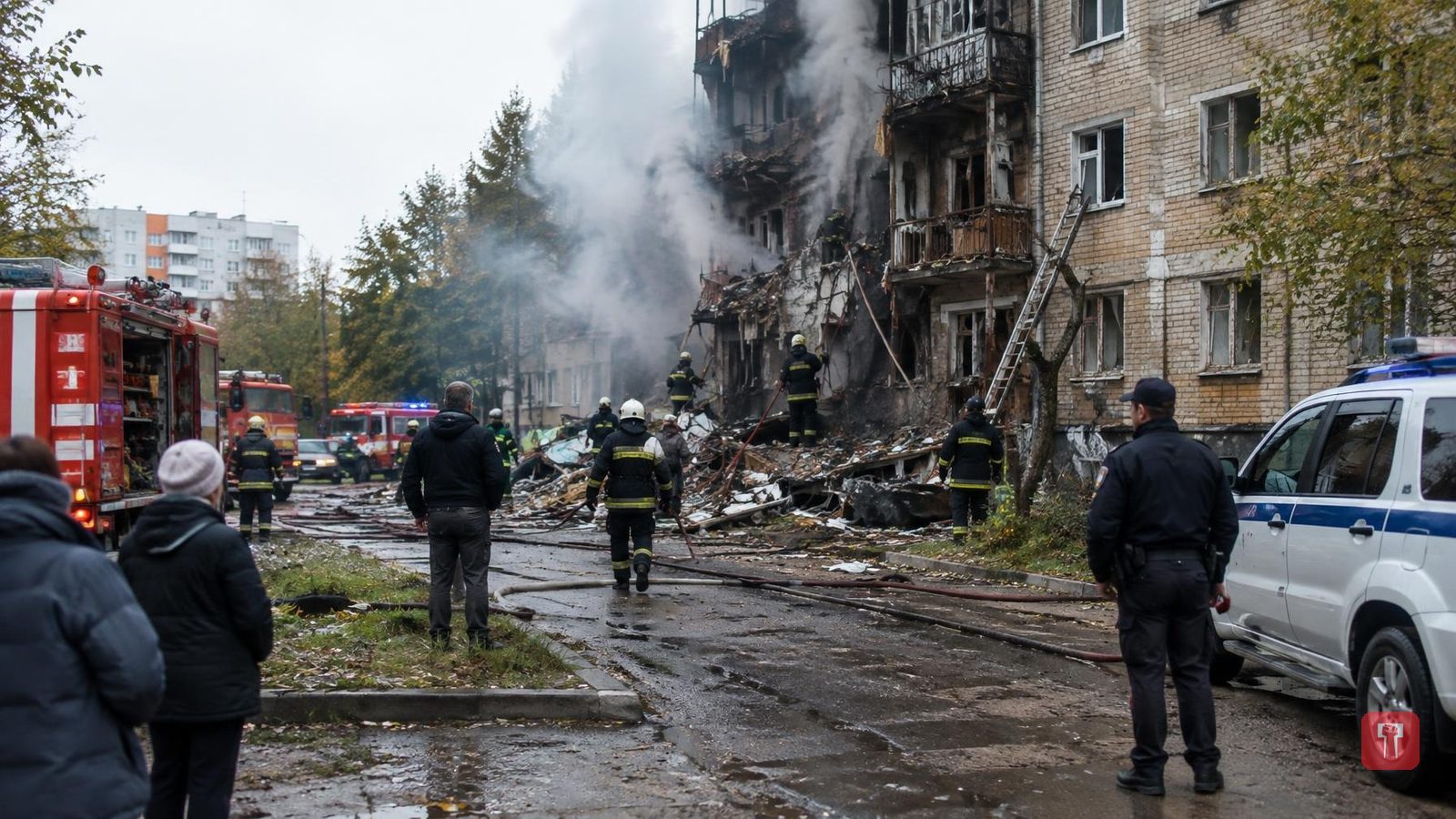
The voting was not confined to political manoeuvring alone, taking on the character of a battlefield. On Sunday, the final day of voting, Ukraine's military launched its largest and most intense drone attack yet on Russian territory. Russia's defence ministry claimed it shot down more than 1,110 Ukrainian drones in Russian airspace. Moscow mayor Sergei Sobyanin said more than 1,600 drones were intercepted, but the attacks killed three people and injured more than 20 in the Moscow region. The strikes caused heavy damage to an oil refinery near Moscow and triggered fires in several areas. For security reasons, several polling stations in the Black Sea resort city of Sochi had to be closed for a few hours.
Online remote digital voting was also offered on a large scale to Russia's roughly 110 million eligible voters. President Putin, Prime Minister Mikhail Mishustin and Foreign Minister Sergei Lavrov all voted online. However, on the final day of the election, there were reports of cyberattacks on electronic voting systems in Moscow and several other areas. Independent news agencies alleged that technical faults at several polling stations meant voters were not given paper ballots and were instead directed to electronic terminals. Russia also held voting in Ukraine's Donetsk, Luhansk, Zaporizhzhia and Kherson regions, as well as in Crimea, annexed in 2014, which Ukraine, the European Union and the United Nations have rejected outright as a direct violation of international law.
Besides United Russia, the Communist Party of the Russian Federation, the Liberal Democratic Party, A Just Russia and New People also contested the election, but all of these are opposition parties in name only and back every major Kremlin policy in parliament. Yabloko, Russia's only major officially anti-war party, was struck off the list of national parties by Russia's Supreme Court in August. Several anti-war leaders, including Alexei Navalny, have been jailed, barred from contesting elections or forced to leave the country. Representatives of the Communist Party and Yabloko have complained that their election observers were denied entry to polling stations in several places. Amid this crackdown, questions are being raised worldwide about how fair this parliamentary election in Russia really was.
