

Rural Women's Day: Smartphones and Lakhpati Didi scheme are changing village women's lives
On International Day of Rural Women, a look at the work village women do, the barriers they still face and the shifts under way through self-help groups and digital access.
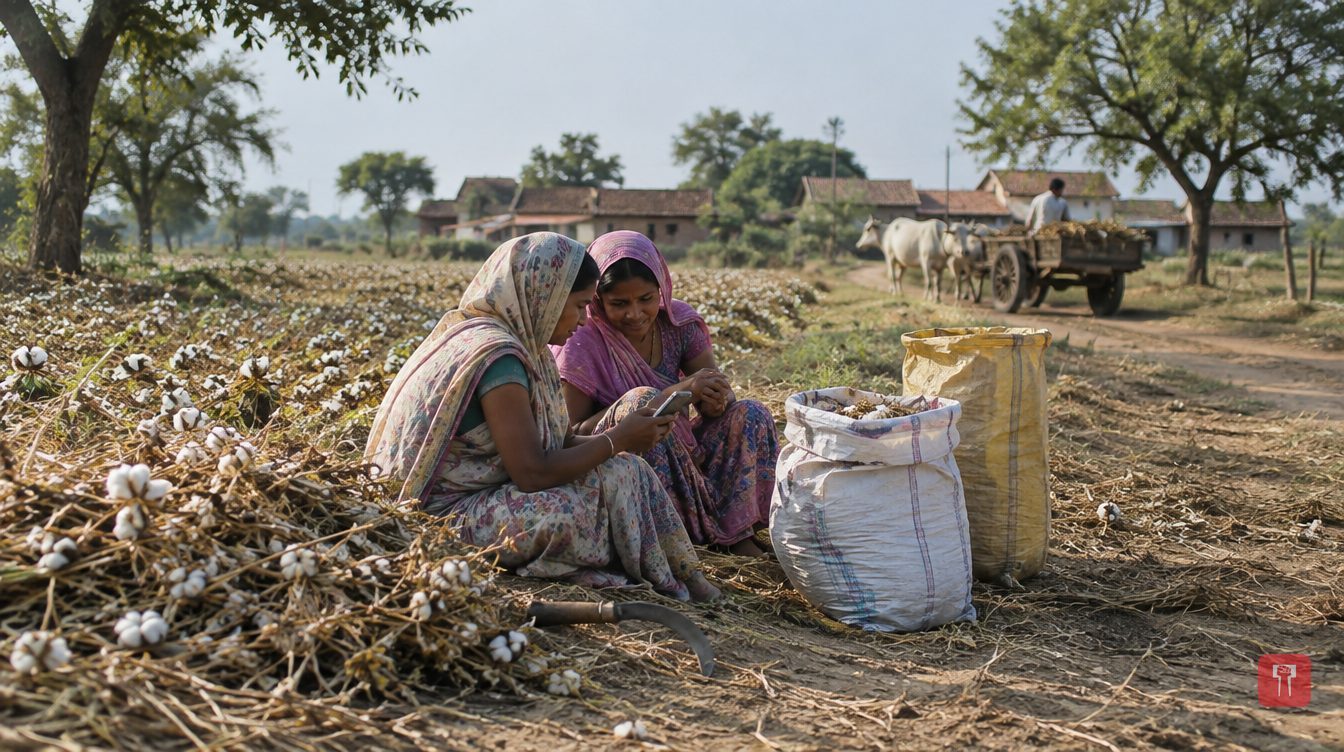 Images are not validated/verified
International Day of Rural Women is observed across the world on October 15 every year. The day honours the labour, struggle and contribution of crores of women who live far from the glitter of cities and shape the country's future with their sweat. Their day begins with the first light of morning and runs late into the night across the field, the cattle shed and household chores. These women do not merely feed their families by cooking; they also carry the burden of the entire country's food security on their shoulders.
The United Nations formally declared the day in 2007, and the first Rural Women's Day was observed on October 15, 2008. Its aim is to bring the hard conditions of village women to the world's attention, protect their rights and secure them an equal place in political, social and economic decisions. More than a third of the world's population is made up of rural women. In developing countries in particular, about 43 per cent of those working in agriculture are women.
In an agrarian country such as India, the role of village women is even more important. Women take part in almost every difficult task in the field, from sowing to transplanting, weeding, hoeing and harvesting. They also handle animal husbandry, dairy work, and the collection of firewood and drinking water. In many remote areas, women walk for miles to fetch drinking water. In this way they are the real experts on water management.
Yet, regrettably, even after giving more time and effort in the field than men, they often do not get official recognition as farmers. They still face problems such as lack of land ownership, lack of access to credit or loans, and discrimination in wages. Even so, they keep the chain of the country's foodgrain production running without complaint. That is why it is said that the rural woman is not merely a provider of food but the backbone of the entire rural economy.
Today, the picture of village women is slowly changing. Thanks to women's Self Help Groups, the Lakhpati Didi scheme and several government initiatives, women in rural areas are moving towards self-reliance. Through small and large cottage industries, handicrafts, organic farming, dairy work and processing industries, they have stood on their own feet and given their families financial support.
Because of the digital revolution, smartphones have now reached the hands of rural women too. By learning to use weather forecasts, crop market prices, information on government schemes and digital payments through UPI, they are connecting with the modern world. When a rural woman gets education, healthcare, economic independence and the right to take decisions, not just her family but the whole village races ahead on the path of progress. Investment in education and health is the real key to rural empowerment.
The United Nations Sustainable Development Goals (SDGs) include key targets such as eradicating poverty, ending hunger, gender equality and tackling climate change. It is impossible to achieve these without the participation of rural women. Today, climate change has its biggest impact on rural women. They have to bear directly the losses caused by unseasonal rain, drought or floods.
So, while marking Rural Women's Day this year, it is not enough to stop at speeches or greetings. It is necessary to resolve to bring real change to their lives. Giving them land rights, helping them get easy bank loans, training them in modern farming techniques and providing opportunities for higher education are the need of the hour. Only when these hands that toil in the soil get respect and the right platform will a truly prosperous India and an empowered world be possible.
