

Republican senators split over Trump's Russia diesel deal as India watches 18 October deadline
Senators from both parties have accused the White House of undermining sanctions law, while Republican whip John Barrasso defended the deal as a pressure tool against Russia.
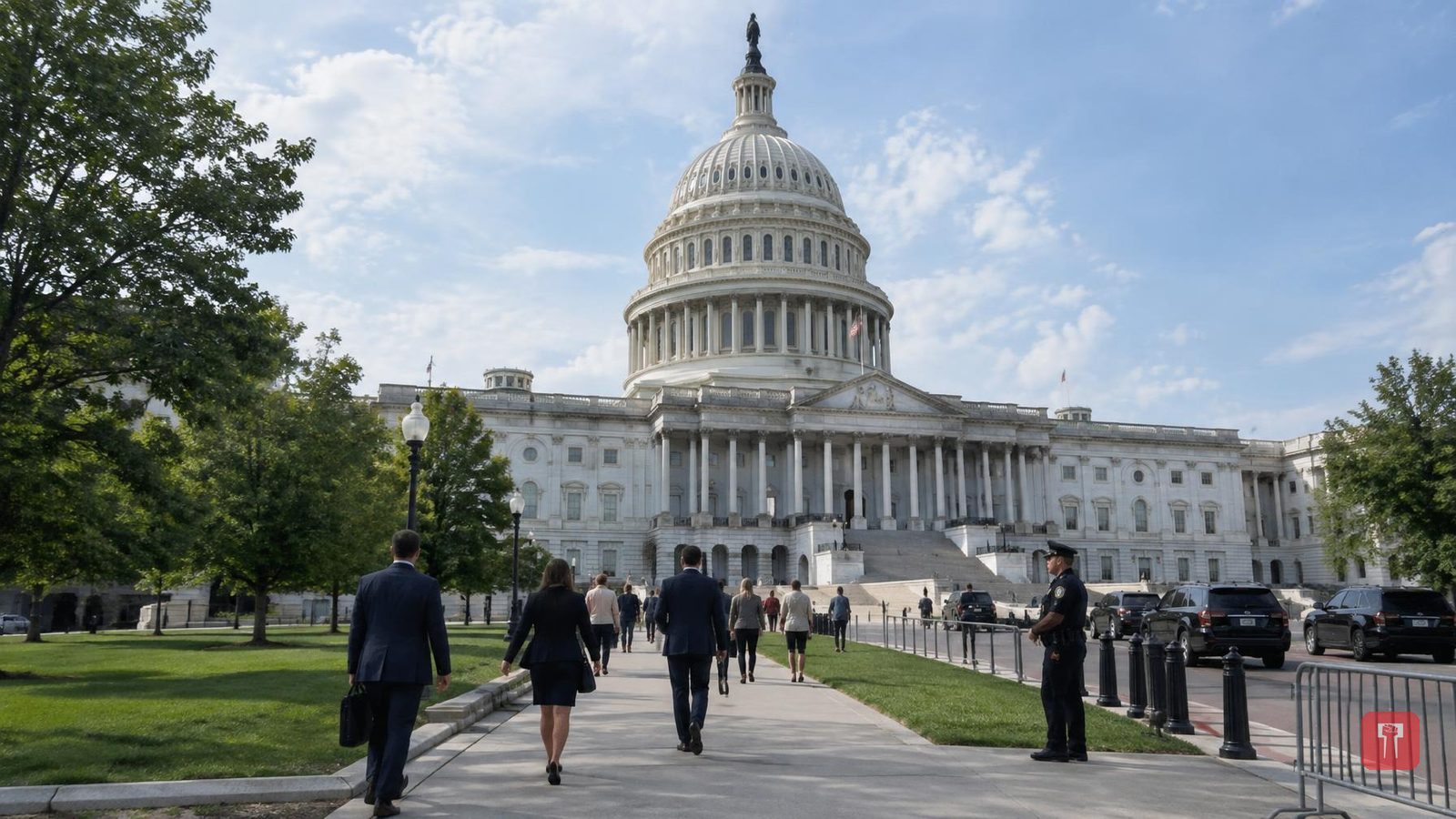 Images are not validated/verified
The diesel agreement US President Donald Trump has struck with Russia has set off a fierce debate in Washington. Most notably, differences have surfaced openly in the US Senate among Republican lawmakers and leaders themselves. A deadline of 18 October has been set for the final decision on whether to impose stiff sanctions on countries that buy crude oil and fuel from Russia. For this reason, the global energy market and large oil-importing countries such as India are watching this one decision by Trump closely.
The infighting played out on two major TV programmes, where Republican senators offered differing views on the issue. NBC journalist Kristen Welker asked directly whether Trump's diesel deal was a direct violation of the 2022 Russian oil sanctions law. Republican Senator Thom Tillis said plainly that President Trump was quite likely to violate the original law and policy passed by Congress.
Tillis, the senator from North Carolina, recalled that when the sanctions bill known by the name of the late Senator Lindsey Graham was voted on in the Senate, lawmakers had backed a tough stance with one voice. Tillis said, "As I recall, that bill got 86 votes in the Senate. That was a unanimous decision of the US Senate. But in the last 24 hours, the President's actions and statements are undermining the very purpose of this law."
Seven senior senators, led by Tillis and Jeanne Shaheen, the ranking Democratic member of the Senate Foreign Relations Committee, then issued a joint statement. The statement said Trump's decision runs directly against the law passed by the US Congress, and that the White House and the Trump administration should immediately withdraw this controversial position. Republican Senators Susan Collins, Lisa Murkowski and John Curtis, along with Democratic Senators Richard Blumenthal and Ron Wyden, have also signed the statement.
Coming to Trump's defence, Senate Republican whip John Barrasso said on CBS that the law was given to the President as an additional authority and weapon so that he could apply diplomatic and economic pressure on Russian President Vladimir Putin. Margaret Brennan had asked him whether the President was not mocking a law he himself had approved before 18 October. Barrasso said the diesel deal is being used as a strategy to bring Russia to heel and to find a long-term solution in the Ukraine-Russia region.
The senators did not name India directly in this debate, but the 18 October deadline is seen as extremely sensitive for India. Under Section 113 of the Lindsey O. Graham Russia and Iran Sanctioning Act 2026, which came into force on 18 September 2026, the President has the authority to impose secondary tariffs of up to 100 per cent within 30 days on the five largest buyers of Russian crude oil or natural gas.
India is the world's second-largest buyer of Russian crude oil. If Trump decides to enforce the law strictly, the Indian economy and oil refining companies could come under heavy pressure. The law also provides, however, that the President can grant a country a waiver from this tariff if he certifies to Congress that it is in America's national interest.
Meanwhile, US Treasury Secretary Scott Bessent said in an interview that the Graham law is being misinterpreted. According to him, Section 113 of the law covers only crude oil and natural gas, and the law does not directly bar refined fuel products such as diesel. All eyes are now on what stand the White House takes on 18 October.
