

Rare snowfall blankets Sahara desert as temperatures drop to -3 degrees
Snow covered the red-golden dunes near Algeria's Ain Sefra, a rare event scientists say is unusual but not impossible in the desert.
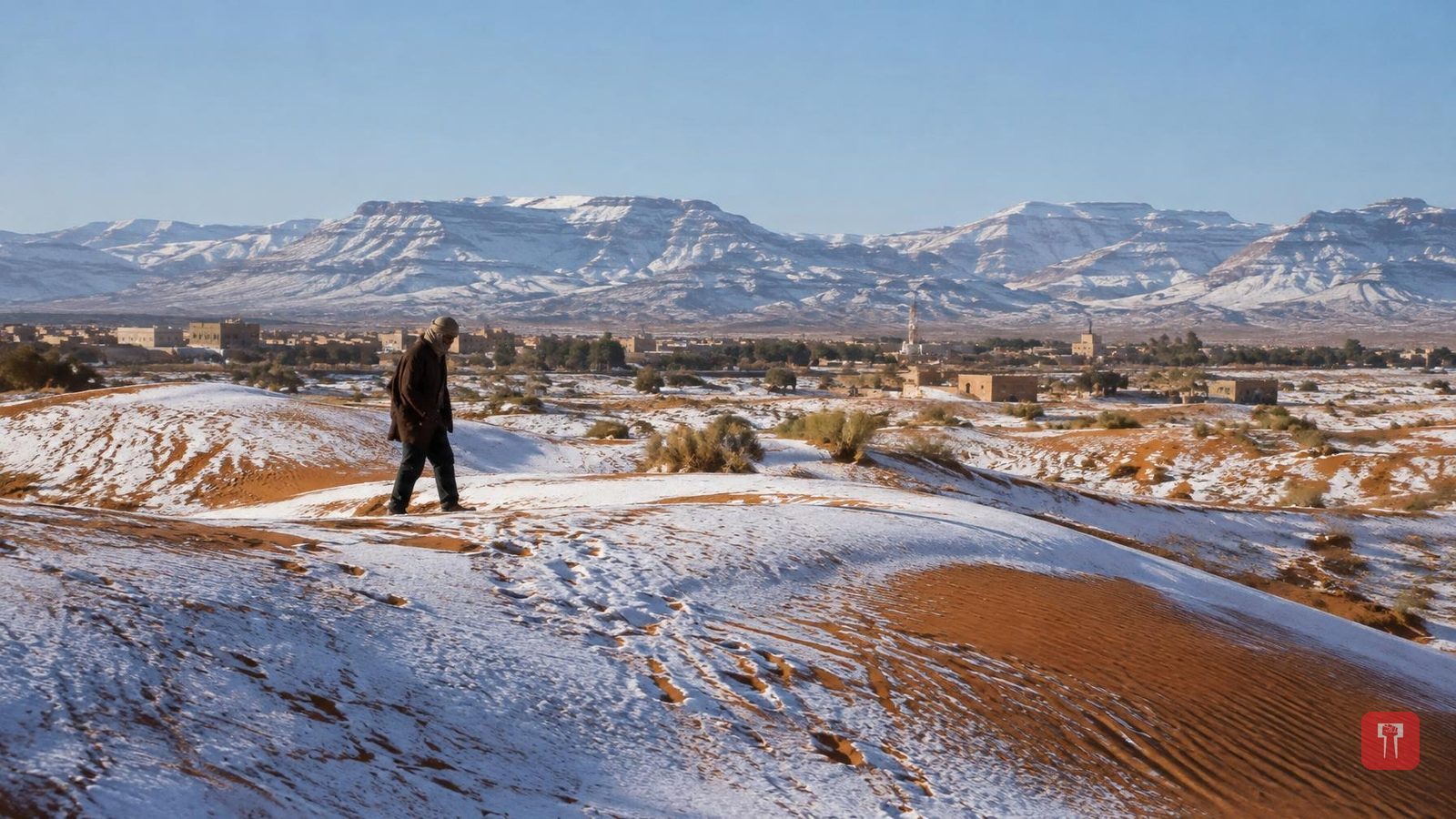
Few would believe it if told that snow had suddenly fallen in the Sahara desert, counted among the world's hottest and largest deserts. In an area where summer temperatures climb above 50 degrees Celsius, a white sheet of snow settling over the red-golden sand dunes left everyone stunned.
This rare event took place in the Algerian city of Ain Sefra, often called the gateway to the Sahara. Photographs and videos of snow falling in this scorching desert region have become a talking point around the world.
The first officially recorded snowfall of this kind in Ain Sefra was in 1979. Since then, similar snowfall events have been recorded in 2016, 2017, 2018, 2021, 2022 and in recent days as well. The event is certainly highly unusual, but not impossible. These occurrences make clear that despite the desert's intense heat and dry weather, snowfall can occur if a particular kind of weather system develops.
Snow falling in the Sahara requires certain specific seasonal and atmospheric conditions to come together. In winter, extremely cold, fast-moving winds from Europe travel south into North Africa. When this cold air meets moist air coming from the Atlantic Ocean and the Mediterranean Sea, the first condition needed for snowfall is created.
The desert sky has very few clouds. Because of this, the ground absorbs the sun's heat quickly during the day, and that heat escapes into the sky just as quickly once night falls. This is why desert temperatures drop sharply on winter nights. When the snowfall occurred in the Ain Sefra area, the night temperature fell below freezing to between -2 and -3 degrees Celsius. When the temperature drops below zero and moisture is present in the air, water droplets freeze into ice crystals and fall to the ground as snow.
The area's geography plays a major role in why this happens in Ain Sefra specifically. The city sits at an elevation of about 1,000 metres, or 3,000 feet, above sea level and is surrounded by the Atlas mountain range. When moist air from the ocean strikes these high mountains, it is forced upward. The higher the air rises, the colder it gets, which makes it easier for the moisture in the air to turn into snow.
However, the snow that falls in the desert does not last long. Once the sun rises, the intense desert sunlight and the heat from the ground cause the snow to melt rapidly within a few hours. Because of the desert's bitterly cold nights and hot days, the snow does not stay for long, but even in that short time, this unusual spectacle of nature can be witnessed.
According to scientists, it would not be right to treat a single snowfall event as direct evidence of climate change. Even so, changes in the jet stream caused by global warming may have some effect on such unusual weather events, and scientists are still studying this.
