

Potholes and loose joints now mar Nagpur's cement roads, endangering two-wheeler riders
 Images are not validated/verified
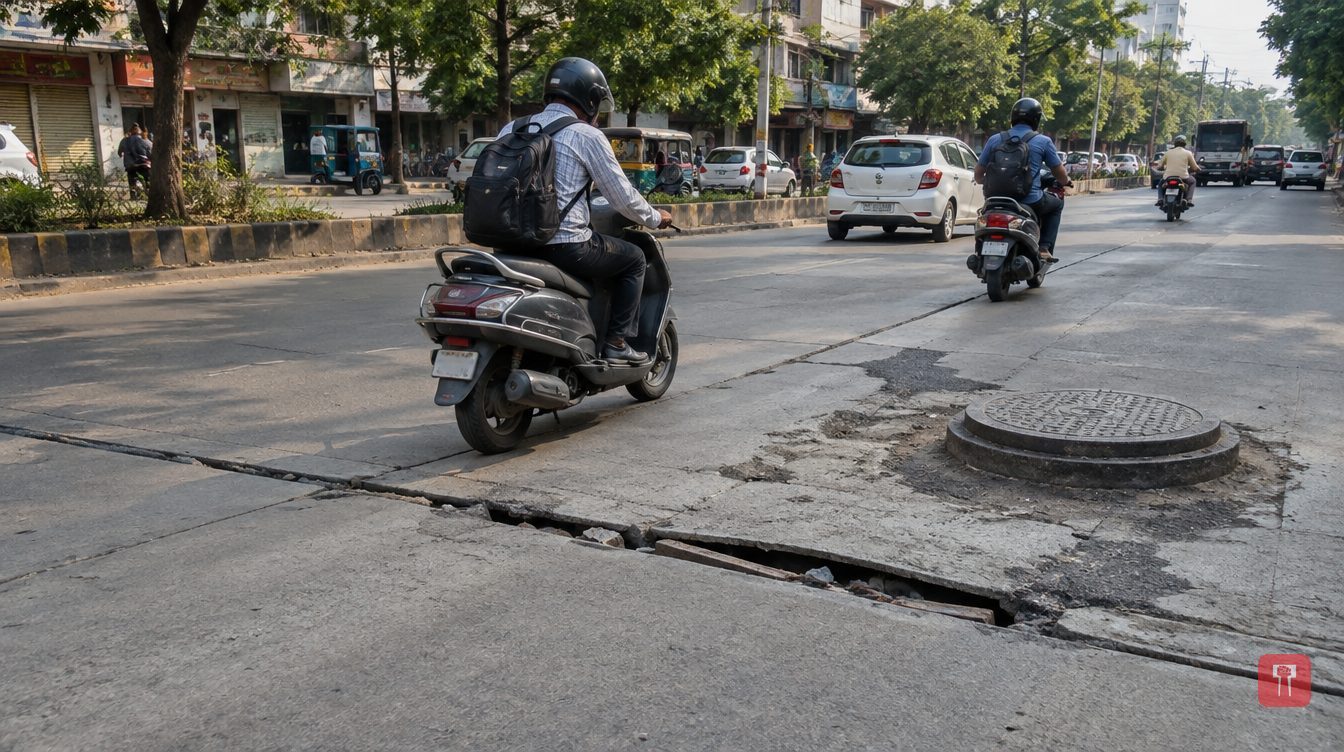
Cement roads laid to end Nagpur's pothole notoriety now show open joints, broken joint sealant, raised manhole covers and sunken patches.
There was a time when Nagpur came to be known for the potholes on its asphalt roads. Concretisation of more than 350 km of the city's roads began to shed that reputation. Under the Smart City project, it was claimed that the roads would be strong, potholes would end, vehicles would run safely and repeated maintenance would be reduced.
But many of the roads now look as though the potholes have only changed address, moving from asphalt to cement. In places the joints are open, in places the sealant on the joints has come off, in places manhole covers stand above the road, and in places the entire surface is bumpy.
The biggest advantage of a cement road is considered to be its level, durable surface. In many stretches, that basic purpose appears to be missing. Sudden jolts to moving vehicles have become common. For two-wheeler riders, even a small flaw in the road can cause a serious accident.
Sealant coming off the joints and joints opening up is the most dangerous problem. If a two-wheeler's wheel gets caught even slightly, the rider loses balance. On an asphalt road, such a situation often means a minor scrape, but if a fast two-wheeler overturns on a cement road, the rider can suffer head injuries, long abrasions on the body and damage to the vehicle. The flaw is small, the consequence big.
The cement road from Rameshwari to Manish Nagar offers a glimpse of this. In several places, riders cannot tell whether they are on a road or a speed-breaker track. Manhole covers are not flush with the road surface. In places the cover is raised, and in places the surface around it has sunk. Notably, it has not yet been a year since this road was completed and opened.
The stretch from Hingna T-point to Pardi Chowk also raises questions about construction quality and maintenance. The joints, levelling and post-construction condition in many places are such that riders must stay constantly alert. A road described as a byword for convenience and safety demands extra caution in many places.
On the cement roads of the Nagpur Smart City project, there are either large potholes or sunken stretches in many places. Asphalt is being used at several places in the city to hide these ugly potholes. But that layer of asphalt too turns into a carpet of potholes within a few days, and it is motorists who suffer.
The story of the cement Ring Road from Dighori Chowk to Chhatrapati Chowk is no less troubling. The road was first dug up for a pipeline, and then the construction of an overbridge worsened its condition. Potholes beginning about 100 metres before Manewada Chowk dog riders all the way to Hudkeshwar Chowk. It is natural for roads to deteriorate and traffic to be affected during such large construction, but the question is who is responsible for giving citizens a safe route. If the local administration leaves the public to the mercy of God, then God alone can help.
There is nothing wrong with building cement roads. The real question is one of construction quality, engineering, supervision and maintenance. When joints are opening, sealant is coming off and manholes do not match the surface, building a new road is not enough. Why should the next two-wheeler rider pay with their bones for a flaw that has not been fixed despite lakhs and crores of rupees being spent?

Comments
No comments yet. Be the first.