

Pankaja Munde: Clean air action plan for Mumbai region, curbs on dust and construction debris
A clean air action plan will be run in the Mumbai Metropolitan Region, with guidelines to be drawn up in 15 to 20 days, after a meeting chaired by Minister Pankaja Munde.
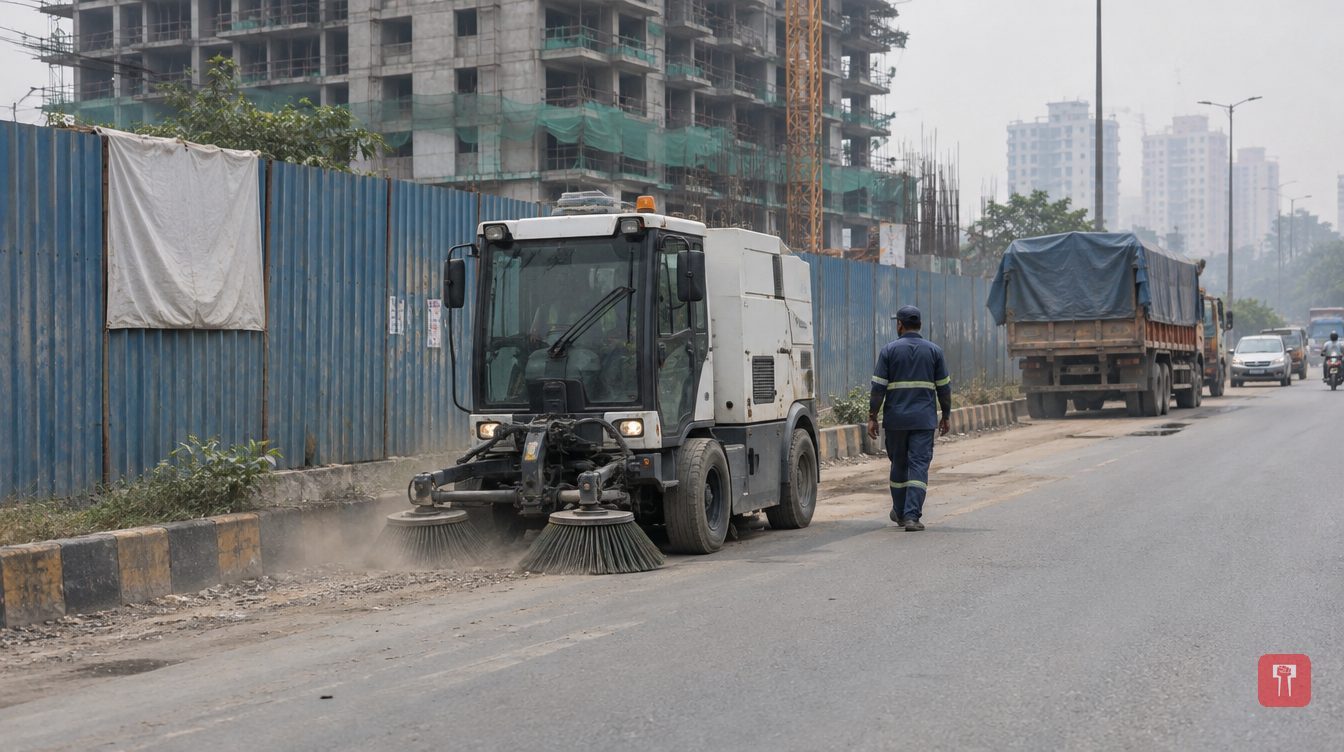 Images are not validated/verified
A decision has been taken to run a "Clean Air Action Plan" in the Mumbai Metropolitan Region to curb rising air pollution. The decision was taken at a meeting chaired by Environment and Climate Change Minister Pankaja Munde. The minister directed all the municipal corporations and agencies concerned to take joint, strict steps to stop road dust, construction debris, vehicle emissions and industrial pollution. An attempt will be made to prepare the guidelines in the next 15 to 20 days.
Citing information placed before the meeting, Munde said special attention must be paid to road dust and to dust that vehicles throw back into the air. These account for a large share of pollution, so the way roads are cleaned will have to change. Merely sweeping dust to one side does not reduce pollution. She said the use of vacuum cleaning machines should be increased. While sprinkling water, the possibility of using treated sewage water should also be examined.
The municipal corporations have been told to acquire the machines needed to reduce air pollution. Technological methods should be adopted for road cleaning, dust control and regular monitoring of pollution. The minister also suggested considering whether something can be done to reduce dust in the open grounds of schools and colleges.
Large-scale construction and redevelopment are under way in the Mumbai Metropolitan Region. Transporting and disposing of the debris they generate is a key issue in pollution control. Vehicles carrying debris must have the construction material fully covered. Munde directed the traffic police not to let rule-breaking vehicles go after merely collecting a fine. They should not be allowed to proceed without meeting the required conditions. The traffic police were also asked to enforce the existing rules strictly.
Munde said many municipal corporations are facing difficulty because there is not enough space to dump debris. A joint system for collecting, transporting, processing and reusing debris is therefore necessary. Mumbai and neighbouring municipal corporations should consider sharing the available sites. Along with a separate arrangement for debris disposal, processing it for reuse in construction should be encouraged. She made it clear that separate meetings would be held with the local bodies concerned, including Panvel, Kalyan and the Brihanmumbai Municipal Corporation, to understand their difficulties.
On industrial pollution, the minister said the Maharashtra Pollution Control Board should, along with inspections, also check whether the rules are actually being followed. A tough stand should be taken against industries that do not comply even after repeated inspections. But she said the aim is not to shut down every industry; getting the necessary improvements made is what matters. In some industrial areas, old machinery and production methods have been seen to add to pollution, and those areas need different measures suited to local conditions. The board's visits should be increased, and after each visit it should be confirmed whether the rules were followed.
The meeting also discussed vehicle maintenance, enforcement of pollution control and dust raised during transport. The traffic police and other agencies should work in coordination, especially to control vehicles carrying construction material. The meeting also reviewed increasing the use of electric vehicles, providing electric buses for public transport, and making proper use of funds sanctioned under the National Clean Air Programme.
The minister also stressed the need for green measures in cities. To reduce the effect of growing construction, concrete roads and dust from open spaces, she suggested a technical study of rooftop gardens, eco-friendly changes in construction design and measures to stop dust in open spaces. She said Mumbai is on the coast, so winds keep blowing, but efforts to reduce pollution cannot rely on natural conditions alone. She also appealed to all municipal corporations and departments to prepare the action plan together and implement it effectively.
Commissioners of various municipal corporations presented problems in their areas at the meeting. Mira-Bhayandar has little space to dump debris, so joint use of available sites in Mumbai or Thane was raised. Navi Mumbai cited difficulty in controlling dust because of construction in the airport area, redevelopment of the industrial belt and national highway traffic. In Kalyan-Dombivli, police help was discussed to stop illegal transport of debris at night and the dumping of debris in mangrove areas. Coordination with the regional transport office and the police to remove abandoned vehicles parked along roads was also discussed.

Comments
No comments yet. Be the first.