

Nagpur air quality worsens, AQI 114 on Tuesday is higher than Mumbai and Chandrapur
Dry weather and falling night temperatures are trapping dust near the ground in Nagpur, and experts have urged the administration and police to act before Diwali.
 Images are not validated/verified
Air quality in Nagpur is deteriorating rapidly. Dry weather and falling night temperatures are together trapping harmful dust particles close to the ground in the city. On Tuesday, Nagpur's Air Quality Index (AQI) reached 114, which falls in the "moderate" category. The figure is based on a bulletin issued by the CPCB at 4 pm on October 21.
According to the same bulletin, Mumbai's AQI was 111 and Chandrapur's was 97, so Nagpur stood above both. Pune's AQI was 118, only slightly ahead of Nagpur.
Experts have warned that the festival season is approaching and the use of firecrackers will also rise. They say pollution will increase considerably if temperatures fall further in November. If strict steps are not taken now, Nagpur could be caught in an environmental and health crisis that could have been avoided.
In the pollution control board's data, PM10 levels were high in many areas. The highest PM10 level, 148 µg/m³, was recorded in Ambazari and Ram Nagar. It was 146 µg/m³ in Mahal and 132 µg/m³ at GPO Civil Lines. Ambazari and Ram Nagar have considerable greenery, yet such high readings there were described as a cause for concern. This suggests that conditions trapping pollution in the air and the sources of pollution are outweighing the natural effect of the greenery.
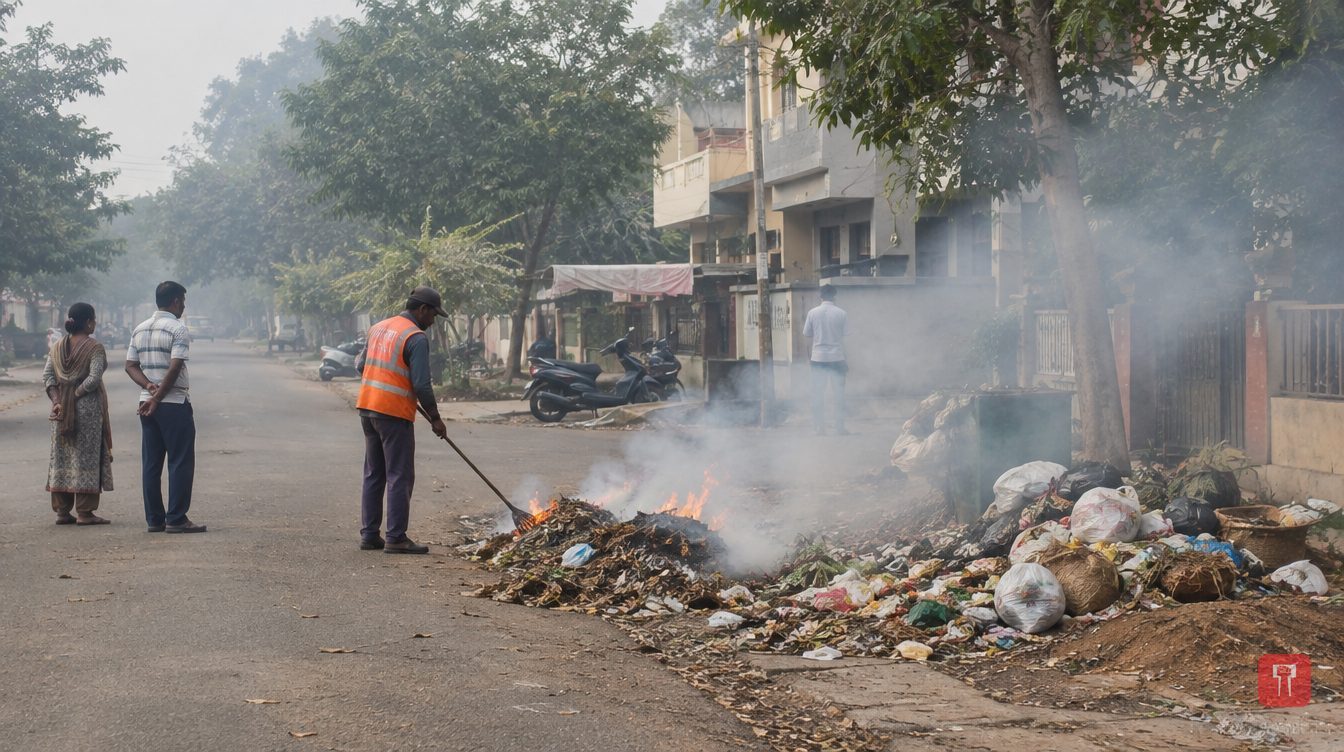
Hema Deshpande, regional officer of the Maharashtra Pollution Control Board (MPCB), listed some main reasons for the worsening air. These include the growing number of vehicles and their exhaust, a long spell of dry weather and falling night temperatures, because of which pollutants do not disperse and PM10 settles close to the ground. Rising firecracker use before Diwali and the open burning of solid waste and dry leaves were also counted among the causes. Irregular garbage collection makes this worse.
Residents of areas such as Borgaon say that burning of waste in the open early in the morning is common. According to them, dry leaves, plastic and solid waste are not collected regularly by the municipal corporation. As a result, ordinary people and sanitation workers are burning waste in the open, adding to the morning smoke.
Hospitals have said that children and people with existing respiratory illness are being directly affected. According to paediatric lung specialists, there has been an increase in the number of children with worsening cough, more severe asthma attacks and respiratory infections lasting 10 to 15 days. Doctors say children with asthma are having to restart inhaler medication or take higher doses. Medical experts have appealed to parents and citizens to stay away from dusty places and to get the influenza vaccine early for vulnerable people.
Experts have asked the administration and police to act without delay to keep the situation under control ahead of winter and Diwali. First, measures under the Graded Response Action Plan (GRAP) should be implemented immediately, so that highly polluting activities are curbed and the movement of heavy vehicles is controlled. Second, the municipal corporation should patrol at night and in the morning and impose heavy fines, so that the open burning of waste and dry leaves stops completely.
Third, leaves and recyclable waste should be collected daily without interruption in all residential and commercial areas, so that people have no need to burn them. Fourth, strict public advisories on restraint in using firecrackers should be issued, and sensitive people should be encouraged to protect their breathing.

Comments
No comments yet. Be the first.