

No confirmation that tea and coffee sales have been banned at railway stations
A claim that tea and coffee can no longer be sold at stations lacks firm backing, though vendors must hold authorised permission and follow railway rules.
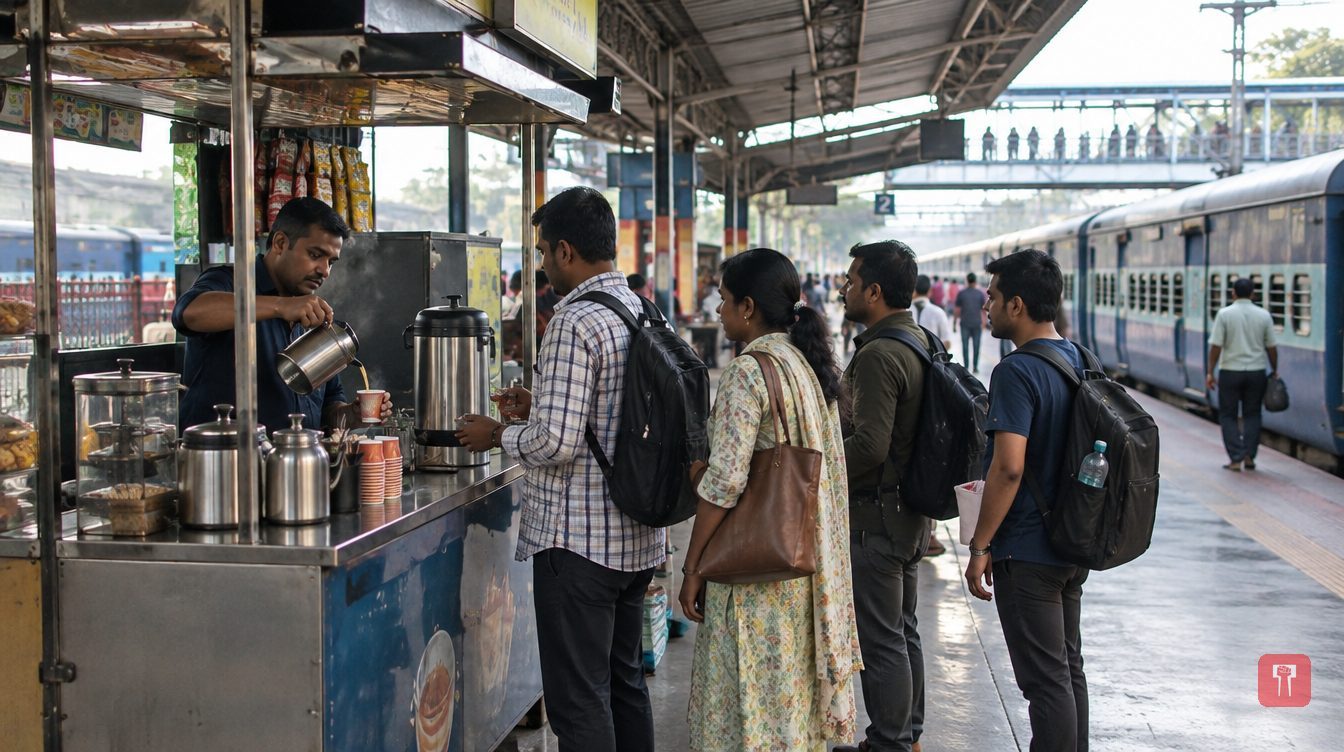 Images are not validated/verified
Lakhs of passengers travel by Indian Railways every day. Whether on a long journey or a daily local commute, hot tea, coffee and other food and drink at stations are a necessity for many travellers. A claim has now surfaced that the sale of tea and coffee at stations has been stopped, and the truth behind it needs to be understood.
First, it is worth knowing who controls the sale of food and drink at stations. Those selling tea, coffee, water, snacks and other items at a station must follow the conditions set by the railway administration concerned. Authorised permission is required to run a stall or a food and drink counter. Vendors must also maintain the quality and cleanliness of what they sell.
Vendors are expected to store food safely, keep the surrounding area clean and sell only in line with the rules in force. A vendor found operating without permission or breaking the rules can face action. Stall operators should therefore work only after knowing the rules.
The question now is whether the sale of tea and coffee has really stopped. The claim is being made in some places, but there is no concrete information that the sale has been banned at all Indian Railways stations. It would therefore not be right to conclude that tea and coffee sales have stopped entirely.
Different conditions may apply at certain stations, depending on the type of stall or local arrangements. If any such report appears, it is important to check the official notice issued by the railway department concerned. Incomplete information on social media should not be taken to mean that tea and coffee are no longer sold at all stations.
Stall owners should pay special attention to a few points. First, authorised permission: they should hold the necessary licence or agreement from the railway administration concerned. Second, cleanliness: the stall, utensils and the place where food is handled should be clean. Third, quality: items kept for sale should be safe and fit to eat. Fourth, compliance: the conditions set by the railway administration and the food safety rules in force should be followed. Fifth, official information: if rules change, they should confirm with the railway department concerned.
Passengers too should be careful. When buying tea, coffee or anything else at a station, they should buy from an authorised stall as far as possible. They should watch the cleanliness of items, the price and whether the sale is authorised. A complaint about quality can be lodged with the railway administration concerned.
On the whole, rules and authorised permission are important for selling tea and coffee at stations, but the claim that sales have stopped at all stations cannot be accepted without official confirmation. Stall owners should know the rules in force, and passengers should buy food and drink only from authorised, clean stalls.

Comments
No comments yet. Be the first.