

Nagpur pool owners say modern pools save water, await word on possible curbs
As groundwater falls and borewells run dry, pool owners say they will obey any order but argue that pools are not the main cause of waste.
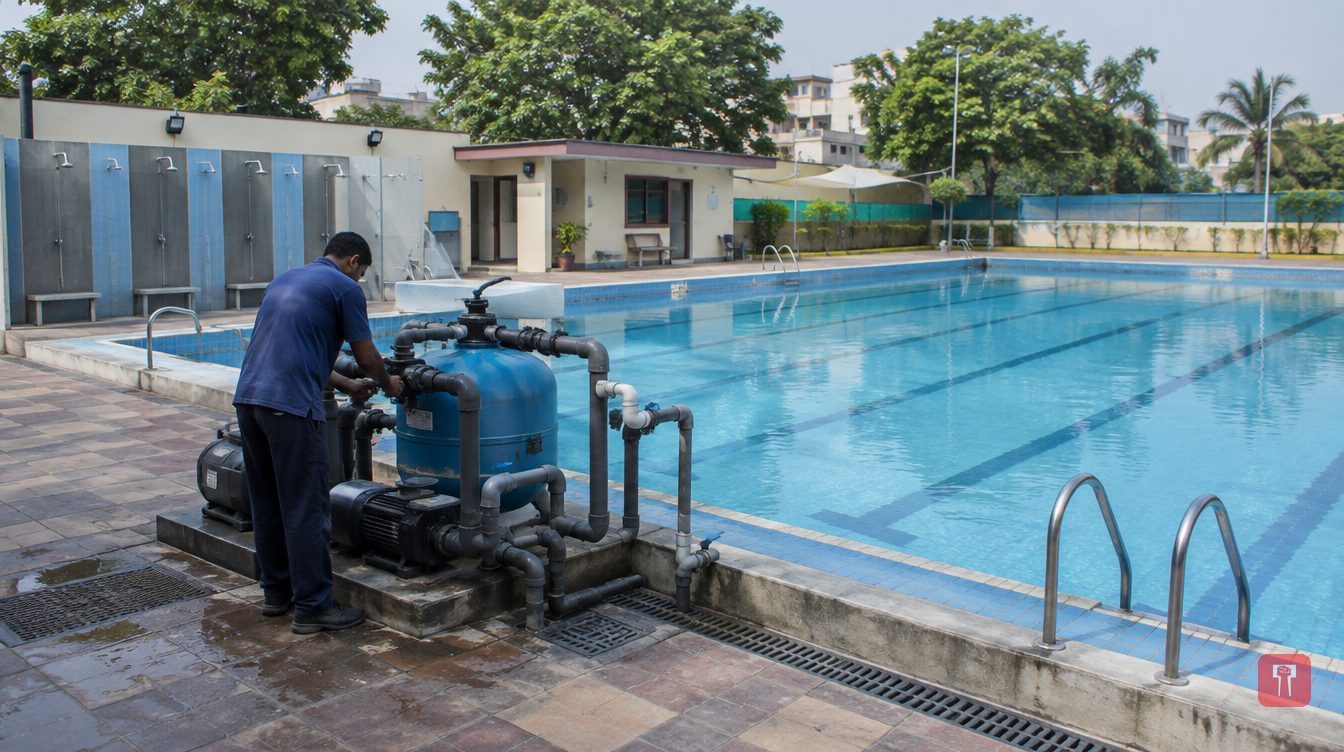 Images are not validated/verified
Swimming pool operators in Nagpur are anxious that they may be told to close as the city's water shortage grows more severe. Groundwater is receding, borewells have stopped working in places and restrictions have already been placed on borewell use. The administration has now begun to look at the city's pools, and many in the city are wondering whether these recreation spots will be shut.
The operators say they will follow whatever instructions come from the District Collector, the Nagpur Municipal Corporation (NMC) or the Nagpur Improvement Trust (NIT). What they object to is the idea that pools are a leading cause of water waste. No closure order has reached them so far, they say, and if one does, it will be obeyed.
The city's pools fall broadly into two groups. One group has its own well or borewell, or takes water from a source such as Ambazari, which is not used for drinking. The other group fills its tanks straight from the municipal supply. The administration is reportedly preparing to act on the basis of this difference, and operators believe it could shape any curbs on consumption. They argue that pools using non-drinking sources and modern recycling equipment should be treated separately from those drawing on the municipal drinking water network.
Prashant Ugemuge, managing director of Midland Sports and Wellness, which runs an NIT pool, said his facility is supplied from Ambazari. "The water in our pool and showers comes directly from Ambazari. It has nothing to do with the drinking water that reaches homes. People in Nagpur do not use Ambazari water for drinking," he said.
He also took on the belief that pools are drained and refilled again and again. "Once a pool is filled, the same water is filtered and lasts for months. The water that is lost is mainly what splashes out while swimming or is used in showers," he said. In his words, the popular picture is different: "People think we empty the pool every day and fill it with fresh water."
Ugemuge said the real issue lies in how people use water at home. "The real crisis is not the pools, it is our habits. We stand under the shower for 20 minutes and leave the tap running while shaving. Bathe with a bucket and keep the tap off, and a single household will save 100 litres of water a day," he said. He added that households can save a good deal by bathing with a bucket and keeping taps closed.
He also pressed for wider use of treated sewage water for jobs other than drinking, such as washing cars and watering gardens. This water is already used at some IT parks, he noted, and he asked: "Why not in every large building?"
Dr Jayprakash Duble, a former deputy director (sports) and an international swimming coach, runs the National Institute of Swimming on Manewada-Besa Road. He went further than Ugemuge and described pools as water savers. He said improved technology has sharply reduced wastage. "Earlier, a swimming pool had to be emptied every 15 days. Technology has changed now. Today's pools run on closed-loop systems, in which water is filtered, recycled and reused," he said.
Duble gave a comparison to make his case. "If 200 people bathe at home, the water for 200 baths goes down the drain. If the same 200 people use a pool, the water can be filtered and reused. If showers are used responsibly and the system is good, a pool can save more water than people bathing individually," he said. He added: "Think about it. If buckets and sensible use of showers are followed at the pool too, a pool saves more water than a home."
It remains unclear whether the administration will actually impose a restriction on pools, and for now operators are waiting for directions from the authorities. In their view, the larger task falls on every sector, from households to commercial establishments, to use water with more care. The question they raise is whether Nagpur can meet its water crisis through considered conservation and recycling, and by building a habit of keeping taps off, rather than through one uniform restriction on everyone.

Comments
No comments yet. Be the first.