

MG Windsor EV versus a family diesel SUV: running costs and daily use compared
 Images are not validated/verified
For families weighing the MG Windsor EV against a diesel SUV, fuel savings are large, but charging access, battery plans and travel habits decide the real gain.
Anyone who has bought a family car will remember standing at a petrol pump watching the meter climb. The question then is how much of the household budget goes into daily travel. And if an electric car is bought, will there really be savings, or will one expense simply replace another?
For families considering the MG Windsor EV, the answer does not rest only on electricity and diesel prices. It also depends on how far the car is driven each day, whether charging is available at home, where the family goes on weekends, how much luggage it carries and how comfortable the family is with planning long trips.
The Windsor EV is a different kind of vehicle from a conventional diesel SUV. It offers open space for five people, a flat floor, reclining rear seats and the convenience of electric driving. The question is whether it can meet the family's daily needs without having to rethink every journey.
The biggest difference in running cost is fuel. Take diesel at Rs 99.82 a litre and an SUV returning 14 km a litre: the cost works out to about Rs 7.13 a km. An EV that runs 7 km per kWh, with home electricity at Rs 8 a unit, costs about Rs 1.14 a km. Actual costs depend on location, fuel prices, electricity tariff, driving style and charging. Home charging offers the greatest benefit, while frequent public charging can reduce the savings.
The purchase price makes the calculation more complicated. The Windsor EV comes in variants with different batteries and features. The 38 kWh version has a claimed range of 332 km, while the Pro version's larger 52.9 kWh battery has a claimed MIDC range of 449 km. None of these figures should be taken as a guaranteed daily range.
Under Battery-as-a-Service (BaaS), the car's upfront price is lower because the battery is rented separately on a per-kilometre basis. This makes buying the car easier but changes the running-cost arithmetic. For example, on a BaaS plan of Rs 4.50 a km, 15,000 km comes to Rs 67,500 in battery rental, which is separate from the electricity cost. The car's upfront price is also payable.
So when comparing with a diesel SUV, it is not right to set the BaaS price directly against a conventional car at full price and assume the cheaper option will stay cheaper. Battery rental, electricity, finance and the period of ownership should all be added up. A better approach is to take two quotations, one with the battery included and the other under BaaS, if available. Then look at the total cost over three to five years based on your annual kilometres.
In terms of daily family needs, the cabin is a key strength for a family of four or five. The rear seats recline, and the large boot can hold shopping, school bags and weekend luggage. Depending on the variant, there are also ventilated front seats, connected technology and a panoramic-style glass roof. However, this is a five-seat crossover and not a substitute everywhere for a large seven-seat diesel SUV. If the current vehicle often carries seven people, has to tow, or is driven on rough village roads, the Windsor EV will not be an equal replacement.
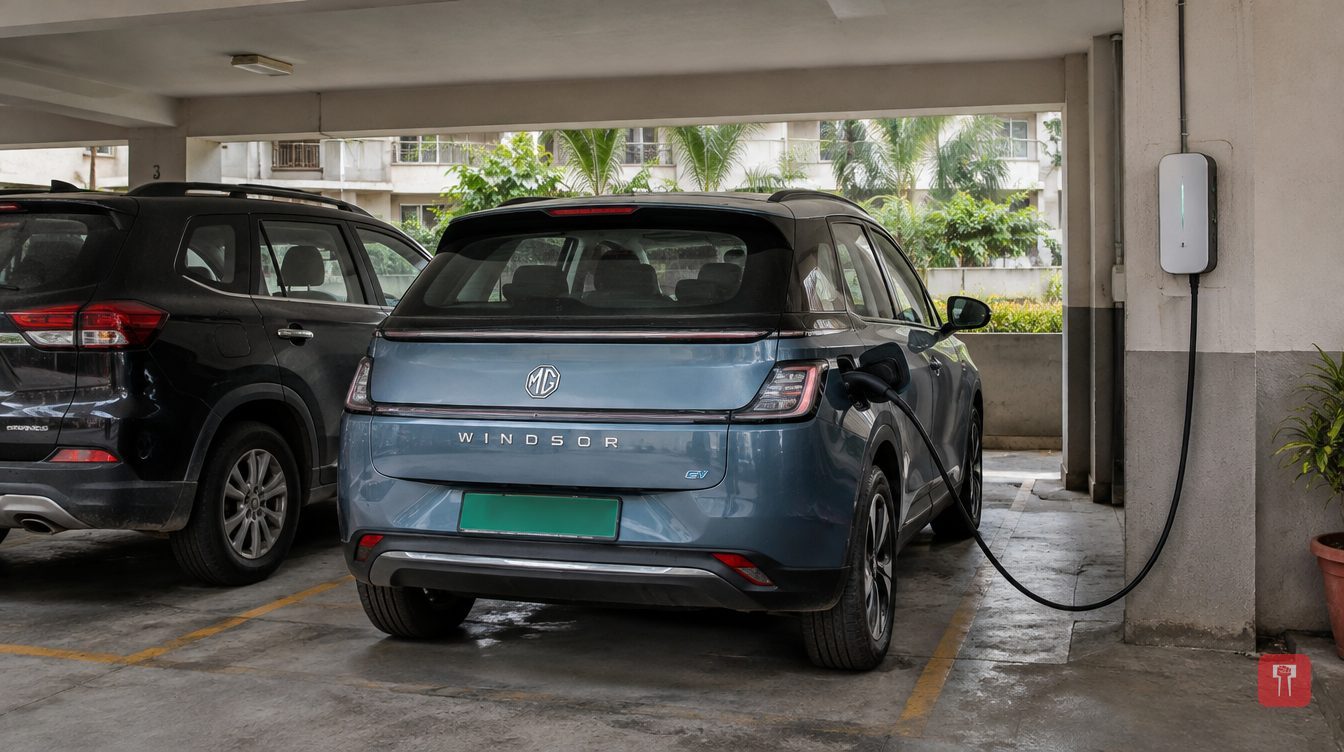
Charging is the biggest change. If you have your own parking and a charger can be installed at home, life is considerably easier, since there is no need to visit a petrol pump. The Windsor EV Pro version supports a 7.4 kW AC charger, and charging time depends on battery size and other conditions. DC fast charging is useful on long trips, but depends on the charger's speed and the condition of the battery.
Ask three questions before buying: Can you charge reliably at home or at the office? Are there dependable public chargers on the routes between your cities? And does the family often take long trips where stopping to charge would be a hassle? If the answer to the first two is yes, living with the car will be easier. For those who often travel long distances through areas with few chargers, a diesel SUV may remain more flexible.
Ownership cost does not count fuel alone. The price, loan interest, insurance, servicing, tyres, battery terms, charging equipment and resale value must also be added. Diesel SUVs and EVs may lose value at different rates. Routine powertrain servicing on an EV is generally lower, but it is not maintenance-free. Tyres, suspension, brakes and the AC need attention. Under BaaS, battery rental rises with distance driven, so someone driving 20,000 km a year will pay considerably more rent than someone driving 8,000 km.
In the end, for a family that drives mostly in the city, has a fixed daily distance and can charge at home, the Windsor EV is a strong option. For those who need to make long trips, want seven seats or must pass through places with little charging, replacing a diesel SUV will involve more compromises. The right car is not the one with the lowest theoretical running cost, but the one that fits the family's travel, budget and daily routine without creating new problems.
Reach readers on the ward they actually live in.
Advertise with Prime Time 24Reach readers on the ward they actually live in.
Advertise with Prime Time 24Reach readers on the ward they actually live in.
Advertise with Prime Time 24
Comments
No comments yet. Be the first.