

Why a lamp is kept burning at home for 10 days after a death, and what the marks in the flour mean
The practice is rooted in scripture, not superstition, and the shape under the lamp says nothing about rebirth, the explanation says.
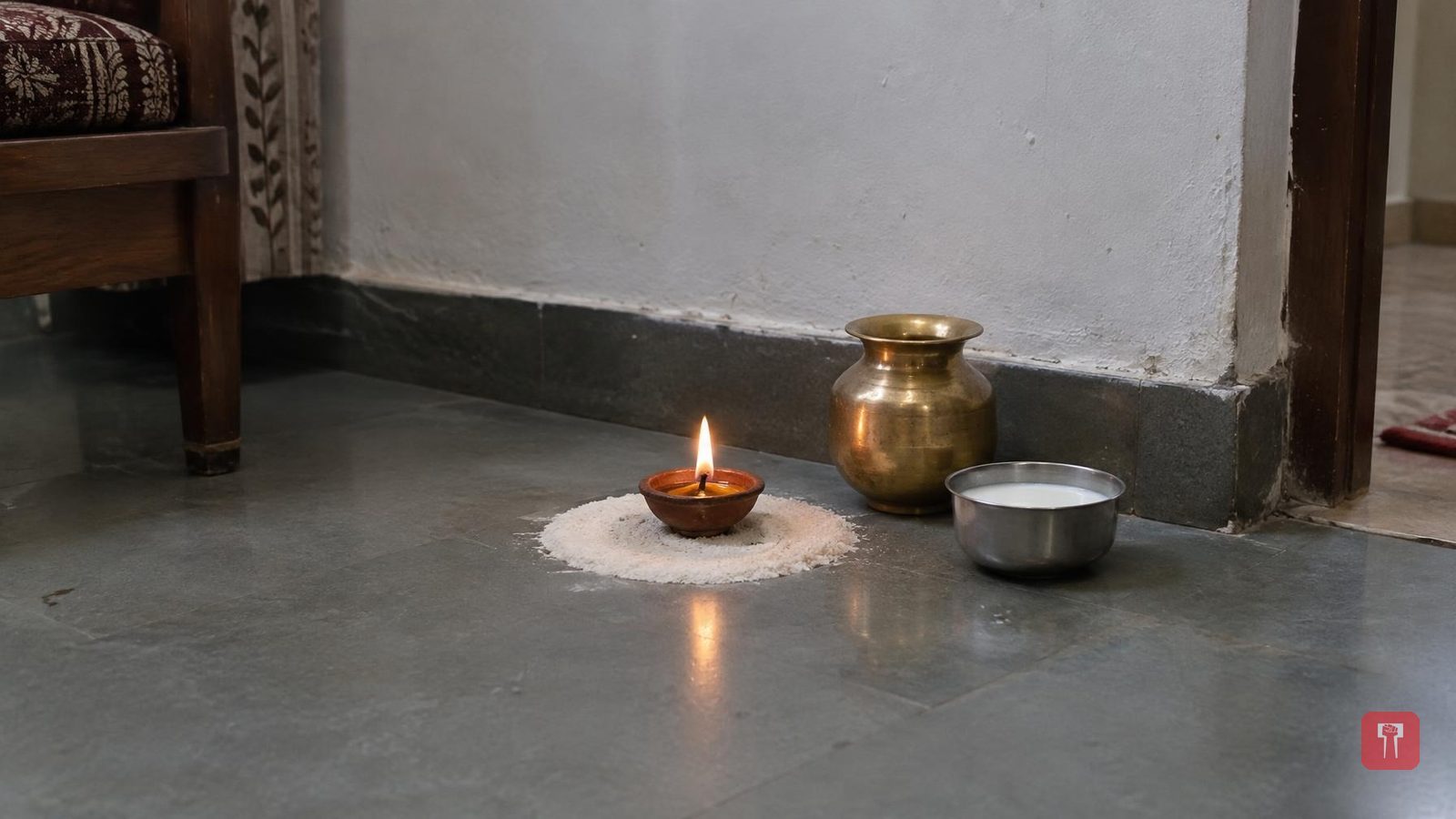
In Hinduism, a reason is given for every rite from birth to death. Rites begin even before a person is born, and after death the person is seen off with respect. It is believed that the soul never dies and only the body changes. For this reason, certain rites are performed even after someone has passed away. One of them is keeping a lamp burning continuously at home for 10 days.
The practice is followed in many homes, but many people do not know why. It is said that behind it lies not blind faith but a substantial body of scripture.
The scriptures say that when a person dies, the soul enters the flame of the lamp that is waved before the person at the last moment. That lamp is therefore regarded as the form of the departed person. Just as a deity is placed on a heap of rice during worship, a circle of flour or grain is made at a spot in the house and the lamp is placed on it. This lamp is never allowed to go out and is kept burning continuously.
On the first day, only a pot of water is kept near the lamp. From the second day, a small rice ball or a bowl of milk is placed there at mealtime every day. This is not done without reason. After leaving the body, the soul sets out on a journey, and this is the shidori, or food for the road, so that the soul does not go hungry and gains strength on the way.
It is said that after a person departs, the soul does not immediately get another body. The pind offerings made every day during the first 10 days form the parts of its subtle body. This is called avayav shraddha. On the 10th day the body is complete, and the lamp is then taken to a river and immersed. The soul then sets out on its next journey.
The biggest misunderstanding concerns the marks on the flour and the cycle of birth. When the lamp is lifted on the 10th day, a shape appears on the flour beneath. Some say that if a human footprint forms, the person will be reborn as a human, and if a bird's claw forms, as a bird. But this is entirely wrong. In fact, the base of the lamp is rough. Being left in one place for 10 days, it presses down and lines appear on the flour. This has nothing to do with the soul. There is no need to be afraid, because deciding the next birth is not so easy.
Often the lamp goes out because of wind or because the oil runs out, and the family panics, fearing a bad omen. The scriptures say nothing of the kind. If the lamp goes out, it should be cleaned at once and relit, and no fault attaches. If the death occurred in another village or city, or keeping the lamp for 10 days is not possible, lighting it for just one day is also acceptable.
The scriptures exist not to cause people distress but so that the departed soul may find peace. The rite should therefore not be viewed with fear. It is a sattvik way of showing the departed a light and giving strength for the next journey.
