

Maharashtra targets 30 lakh homes in Mumbai and MMR over 15-20 years, with focus on redevelopment
The state plans about 30 lakh homes in Mumbai and the Mumbai Metropolitan Region, putting redevelopment at the centre of its housing policy, Deputy CM Eknath Shinde said.
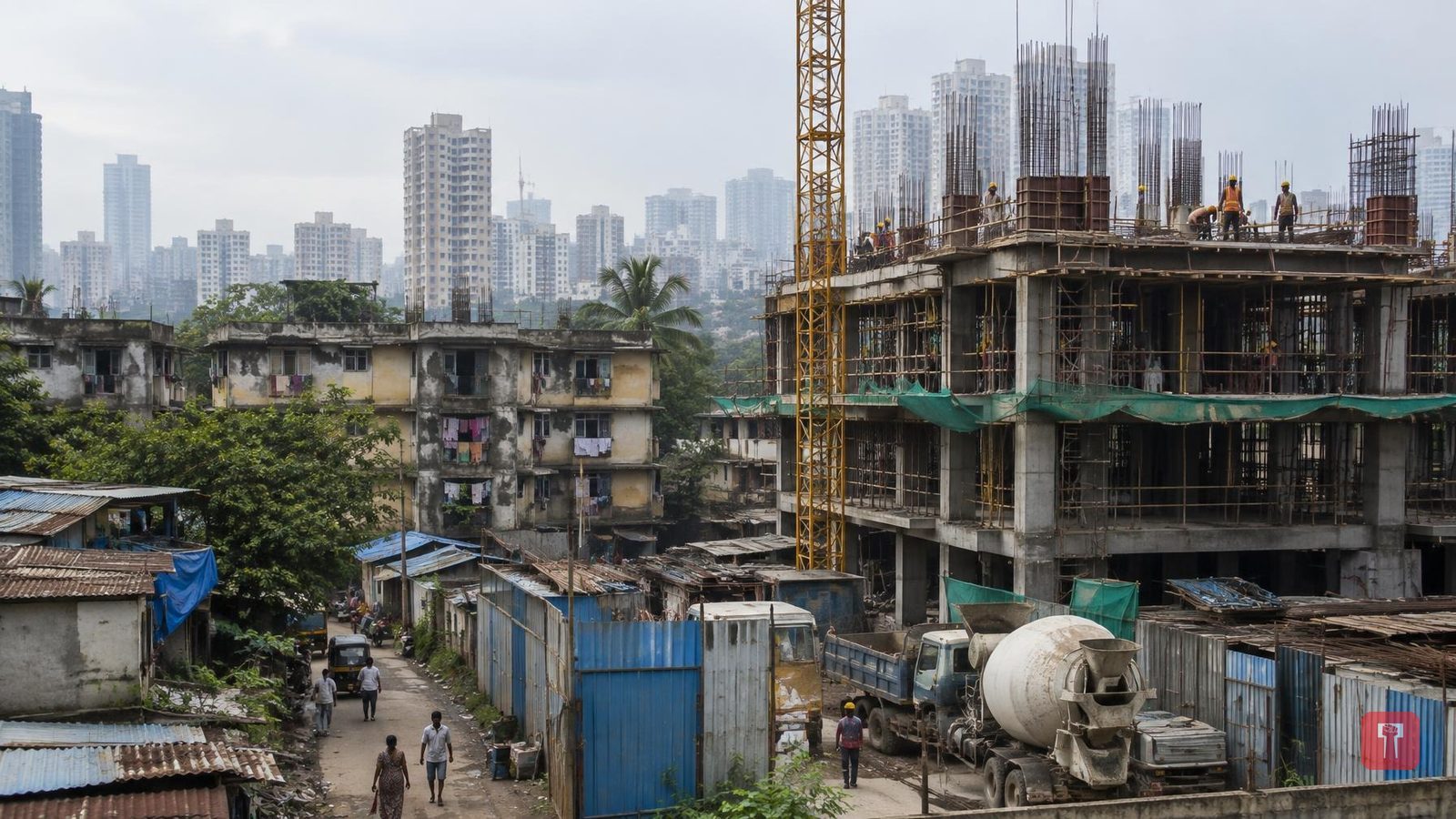
The Maharashtra government has drawn up an ambitious plan to build about 30 lakh homes in Mumbai and the Mumbai Metropolitan Region (MMR) over the next 15-20 years. Redevelopment has thus moved to the centre of the region's future housing policy. Maharashtra Deputy Chief Minister Eknath Shinde announced the target recently. He also spoke of plans to expand cluster redevelopment in Mumbai and the MMR.
Redevelopment is fast becoming an important source of residential housing supply in Mumbai. According to a recent JLL-NAREDCO report, more than 1,000 redevelopment projects have started in Mumbai since 2020. They account for about 13% of the city's total residential supply. Redevelopment's share in home sales has also risen sharply, indicating its growing importance in Mumbai's residential market.
The western suburbs have a particularly large share in this shift. About 36% of the redevelopment projects launched since 2020 are in Borivali, Malad, Andheri and Goregaon. Redevelopment activity appears heavily concentrated in older residential areas where land is increasingly scarce.
Arshad Lashkaria, CEO and Managing Director of the Lashkaria Group, said: "Making effective use of existing urban land capacity is increasingly necessary for housing growth in Mumbai. If redevelopment is carried out with proper planning, transparency and a focus on the rehabilitation of residents, it can improve the quality of the existing urban fabric as well as create new homes. Achieving the target of 30 lakh homes will require coordination among the government, developers, housing societies and local communities. Effective implementation and timely completion of projects will also be decisive for the success of this target."
The opportunity is especially large in the SRA area. According to the JLL-NAREDCO report, Mumbai currently has 1,202 active slum rehabilitation projects. They cover more than 3.2 lakh slum dwellings over about 2,156 acres. This shows the potential scale of redevelopment in a city like Mumbai, where open land for large-scale housing is limited.
However, merely approving projects will not be enough to reach the target of 30 lakh homes. Project execution, financing, regulatory approvals, rehabilitation arrangements and supporting infrastructure will be equally important. Cluster redevelopment could make it possible to plan scattered plots and old colonies at the level of a larger area. This could lead to more integrated residential communities.
An industry expert said: "Cluster redevelopment can be a game-changing factor for Mumbai, because it allows infrastructure, open spaces and residential development to be planned together rather than plot by plot. However, it will be important to create a framework that gives developers the necessary clarity and certainty while ensuring existing residents get timely rehabilitation and long-term value from the redevelopment process."
Developers will face the major challenge of balancing the interests of existing residents, financially viable projects and the supply of additional homes. For residents, the success of redevelopment will depend on the quality and timeliness of rehabilitation. The quality of amenities and infrastructure that come with the new homes will also matter.
The target of 30 lakh homes is therefore not merely a construction challenge for the MMR. It is a test of whether redevelopment can move beyond standalone projects and become a large-scale, well-planned process of urban renewal. The process is expected to produce not just more homes but also safer buildings, better amenities and better-connected residential areas.
