

Maharashtra sets aside Rs 500 crore for compressed biogas projects to turn waste into clean fuel
The state has earmarked Rs 500 crore for 2026-27 to promote clean fuel and organic manure from urban waste and agricultural residue, an official said.
 Images are not validated/verified
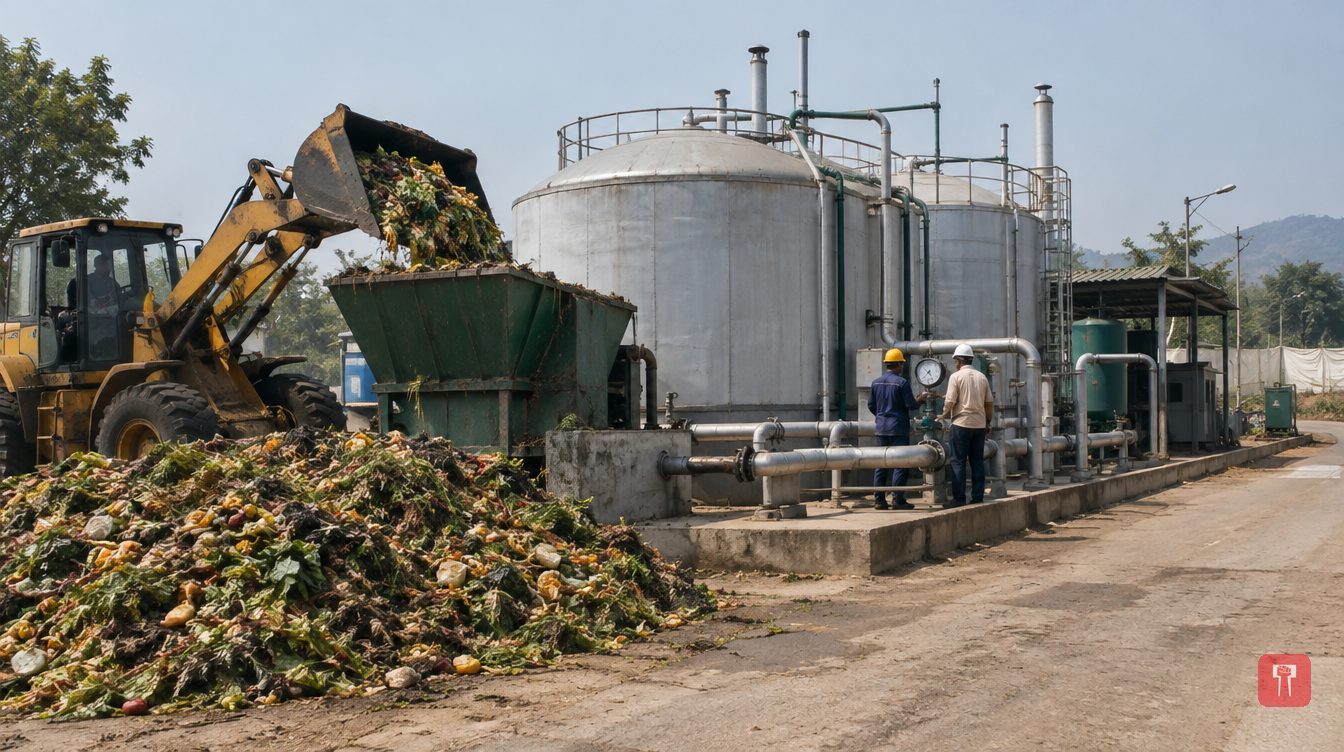
To promote the production of clean fuel and organic manure from urban waste and agricultural residue, the state government has earmarked Rs 500 crore for compressed biogas (CBG) projects in the financial year 2026-27. Viability gap funding of up to Rs 75 lakh will be available for each tonne per day of project capacity, subject to a maximum of Rs 15 crore for a single project. Aniruddha Jevlikar, Deputy Secretary in the Urban Development Department, gave the details. He said the policy would raise the economic value of waste and boost private investment and job creation.
The Union Ministry of Petroleum and Natural Gas, in collaboration with Bharat Petroleum Corporation, held a state-level workshop at the Taj President hotel in Mumbai. Its subjects were the Gobardhan scheme, the Model State Compressed Biogas Policy and SASCI 2026-27. Jevlikar made a presentation there and explained the state government's policy.
The state has 29 municipal corporations, 248 municipal councils and 147 nagar panchayats. In the areas of these 424 urban local bodies in all, 24,859 tonnes of waste is generated every day, of which 13,673 tonnes is wet waste and 11,186 tonnes is dry waste. Jevlikar said CBG would be produced from this waste along with agricultural residue, livestock dung, waste from agricultural produce market committees, sugar industry by-products and biomass.
The minimum capacity of a CBG project will be 20 tonnes a day. Greenfield and brownfield projects can be set up through public-private partnership or the hybrid annuity model. Cluster-based projects will also be encouraged for smaller cities. Land can be provided at the rate of one acre per tonne per day of capacity, with a minimum of one acre and a maximum of 20 acres. The lease on the land will be charged at 0.7 per cent of the ready reckoner rate, rising by five per cent every three years. Jevlikar said that once a project starts, there is a provision for a 2.5 per cent refund of state GST, a tipping fee, and water and electricity facilities.
He said biomass will be collected through farmer producer organisations and women's self-help groups. Long-term supply agreements with agricultural produce market committees, goshalas and sugar mills will be made to ensure raw material is available.
Under the Centre's SASCI (Special Assistance to States for Capital Investment) scheme, Rs 1,300 crore is provided for state CBG policy alignment, Rs 500 crore for the readiness index and Rs 1,200 crore for financial co-financing. Maharashtra is placed in Category 'A', so it can receive up to Rs 100 crore for policy alignment. If it ranks among the top three states in the readiness index, it can receive Rs 75 crore, and up to Rs 200 crore for financial co-financing. This assistance is available on a first-come, first-served basis.
District Bio-CBG coordination committees chaired by district collectors will oversee implementation of the policy. An executive committee under the Urban Development Department and a state-level steering committee chaired by the Chief Secretary will work alongside them. Land allotment, project approvals, coordination between departments and progress reviews will be handled through these bodies.
Eligibility under SASCI requires a single-window portal, time-bound approvals, a grievance redressal system and raw material planning. Maharashtra is expected to launch the single-window portal and a two-tier grievance redressal system, register raw material collectors and begin land allotment before December 1, 2026. Jevlikar said in his presentation that the policy would promote scientific waste management, clean fuel and organic manure production, private investment and job creation, and strengthen the state's circular economy.

Comments
No comments yet. Be the first.