

Kojagiri Purnima on October 25: why kheer is kept in moonlight
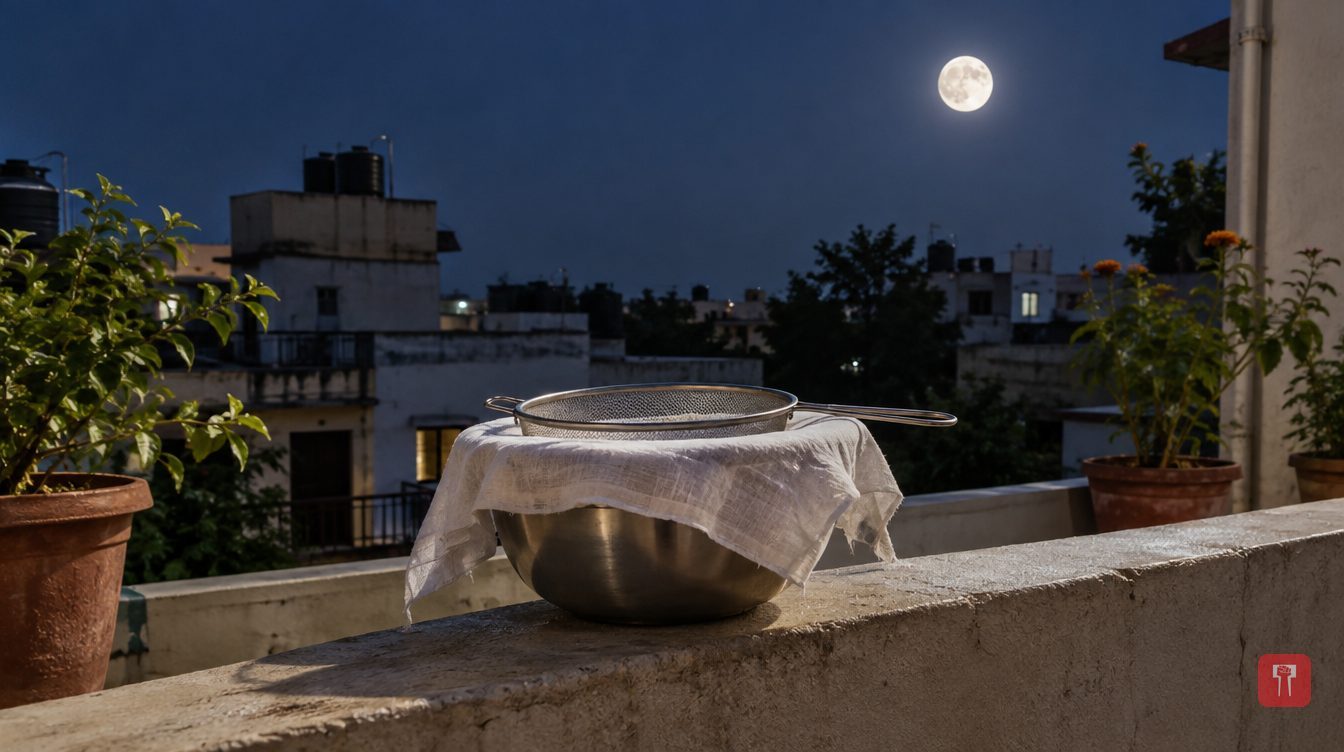
Kojagiri Purnima, also called Sharad Purnima, falls on Sunday, October 25, and devotees traditionally leave kheer out in the moonlight that night.
 Images are not validated/verified
Kojagiri Purnima falls this year on Sunday, October 25. It is also called Sharad Purnima. The day holds special importance in Hinduism, and according to religious belief the night is considered highly meritorious.
It is said that the moon is full on the night of Purnima. For this reason, keeping kheer under the open sky on this day is considered especially significant. The reasons and traditions behind offering kheer to the moon are of interest.
According to astrologer Pinaki Mishra, the tradition of keeping kheer in the moonlight on the night of Kojagiri Purnima has been followed for centuries. Popular belief holds that the nectar-like rays of the moon give the kheer special qualities that night. The kheer should therefore be left in the moonlight overnight and eaten the next morning as prasad after bathing.
According to Mishra, in Indian religious tradition the moon is seen as a symbol of coolness, the mind and nectar. In mythological belief, the moon's rays are like nectar. On the night of Kojagiri Purnima the moon is said to be complete in all its sixteen phases, and for this reason it showers nectar through its rays.
According to religious belief, Lord Krishna performed the Maharas with the gopikas in Vrindavan on the night of Kojagiri Purnima. The night is therefore regarded as a symbol of devotion and love. In many Vaishnava traditions the day is marked with special worship and bhajans.
On the other hand, there is no solid scientific evidence for keeping kheer in moonlight. Moonlight is a form of sunlight, and there is no proof that leaving kheer in it gives it any special medicinal property or nectar. The temperature of the kheer does drop when it is kept out on a cool night.
Leaving milk-based kheer in the open overnight can also be harmful to health, as dust, insects and microbes can get into it. Take special care, and cover the kheer with a light cloth and a sieve so that dust and other dirt do not get in.
Information of this kind on subjects such as religion, astrology, Vastu and Feng Shui is meant only for readers' information. Experts should be consulted before trying any related practice.

Comments
No comments yet. Be the first.