

Kojagiri Purnima: Lakshmi worship, the tale of Brahmin Valit and the mantras for the night
The full-moon night of the Ashwin month, marked with Lakshmi puja, a night vigil and moon-gazing, carries special religious significance in Hindu tradition.
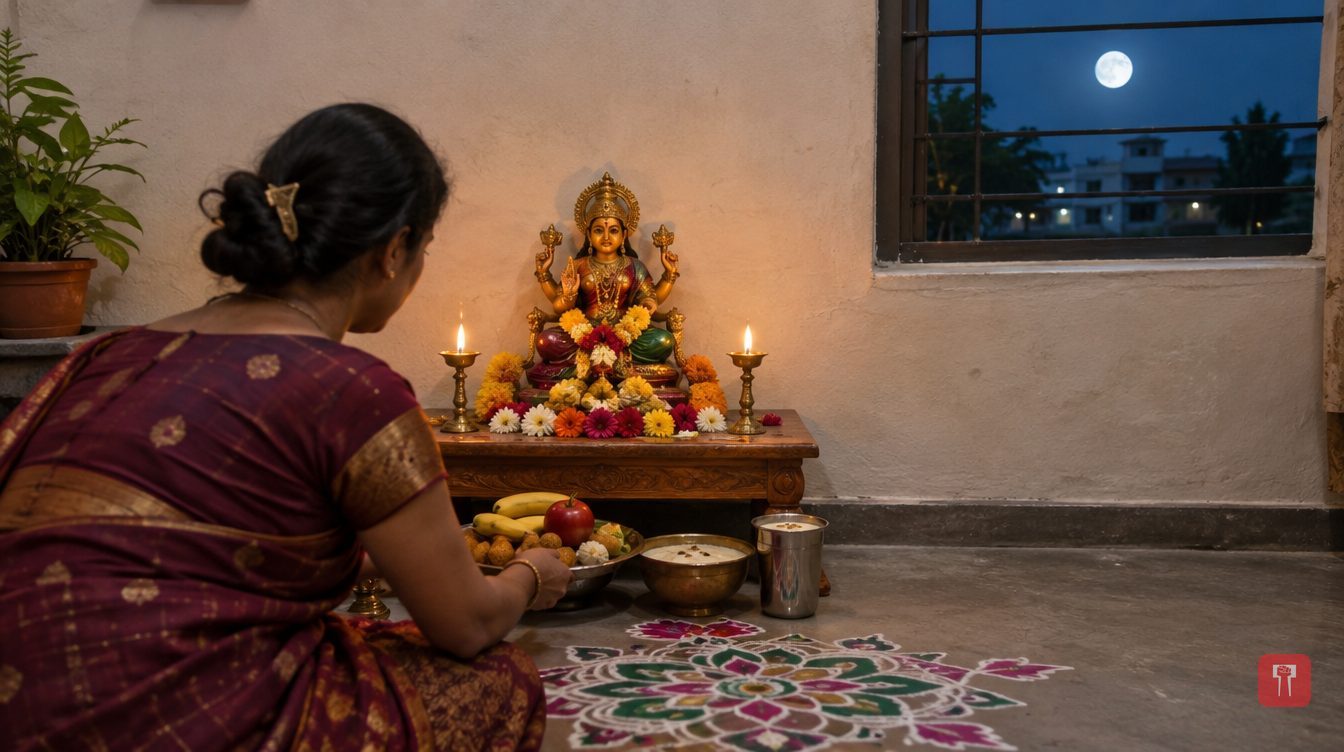 Images are not validated/verified
In Hinduism, the full-moon day of the Ashwin month holds special religious and spiritual importance. This full moon is called Kojagiri Purnima. As the monsoon ends and autumn begins, the full moon spreads its cool light across the sky. The moonlit night is considered to bring calm and freshness to the mind.
It is believed that on this night Goddess Lakshmi walks the earth to see who is awake. The name "Kojagiri" is said to come from the words "Ko jagarti?", meaning "Who is awake?"
The day is marked by worship of Goddess Lakshmi, a night-long vigil, chanting of mantras and sighting the moon. In some places Lakshmi and Kubera are worshipped together. In some places milk is offered to the moon and spiced milk is drunk as prasad. Devotees believe that remembering the goddess with a sincere heart on this night keeps happiness, peace, prosperity and abundance in the home.
According to the vrat katha, a Brahmin named Valit lived in the country of Magadha in ancient times. He was cultured, religious and of good conduct, but very poor. Poverty brought him many hardships. His wife constantly taunted and insulted him over their circumstances, and Valit became deeply distressed.
One day, fed up with his wife's behaviour, he left home and went towards the forest. As he wandered in the forest, the night of Ashwin Purnima arrived. Some Naga maidens were observing the Kojagiri vrat at the time. They included Valit in the worship and asked him to stay awake through the night.
Valit worshipped Goddess Lakshmi wholeheartedly and spent the night awake, remembering the goddess. Pleased with his devotion, Lakshmi blessed him and his poverty ended. The vrat katha says he received wealth, grain and abundance. After some time he returned home. Seeing his changed circumstances, his wife's behaviour changed too, and happiness and peace came into their lives.
The story underlines the importance of faith, devotion, restraint and good conduct. The Kojagiri vrat is not only for gaining money. It inspires people to drive out negativity from the mind and enrich life with good thoughts.
In Hindu tradition, Goddess Lakshmi is regarded as the goddess of wealth, grain, prosperity, good fortune and abundance. Worship of Lakshmi on the night of Kojagiri is believed to create an auspicious atmosphere in the home. While worshipping, one should not ask only for wealth, but also pray for wisdom, contentment and righteous conduct.
The puja can be performed simply at home. The method may vary with the family's tradition and local custom. Kubera is regarded in Hindu tradition as the lord of wealth, so some families worship him along with Lakshmi on this night. The prayer is for honesty in money, business and dealings, for wealth to be used well, and for contentment in the family.
Goddess Lakshmi should be offered fruit, kheer, milk, sweets or bhog prepared according to one's own tradition. Then the aarti of Lakshmi should be performed. The whole family should sit together and remember the goddess, and read the vrat katha of Brahmin Valit or the commonly recited Kojagiri vrat katha.
Sighting the moon on this night has special significance. When the moon is visible, one should offer prayers and give arghya according to one's tradition. In some places it is customary to keep milk, spiced milk or kheer in the moonlight and then take it as prasad. During the night vigil, one can recite Lakshmi's name, chant mantras, read stotras, sing bhajans and read religious stories.
The Mahalakshmi mantra is: "Om Shreem Mahalakshmyai Namah." It is a commonly chanted mantra in homage to Goddess Lakshmi. It should be chanted calmly and with concentration during the puja.
The Lakshmi beej mantra is: "Om Shreem Hreem Shreem Mahalakshmyai Namah." It is a commonly chanted mantra in Lakshmi worship and can be chanted according to one's faith.
The Lakshmi Gayatri mantra is: "Om Mahalakshmyai cha vidmahe. Vishnupatnyai cha dhimahi. Tanno Lakshmih prachodayat." With this mantra, devotees meditate on Mahalakshmi and seek wisdom and inspiration to progress by the right path.
The Lakshmi prayer is: "Namastestu mahamaye shripeethe surapujite. Shankhachakragadahaste Mahalakshmi namostute." In it, devotees bow to Mahalakshmi and seek her blessings.
The Kubera mantra is: "Om Yakshaya Kuberaya Vaishravanaya Dhanadhanyadhipataye. Dhanadhanyasamriddhim me dehi dapaya svaha." With this mantra, devotees pray to Kubera for wealth, grain and prosperity. While worshipping Kubera, one should resolve that wealth will be used not only for one's own comfort but also for the family's welfare, helping the needy and the good of society.
Information on subjects such as religion, astrology, Vastu and Feng Shui is meant only for readers' information. Advice from an expert should be taken before trying any practice related to them.

Comments
No comments yet. Be the first.