

Kavach makes trains safer, but passengers' belongings are not; RPF has just one IPS officer
Accidents have fallen sharply after Kavach, yet theft and stone-pelting persist while the entire Railway Protection Force rests on a single IPS officer.
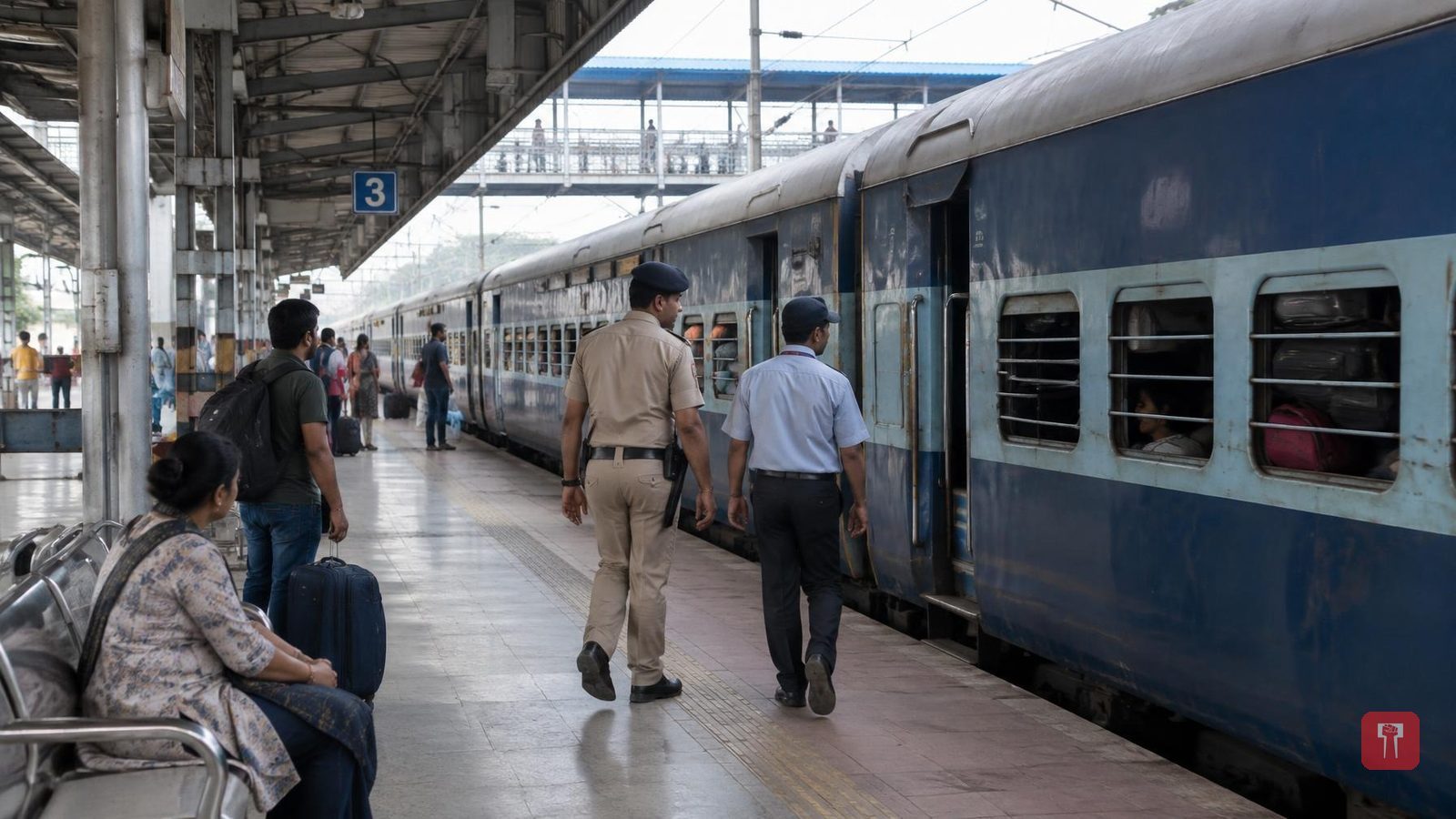
Indian Railways has grown faster. The era of diesel-electric engines and ICF coaches has been left behind, and Vande Bharat intercity and sleeper trains now run. After modern technology such as Kavach was installed to prevent accidents, the number of accidents fell from hundreds to single digits. Safety has thus improved, but questions remain over security of passengers and railway property.
Passengers' mobile phones, valuables and parcels are stolen in trains every day. Cases such as stone-pelting on trains are also rising sharply. The emphasis Railways places on security compared with safety can be gauged from the fact that the entire Railway Protection Force (RPF) still depends on just one IPS officer.
The graph of theft and other crimes in railway premises and moving trains is raising concern. At Nagpur station alone, thefts of more than Rs 25 lakh, including mobile phones, jewellery and cash, are recorded in a month. If that is the position at one station, one can estimate how many hundreds of crores of rupees' worth of passengers' belongings reach criminals in a year across the network spread over 18 zones and 68 divisions.
This is the biggest contradiction in the system. The police in Nagpur city, with a population of about 40 lakh, have more than 12 IPS officers. On the other hand, the top leadership of the RPF, which handles more than 25,000 trains a day across the country and crores of passengers, rests with a single IPS officer as Director General.
There was a time when IPS officers were posted as Inspector General (IG) at zonal level in the RPF so that criminals on the railways could be dealt with firmly. After policy changes this arrangement gradually ended and now exists only up to the DG level.
In the figures, Maharashtra and Delhi-NCR lead in cases of theft of passengers' property (mobile phones, bags, jewellery). Of more than 20,000 FIRs registered with the Maharashtra GRP, 40 per cent are theft cases. Across the country the share is 75 to 80 per cent. Murders on trains and at stations account for about 0.8 to 1 per cent of all violent crimes recorded in India.
According to the National Crime Records Bureau (NCRB), 215 murders were recorded in railway premises in 2021, 247 in 2022 and 230 to 250 (estimated) in 2023. Around 20,000 to 22,000 accidental deaths from falling on tracks or being hit by trains are also recorded in the railways every year.
The question now is what having IPS officers would achieve. In the railways, law and order rests with the GRP and protection of property with the RPF. Having Indian Police Service officers at zonal IG and DSC level would build better coordination with state SPs, DIGs and DGPs. Real-time sharing of information with the state police's intelligence network and the ATS would also become easier.
IPS officers trained in the Bharatiya Nagarik Suraksha Sanhita and forensic investigation could act effectively against interstate gangs involved in organised theft, drugging of passengers, human trafficking and drugs on trains. IPS officers from outside cadres, free of indirect pressure from local railway divisions (operating and commercial departments), could take decisions with neutrality and firmness. The experience of IPS officers in anti-terror operations, VIP security and the use of modern technology such as AI and CCTV would take security to a global level.
