

Kaul tells Supreme Court Shiv Sena's party constitution lacked internal democracy
Senior lawyer Neeraj Kishan Kaul, citing Election Commission observations, argued that the Shiv Sena chief held sweeping powers and that the party's national executive was opaque.
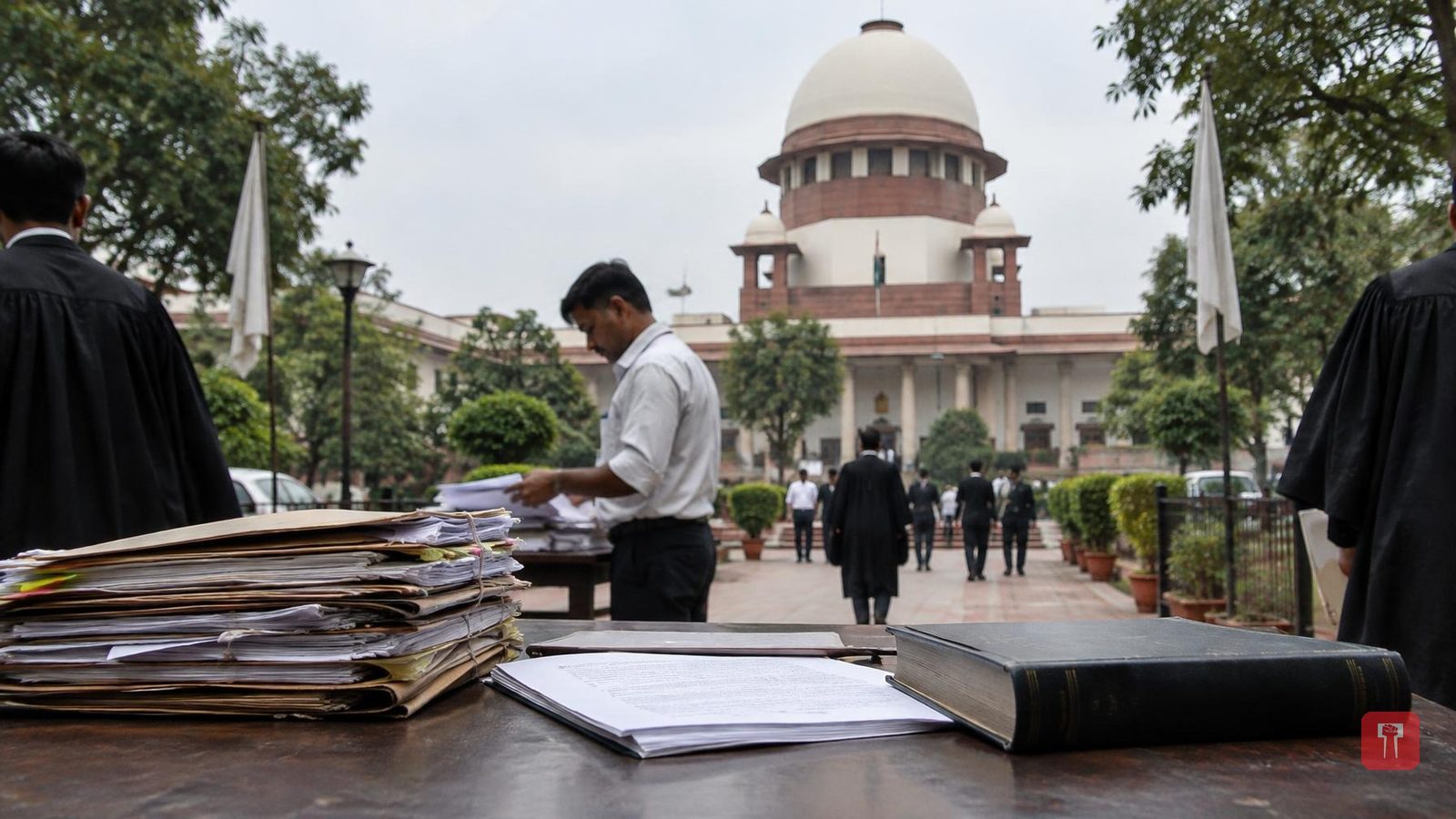 Images are not validated/verified
Internal party democracy and the party constitution were at the centre of a heated debate in the Supreme Court hearing on the Shiv Sena party and its bow-and-arrow symbol. Lawyer Neeraj Kishan Kaul, citing observations recorded by the Election Commission, questioned the party's structure and the way it takes decisions.
According to Kaul, the Shiv Sena was told by letter as far back as 1998 that appointments in the party were not being made according to democratic principles. The Shiv Sena had also replied. Kaul said the Election Commission had made clear that every political party must decide how it functions and write that down in its party constitution.
Referring to the Commission's observations after the split in the Shiv Sena, Kaul raised the question of the powers of the party chief. He said that, going by the way the party functioned and appointed office-bearers, the party chief had been given wide powers. Kaul said the Commission had also recorded that the party chief and the party had become two sides of the same coin.
The court was also told that, under the 2018 party constitution, the power to appoint various office-bearers rests with the party chief alone. This raised the question of how much role the other office-bearers and workers had in the party's decisions.
Kaul also drew the court's attention to the composition of the Shiv Sena's national executive. He said members of the executive have to inform the party chief about the party's day-to-day functioning. The members of the national executive are chosen by the members of the Pratinidhi Sabha. A question was put as to whether this arrangement is sound from the point of view of democracy within the party.
According to Kaul, the 2018 party constitution provides for 13 members of the national executive. But it was claimed that the last correspondence named only nine members. Kaul said that in a party with lakhs of workers, so small a national executive and the lack of clear information about it is a question of transparency, and that this is what emerged from the Election Commission's observations.
The question of documents relating to the party constitution was also significant in the hearing. Kaul said the very constitution on which the party's structure and manner of functioning are based was not available with the Election Commission. As a result, the decision-making process was limited. It was also asked why correct information about the national executive had not been provided.
Neeraj Kishan Kaul argued in the Supreme Court that, after considering all this, the Election Commission decided the matter on the basis of the majority in the legislature party. The question of democracy within the party has thus again come to the fore in the dispute over the Shiv Sena party and the bow-and-arrow symbol.
