

Supreme Court declines interim suspension of Chief Election Commissioner Gyanesh Kumar, seeks EC reply
The court said suspension cannot be ordered on media reports and issued notice on allegations that about 14 SIR decisions were taken without the other two commissioners' consent.
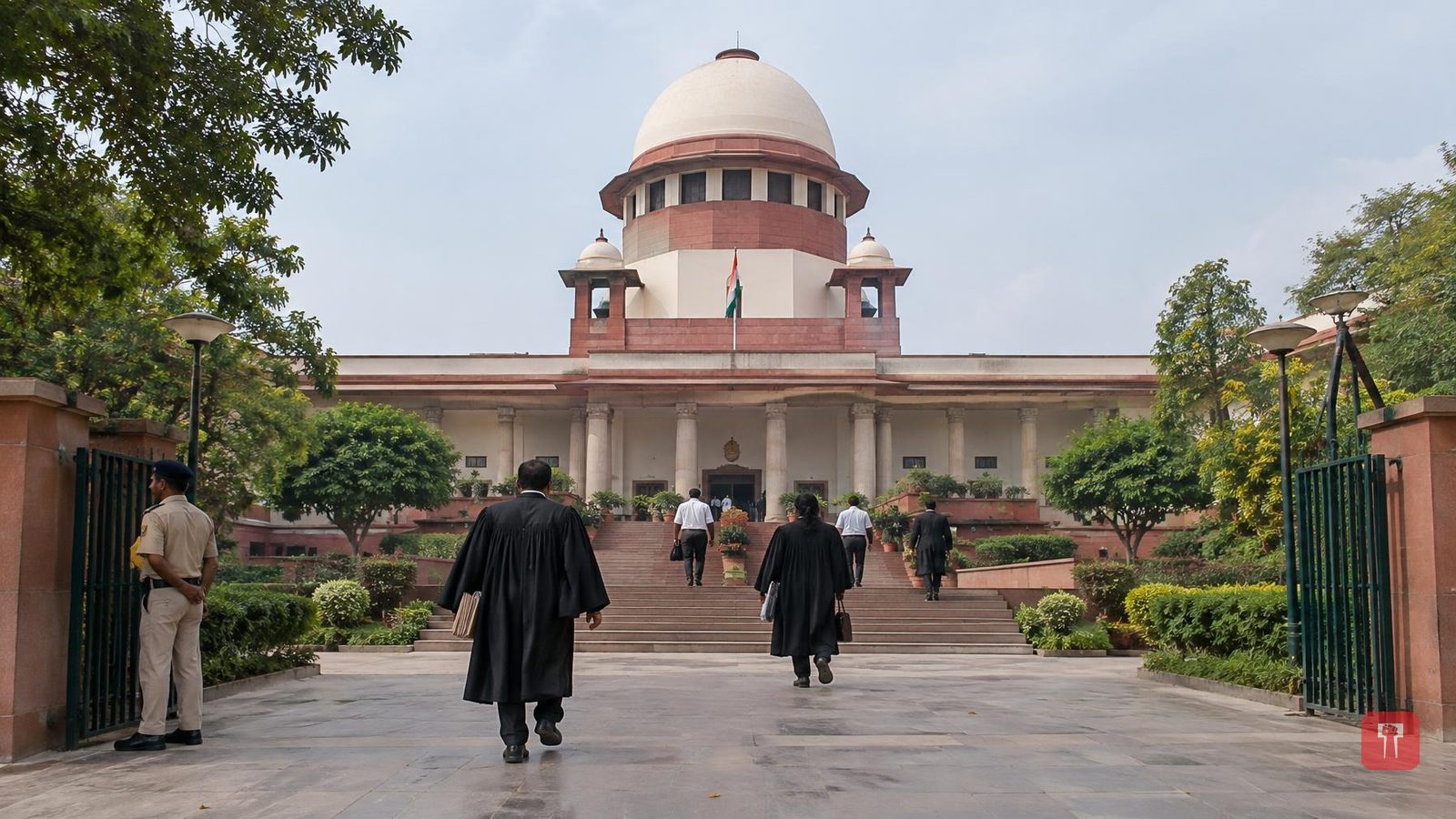
The Supreme Court has declined to pass an interim order on a petition against Chief Election Commissioner Gyanesh Kumar. The court said clearly that suspension cannot be ordered on the basis of media reports. The petition alleges that Kumar took about 14 decisions related to the SIR without the consent of the other two Election Commissioners.
At today's hearing, the court passed no order but sought the Election Commission's response to the allegations. It also said that if it is found that the decisions were taken without consent, they can be set aside.
The bench of Chief Justice of India Surya Kant, Justice Joymalya Bagchi and Justice V. Mohana heard the case. It issued notice to the Centre, the Election Commission, Chief Election Commissioner Gyanesh Kumar, Election Commissioners Dr Sukhbir Singh Sandhu and Dr Vivek Joshi, Deputy Election Commissioner Manish Garg and DG (IT) Seema Khanna.
The petitioners sought an interim order suspending the Chief Election Commissioner immediately. Senior advocate Vikas Singh said: "We are facing a grave situation. It could shake the foundations of our democracy. Earlier there was a special respect for the Election Commission. But today the Chief Election Commissioner is acting in complete violation of legal provisions. ... An interim order is necessary, otherwise the whole country will be burnt to ashes." Singh voiced this apprehension.
Chief Justice Surya Kant said the Supreme Court had not approved any modified form of Form 6, used to add names to the electoral roll during the SIR.
The bench asked who would run the Election Commission and conduct elections if the Chief Election Commissioner were suspended. It also said the parties' responses must be taken before any order is passed.
The court's expectation is that the law is binding and must be followed. If a violation of the law is found, the court can set aside the decision concerned.
Justice Joymalya Bagchi also asked whether such an order could be passed without hearing the respondents. He said that if the record showed a decision had not been taken unanimously, the court could stay it and declare it ultra vires. In his view, it would not be right to reach a conclusion without hearing the respondents merely on the ground that all the decisions were taken unilaterally.
The court was hearing petitions against the Election Commission over the Special Intensive Revision (SIR) of electoral rolls. The petition argued that the Election Commission is a multi-member constitutional body, yet it is exercising its powers without following the collective decision-making process the law requires.
Election Commissioners Sukhbir Singh Sandhu and Vivek Joshi had recorded formal objections at least 14 times over 10 months to decisions on electoral rolls, voter registration and the Commission's technology systems. The controversy arose after this.
This story has published but the live thread has not started. Updates appear here the moment the desk files one.
