

Journalists' union demands scientific testing of effluent over Patalganga river pollution
The Maharashtra State Journalists' Association wants effluent samples tested and the results made public, saying the final action on polluting units remains unclear.
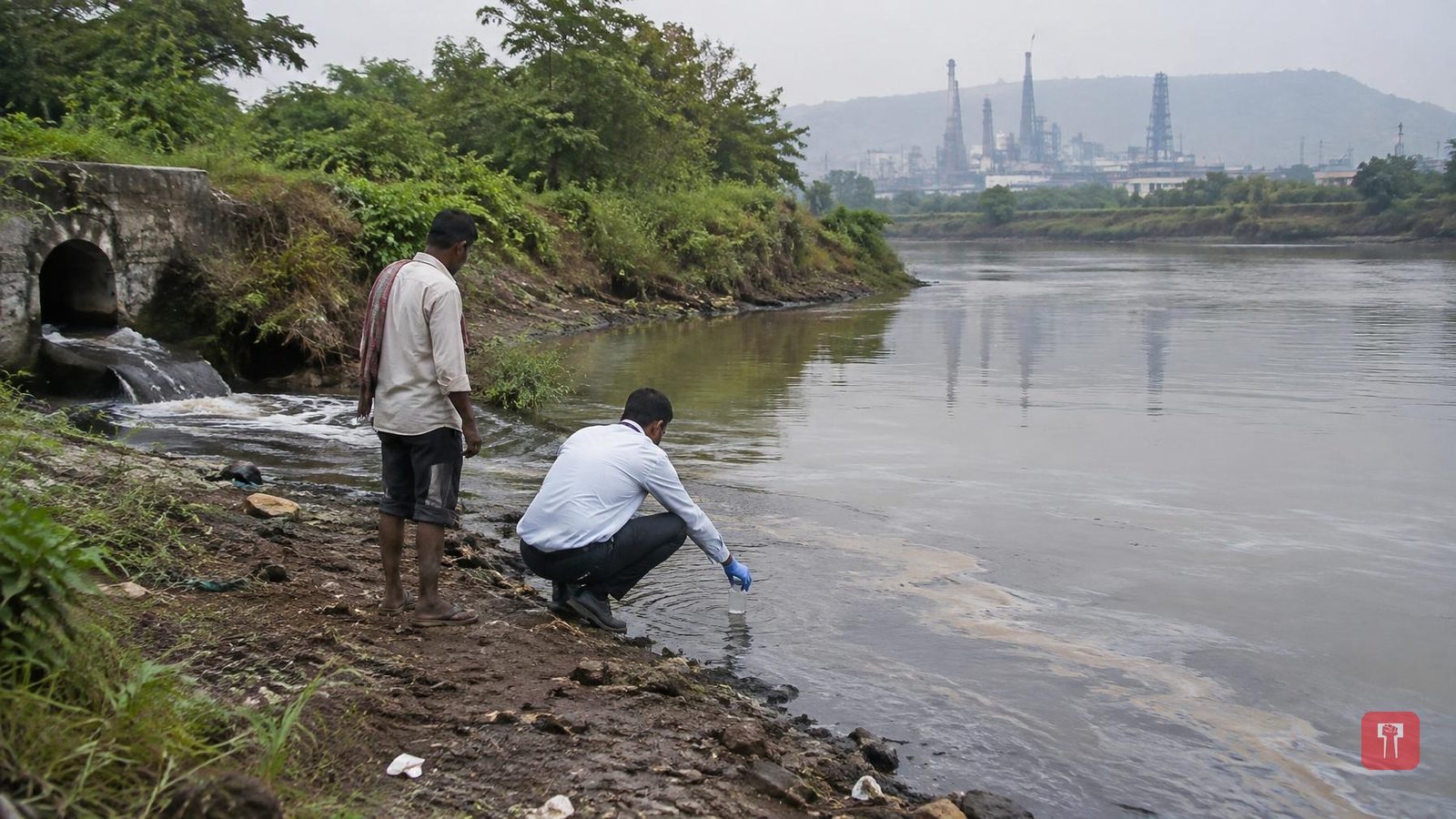
Raisani: The issue of pollution in the Patalganga river in Khalapur taluka has surfaced once again. The Maharashtra State Journalists' Association has taken an aggressive stand on it. There are complaints that effluent from the industrial area is affecting the river and the surrounding environment. Against this backdrop, the association's Konkan divisional president Rakesh Kharade has continued to write to and follow up with Chief Minister Devendra Fadnavis, Environment Minister Pankaja Munde and the Maharashtra Pollution Control Board.
Villagers are demanding that the authorities concerned visit the site, collect effluent samples, have them scientifically tested and make the report public.
It is said that the Maharashtra Pollution Control Board is conducting inspections, hearings and follow-up action in the case of some industries. Even so, what final action has been taken is yet to be clearly disclosed, Kharade claimed. He has asked, "What next after the proposed action?" and "When will the final action come?" He has filed an RTI application with the Maharashtra Pollution Control Board for further information.
According to documents available with the board, inspections of The Bombay Dyeing and Manufacturing Company Limited (polyester division), Gatik Synthesis LLP and Reliance Industries Limited (LAB division) recorded varying observations related to environmental conditions and rules.
The documents say the inspection of Reliance Industries Limited (LAB division) noted several matters, including separate collection systems for effluent and rainwater, the effluent treatment system, and an oily layer seen on the surface of the water. In the case of Gatik Synthesis LLP, the documents also record observations on the ATFD system not being operational, the storage of hazardous waste and the management of the hazardous waste storage area.
Kharade has sought detailed information from the MPCB under the Right to Information Act. He has asked what exact action was taken against the industries concerned after the pollution complaints, how many industries were inspected, what samples were taken during the inspections, what the laboratory reports are, what decisions followed the notices and hearings, and what the current status of the proposed action is.
The journalists' association has also made some demands. It says the efficiency of the ETP system of the industries concerned should be checked, effluent samples should be taken regularly, the treatment system at the CETP should be inspected, the river's water quality should be tested regularly, and inspection reports should be made available transparently.
Kharade has said the public must know what exact final action was taken against the establishments concerned if violations of rules or environmental lapses were found in the inspections. He demands that the matter not stop at notices, hearings or proposed action, and that firm action be taken under the law if guilt is established.
