

Japan wants India in BIG-B plan centred on Bangladesh's Matarbari deep-sea port
 Images are not validated/verified
Japan has pressed to widen its BIG-B initiative in Bangladesh and bring India in, with the Matarbari deep-sea port at its core.
Japan has strongly pushed to widen the scope of its much-discussed BIG-B (Bay of Bengal Industrial Growth Belt) initiative in Bangladesh and to include India in it. The large economic and strategic project, which could change the face of trade in South Asia and South-East Asia, has moved to the centre of international politics.
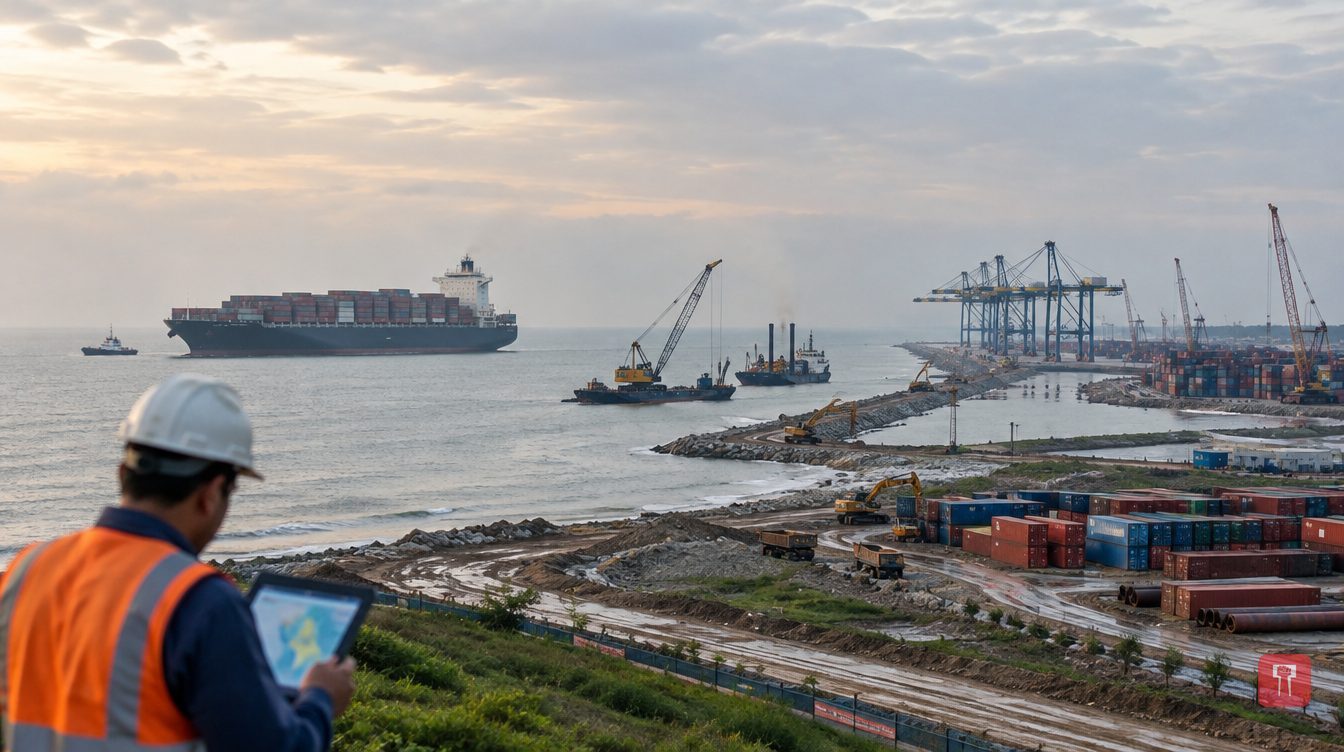
The plan is built around the first deep-sea port being constructed at Matarbari in Bangladesh. It is expected to bring a new industrial and maritime transformation to the Bay of Bengal.
After a high-level meeting between Japanese Prime Minister Sanae Takaichi and Bangladesh Prime Minister Tarique Rahman, the two sides agreed to move the project ahead at a new pace. At the meeting, Japan signalled large investments in energy, infrastructure, ports, transport and the IT sector. Japan is also clear that the project will yield the greatest benefit only if India takes an active part in it.
The concept was first put forward in 2014 by the then Japanese Prime Minister Shinzo Abe. The main aim of the plan is the industrial development of the coastal belt of Chittagong and Cox's Bazar in Bangladesh. Under it, an international-standard deep-sea port, a thermal power project, highways and an industrial corridor are being built at Matarbari.
The Matarbari port is the backbone of the initiative. At present Bangladesh has to depend on the ports of Singapore or Colombo for large merchant ships. Once the Matarbari port is complete, large cargo vessels (Panamax ships) will be able to call here directly. The Japan International Cooperation Agency (JICA) is providing large funding for the project.
Geographical and economic reasons have been cited for Japan's particular interest in bringing India in. The seven states of India's North-East, the Seven Sisters, are landlocked. The only route linking them to mainland India is the Siliguri Corridor, known as the Chicken's Neck.
If India joins BIG-B, Tripura, Assam and other North-Eastern states would get a direct sea trade route through Bangladesh's Matarbari port. The Maitri Setu over the Feni river in Tripura has already eased movement between India and Bangladesh. The plan could create a seamless trade network among India, Bangladesh, Nepal, Bhutan and Myanmar.
BIG-B is not merely a road and port project; it also has a significant political and security dimension. China is trying to expand its influence in the Indian Ocean and the Bay of Bengal through its Belt and Road Initiative (BRI). It has extended its maritime network by developing ports in Myanmar and Sri Lanka.
Against this background, Japan and India are together building a strong and transparent alternative in the Bay of Bengal. With Japanese investment in Bangladesh's infrastructure and the Indian market behind it, China's aggressive policy could be checked. This is why Japan is pressing to bring India into the project.
Reach readers on the ward they actually live in.
Advertise with Prime Time 24Reach readers on the ward they actually live in.
Advertise with Prime Time 24Reach readers on the ward they actually live in.
Advertise with Prime Time 24
Comments
No comments yet. Be the first.