

ISRO launches NVS-03 navigation satellite on GSLV-F18, boosting NavIC; PM Modi congratulates scientists
 Images are not validated/verified
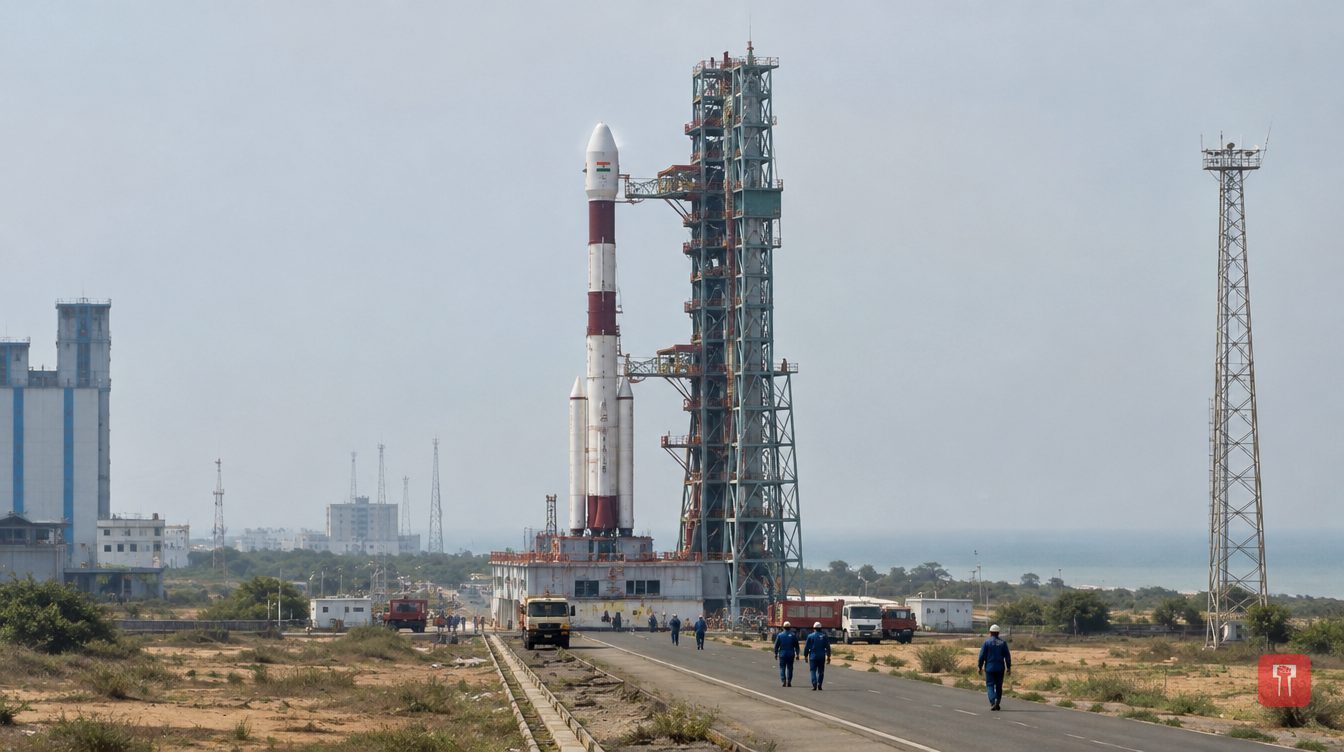
ISRO placed the 2,250-kg NVS-03 satellite in geosynchronous transfer orbit from Sriharikota, a step towards reducing reliance on America's GPS.
ISRO on Friday, October 30, successfully launched the navigation satellite NVS-03. The mission is considered important for reducing dependence on America's GPS and strengthening India's own NavIC system. The launch has further consolidated India's autonomy in space.
The GSLV-F18 launch vehicle lifted off from the second launch pad at the Satish Dhawan Space Centre in Sriharikota at 11.51 pm on Friday, carrying the NVS-03 satellite. Within 20 minutes of liftoff, the 2,250-kg satellite was placed accurately in the intended geosynchronous transfer orbit (GTO).
Scientists celebrated at ISRO headquarters and at Sriharikota. ISRO chairman Dr V. Narayanan formally declared the mission fully successful and praised the contribution of all the engineers.
NVS-03 is the third satellite in ISRO's second-generation navigation satellite series. The main aim of the mission is to make NavIC, the system developed by India, faster, more accurate and wider in coverage. Because of the advanced technology on board, the satellite will provide highly accurate positioning, navigation and timing information across Indian territory and up to 1,500 km beyond its borders.
Satellite-based navigation has become critical for civil transport, merchant ships, disaster management and military and strategic uses. The country's positioning and mapping services will therefore be strengthened. In future, it will also help smartphone map services run directly on a network of Indian satellites.
This was the 20th flight of the Geosynchronous Satellite Launch Vehicle (GSLV). Its performance in demanding space missions is regarded as a sign of ISRO's technical maturity. By safely delivering the 2,250-kg satellite to orbit, the launch vehicle has once again proved its capability.
Prime Minister Narendra Modi warmly congratulated ISRO's scientists, technicians and all staff. In a post on his social media account, Modi said: "This mission is an important step towards strengthening NavIC, the indigenous satellite navigation system. The NVS-03 satellite, equipped with advanced capabilities, will strengthen self-reliance in technology. The dedication and ingenuity of our scientists make the whole country proud."
Dependence on foreign satellites for navigation is considered sensitive from a security standpoint. During the Kargil war, India had faced difficulty in obtaining GPS service, after which it took steps to build its own system. With the NVS-03 launch, India has now achieved self-reliance in space technology.
The help from this next-generation satellite will not be limited to transport or mobile mapping. It will also be useful for aviation, maritime transport and precise control of modern farm equipment. ISRO's "Hanuman leap" has taken India to a new peak in the global space sector.
Reach readers on the ward they actually live in.
Advertise with Prime Time 24Reach readers on the ward they actually live in.
Advertise with Prime Time 24Reach readers on the ward they actually live in.
Advertise with Prime Time 24
Comments
No comments yet. Be the first.