

Britain sets up No. 3 Space Effects Squadron to monitor and counter hostile activity in space
Britain has formally set up its first such unit under UK Space Command, tasked with watching, restraining and disrupting hostile nations' activity in orbit.
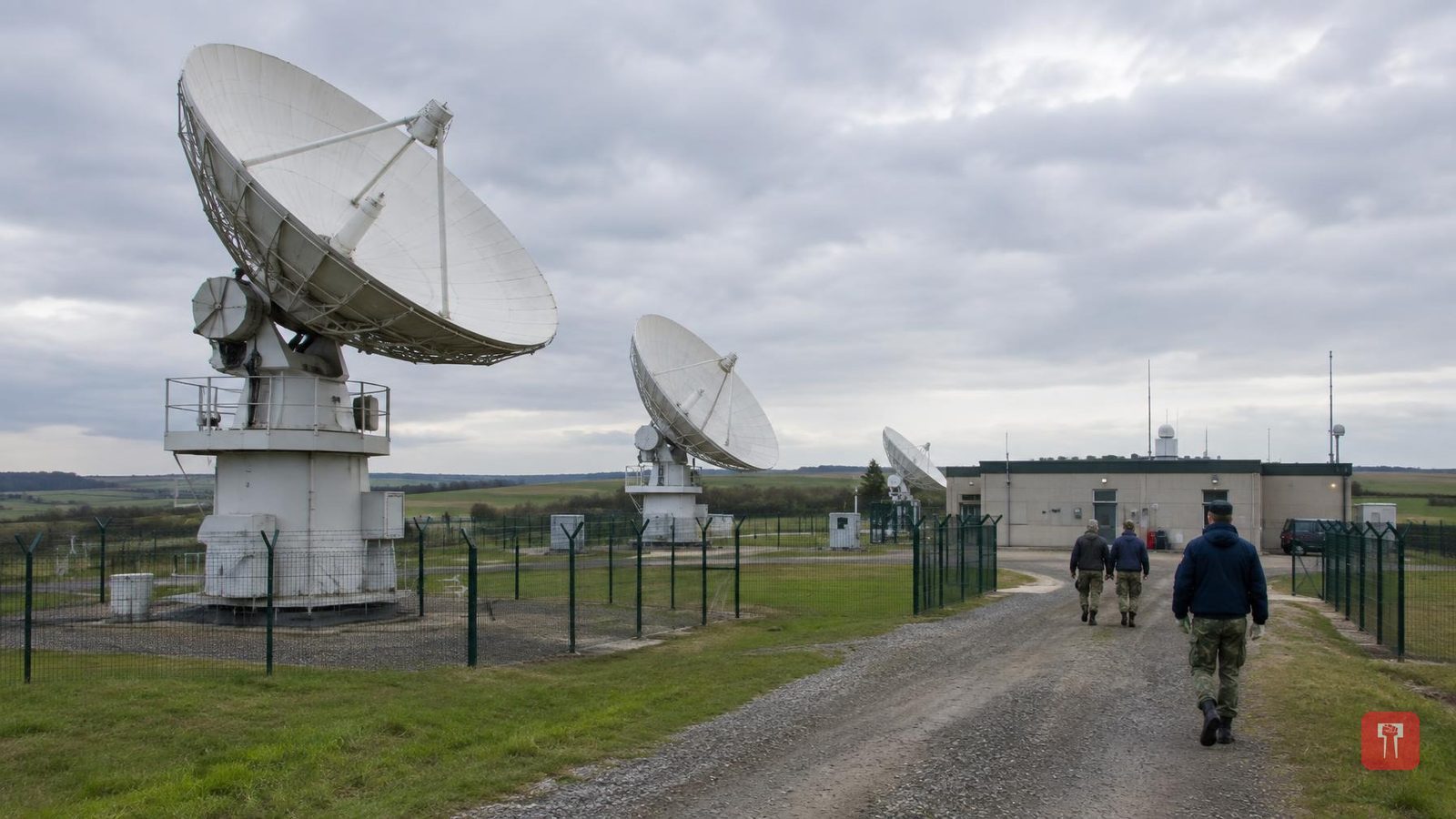
Britain has formally established its first special space unit, named No. 3 Space Effects Squadron, in September 2026. The squadron has been tasked with closely monitoring suspicious movements of hostile nations in space, curbing their capabilities and disrupting their operations.
Western countries have expressed serious concern over the growing space capabilities of Russia and China. Both countries are advancing quickly in surveilling satellites and neutralising them technically. According to a credible global report, Britain has for the past few years been working on advanced ground-operated technology that can completely block an enemy satellite's signals without physically damaging or destroying it.
Many people think satellites are only for TV channels or mobile internet. In modern military operations, however, satellites are considered the backbone. They are used for military communication, navigation, precision intelligence gathering, early warning of missile attacks and precision timing. According to Britain's Ministry of Defence, its key satellites play a central role in navigating military ships, mobile connectivity and providing information on missile attacks.
According to Britain's official space policy, if the Global Navigation Satellite System (GNSS) went down for a few hours or days, the consequences could be dire. Not only would military operations halt, but the lives of ordinary people would also be disrupted. Banking, the stock market, air travel, maritime navigation, railways, road transport and mobile networks could collapse. Britain estimates that a one-day disruption to satellite services could cause economic losses of 1.4 billion pounds, and a one-week disruption 7.64 billion pounds. Space warfare is therefore no longer just about destroying satellites with missiles; the use of lasers, cyberattacks and signal jamming has also grown.
Britain has drawn up this structure under UK Space Command. No. 1 Space Operations Squadron and No. 2 Space Warning Squadron are already operational. With No. 3 Squadron now started, Britain plans to launch new units numbered 4, 5 and 6. These squadrons will work on space warfare training, advanced radar technology and developing strategy.
The British government has announced an investment of 880 million pounds between 2026-27 and 2029-30 to expand military operations, intelligence gathering and surveillance capabilities in space. Britain has also made clear that it will stay away from direct missile tests that create debris in space or destroy satellites, and will focus only on electronic or cyber deterrence measures.
For India, these developments are sensitive from a national security standpoint. India depends heavily on the space sector for border protection and domestic services. In 2019, under Mission Shakti, India successfully shot down one of its own satellites in low Earth orbit (LEO) with a missile, demonstrating its anti-satellite (ASAT) capability. India is one of the few countries in the world with such a capability.
Britain's move will force India to change its strategy. Protecting its own satellites from jamming and cyberattacks has now become more important than destroying an enemy satellite. In this respect, ISRO's NETRA (Network for Space Objects Tracking and Analysis) project is important. Through it, space debris, enemy satellites and potential threats are being watched round the clock with the help of telescopes and radar.
According to ISRO, India currently has 22 satellites operating continuously in low Earth orbit (LEO) and 31 in geostationary orbit (GEO). India's indigenous navigation system NavIC is also important for the military's strategic needs and for civilian use. NavIC's coverage extends over the Indian mainland and up to 1,500 km beyond its borders. If these systems were hit by enemy jamming or a laser attack, India's security could suffer a major blow.
Although military activity in space has grown, the Outer Space Treaty, an international agreement, completely bans the deployment of nuclear weapons or weapons of mass destruction in space. However, clear international rules on jamming, spoofing and laser weapons are still lacking. India will therefore have to focus on making its entire satellite network jamming-proof, cyber-secure and stronger, rather than relying only on anti-satellite missiles.
