

India at UNGA: Terrorism biggest threat to human rights, double standards questioned
 Images are not validated/verified
India told the UN General Assembly that terrorism is the gravest threat to the right to life and criticised countries that apply double standards on human rights.
India set out a firm position on the protection of human rights and rising terrorism at the United Nations General Assembly (UNGA). It strongly objected to the conduct of countries that adopt double standards and play politics in the name of protecting human rights.
The remarks were made by Bhavika Mangalanandan, First Secretary at India's Permanent Mission to the United Nations. She once again drew the world's attention to the fact that terrorism is the biggest threat, an attack on the right of all humankind to live.
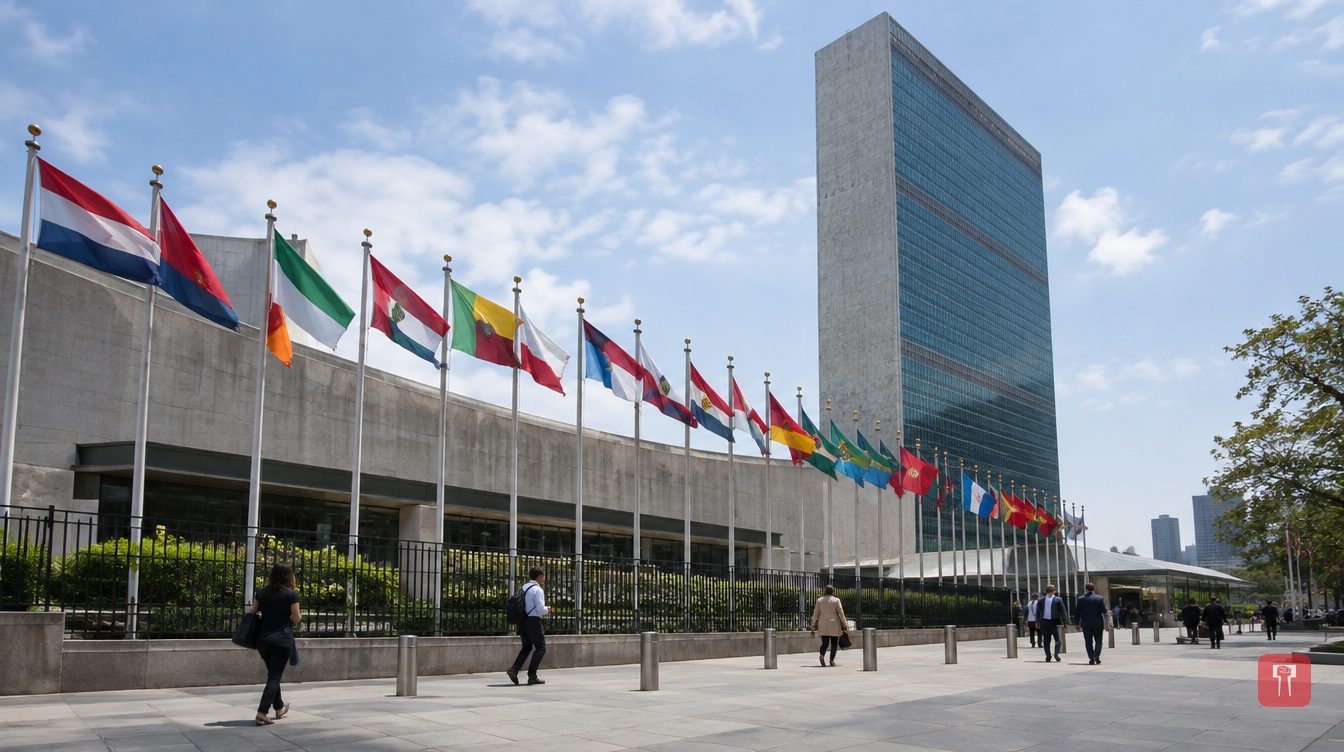
The General Assembly debate in New York was on the report of the Human Rights Council. During it, Mangalanandan directly criticised the Council's working methods and its selective approach. India said the protection of human rights must stand above any political interest or double standards. It warned that when an institution uses the human rights issue in a one-sided manner or as a political weapon, the credibility of that international body itself is put at risk.
India said in its statement that the right to life is the most basic and important human right for every citizen of the world. But cross-border terrorism and violent extremism directly crush this very right. Citing the resolution the Human Rights Council in Geneva adopted in July, India said it was vital for the Council to keep focusing on the principle of "zero tolerance" in countering terrorism through international cooperation.
According to India's statement, countries that spread cross-border terrorism, Pakistan in particular, try to create false distinctions between terrorist incidents and indirectly support some terrorist organisations. Against this background, India said the UN resolution had made clear that terrorism in any form is an attempt to destabilise democracy, territorial integrity and lawfully established governments. India put special emphasis on the point that such violence can therefore never be justified.
India also suggested several ways to improve the working of the Human Rights Council (UNHRC). The Indian representative said that imposing one-sided orders on a country without taking it along or without its participation brings no improvement on the ground. On the contrary, such decisions deepen differences and distance in international forums. In India's view, human rights can be advanced not through pressure or fear of punishment but through genuine dialogue and capacity building.
India backed the Universal Periodic Review (UPR) system, a mechanism in which the human rights record of all member states is reviewed in a spirit of cooperation and with equal treatment. In India's view, the UPR is the fairest and most appropriate forum for assessing human rights. India also said that poverty and a shortage of resources are the real challenges to human rights for developing countries, and that solutions must be found through international cooperation.
In the speech, the Indian representative also reiterated India's democratic values. She said India is the world's largest and most vibrant democracy, resting on the rule of law. An independent and impartial judiciary works in the country to protect the rights and freedoms the Constitution has given every citizen. India, she said, has therefore always been committed to protecting human rights without yielding to any external political pressure, and will remain so.
Reach readers on the ward they actually live in.
Advertise with Prime Time 24Reach readers on the ward they actually live in.
Advertise with Prime Time 24Reach readers on the ward they actually live in.
Advertise with Prime Time 24
Comments
No comments yet. Be the first.