

How the Burj Khalifa's foundation holds up a 828-metre tower on Dubai's sandy ground
 Images are not validated/verified
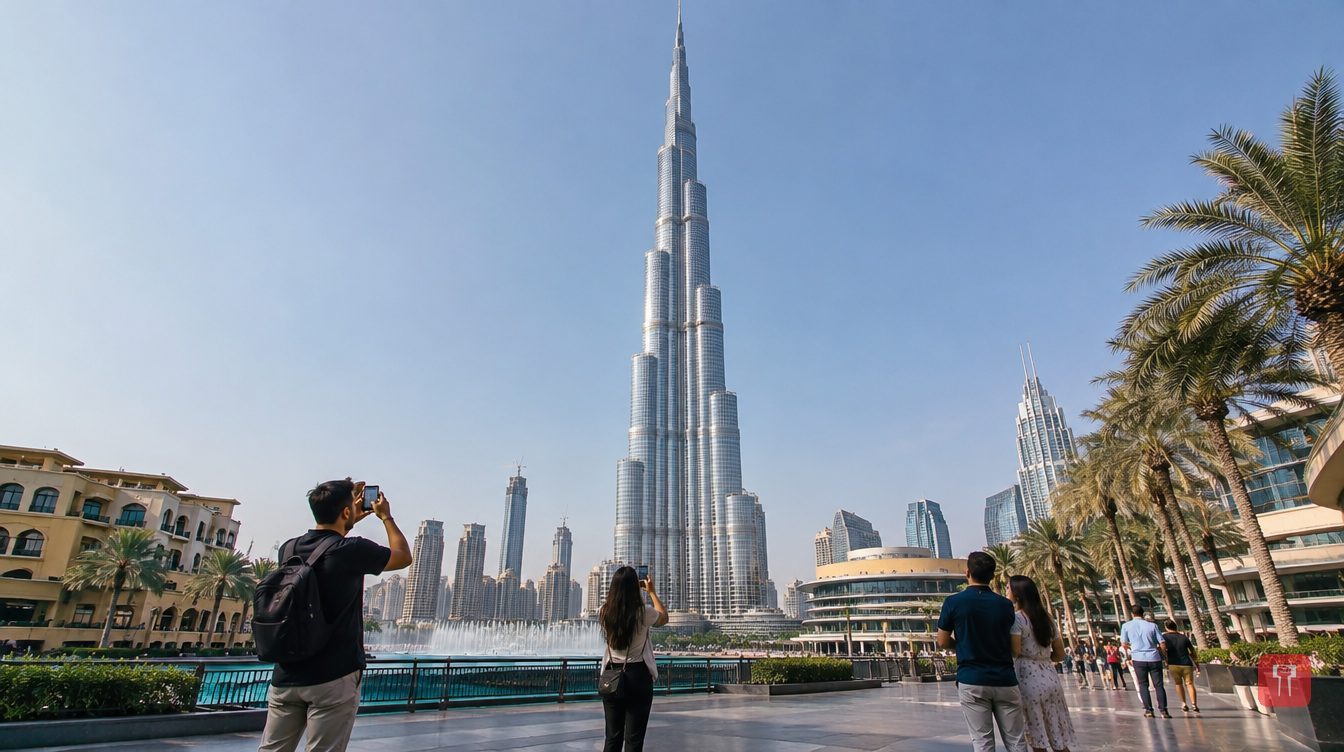
The 163-storey tower stands on a piled raft foundation of concrete piles and a thick raft, designed to cope with loose sand and highly saline groundwater.
Dubai is the first name that comes up whenever modern architecture and engineering are discussed. Walking even a few steps on loose desert sand is hard. How the Burj Khalifa, the world's tallest building at 163 storeys and 828 metres, stands firm there is a question that has long puzzled tourists and ordinary people around the world. Behind the handsome and grand look of the building lies highly complex engineering below the ground.
The ground where the Burj Khalifa was to be built was very challenging from an engineering point of view. Scientists and engineers faced two major difficulties before foundation work began.
The first was balancing loose sand against enormous weight. There was no solid rock under the site. The whole area had layers of loose sandy soil and weak sedimentary rock. Putting up a building weighing lakhs of tonnes on such ground meant a serious risk of the foundation sinking.
The second was the highly saline water underground. Groundwater in Dubai is extremely saline. This water can corrode and damage steel reinforcement bars and concrete. So the challenge was not only to carry the weight but also to keep the foundation safe for decades.
To deal with these challenges, engineers put the concept of a piled raft foundation into practice. In this technique two key parts work together. The first is the huge concrete columns driven deep into the ground, known as piles. The second is a very thick layer of concrete laid over these columns, known as the raft.
To strengthen the foundation, 192 bored piles were sunk into the ground. Some technical documents give the number as 194. Each pile is 1.5 metres in diameter and goes down about 43 to 50 metres. Each pile is designed to carry a load of 3,000 tonnes.
People commonly assume that a building's columns rest on hard rock below. That is not the case with the Burj Khalifa. These columns work as friction piles.
Just as a wooden stake driven firmly into soil is held by the surrounding soil, the piles work on the same principle. The friction between the outer surface of the piles and the surrounding sandy soil creates a strong grip. The piles hold the building tightly along their full length.
A special fluid mixture, known as slurry, was used during excavation to stop the sand from collapsing. A cage of steel reinforcement bars was then lowered into the hole and concrete was filled in using a special technique called tremie. In this method the concrete reaches the bottom directly through a pipe and is not weakened by dissolving in groundwater.
The raft laid over the piles is 3.7 metres thick, about the height of a full storey. About 12,500 cubic metres of high-performance concrete was poured for it in four stages. Materials such as fly ash were used in the mix to prevent cracks from the heat generated as the concrete sets.
A cathodic protection system has also been installed beneath the foundation to protect the steel bars from the saline water underground. This advanced technology protects the rebar from rust, which extends the life of the building by hundreds of years.
It is not only the foundation. The outer structure of the Burj Khalifa has also been designed to withstand the pressure of strong desert winds. SOM, the well-known Chicago architecture firm, built its structure as a hexagonal core with three wings around it, a Y shape.
This triangle-like structure disperses the heavy speed and pressure of the winds blowing at great heights. During construction, a world record was also set for pumping concrete vertically to a height of 601 metres above the ground.
Reach readers on the ward they actually live in.
Advertise with Prime Time 24Reach readers on the ward they actually live in.
Advertise with Prime Time 24Reach readers on the ward they actually live in.
Advertise with Prime Time 24Choose primetime24.com as a preferred source on Google Google shows more stories from your preferred sources in Top Stories.
Reach readers on the ward they actually live in.
Advertise with Prime Time 24
Comments
No comments yet. Be the first.