

Erdogan demands UNSC scrap veto power, slams five permanent members
Turkish President Recep Tayyip Erdogan has called for permanently abolishing veto power in the UN Security Council, saying it blocks decisions that serve most nations.
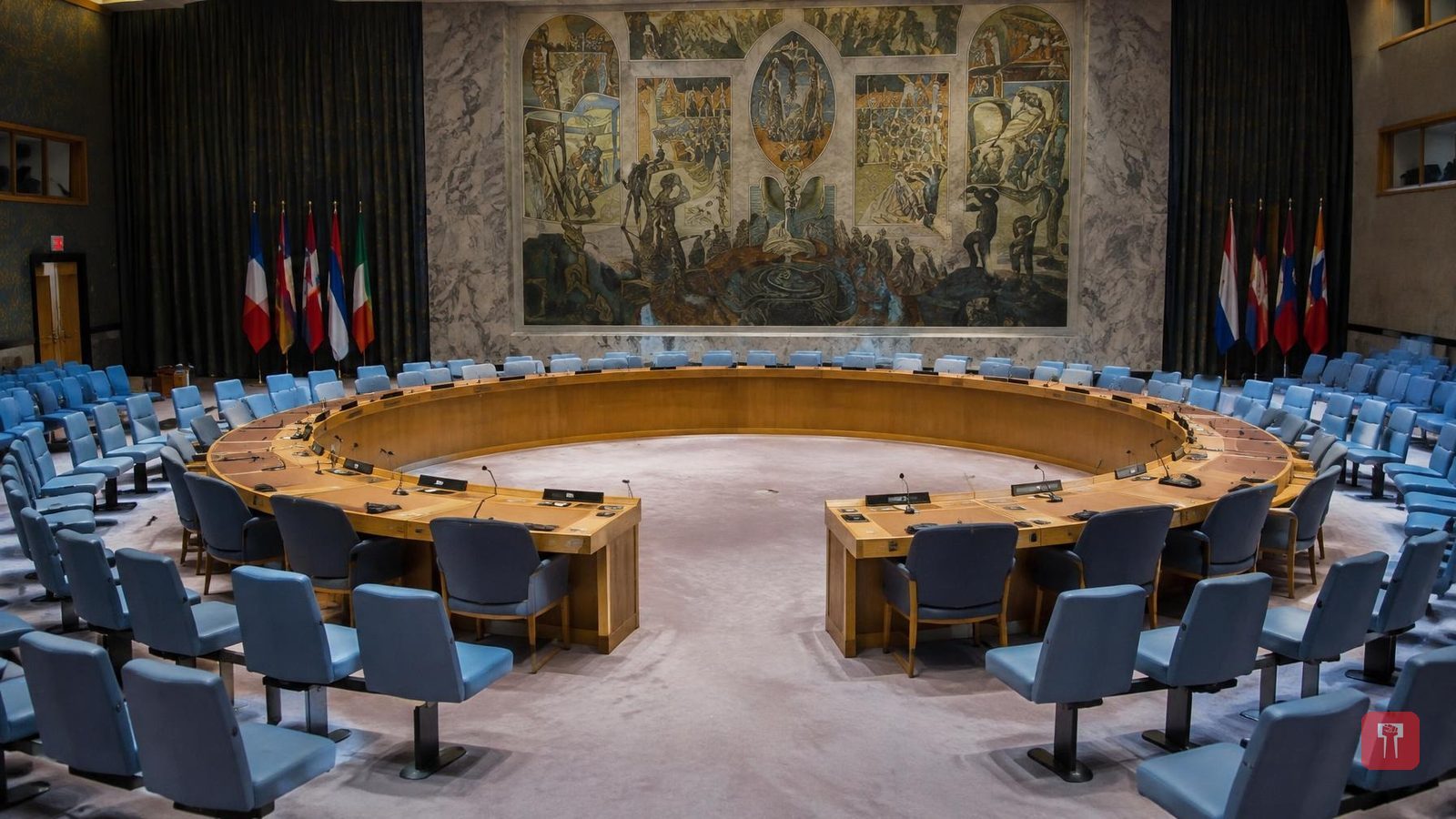
Whenever a major war, tension or crisis erupts anywhere in the world, all eyes turn to the United Nations. But the UN Security Council, or UNSC, often falls short when it comes to resolving important issues. The biggest reason for this is the veto power held by the council's five permanent members. On this very issue, Turkish President Recep Tayyip Erdogan has taken a direct stand, demanding that veto power in the Security Council be permanently abolished.
Erdogan's argument is that even though the world has changed a great deal, the Security Council still functions according to the old structure set up after the Second World War. Decisions that would benefit most countries get stuck simply because one permanent member uses its veto. He argues that without breaking this unlimited power and special privilege of the veto in the Security Council, real peace and justice in the world are not possible.
In an article, Erdogan laid out his position at length. Over the past few decades, the world has seen major pandemics, regional wars, and energy and food crises. This has made one thing clear: solutions to global problems cannot be decided in the capitals of just a few countries. Erdogan said, "If we want real justice at the international level, we need a concrete framework to reform the United Nations system from its roots. The first and most important step in this is abolishing veto power." He stressed that no single country should have the right to permanently block the view or decision of more than a hundred other countries.
The Security Council currently has five permanent members, the United States, Russia, China, Britain and France, and only they hold veto power. In simple terms, even if a resolution moved in the council is acceptable to fourteen members, it is immediately rejected if just one of these five countries opposes it. It is often alleged that the permanent members misuse this power to protect their own political and military interests rather than the global good. Reiterating his familiar stance that "the world is bigger than five", Erdogan proposed scrapping the current structure of permanent membership altogether, with all members instead elected by the General Assembly for a fixed term.
To bring genuine democracy to the United Nations, Erdogan has demanded that the role of the General Assembly be strengthened. He said the Security Council should be made more accountable to the General Assembly. He also called for a new rule under which any country seeking a seat on the Security Council would have to prove its case by winning a majority of all countries in the General Assembly. Erdogan also called on smaller and larger developing countries across Asia, Africa and Latin America to come together and form a large, strong bloc within the General Assembly, arguing that as these countries' contribution to the global economy and politics has grown, they deserve a proper share in decision-making.
Erdogan is not alone in demanding changes to the UN's structure. The G4 countries, Germany, India, Brazil and Japan, have previously demanded expansion and reform of the Security Council as well. Germany's foreign minister recently criticised the obstacles the veto creates in the Security Council's functioning. However, under the UN Charter, abolishing the veto or changing the council's structure requires the consent of the five permanent members themselves, which is unlikely to happen easily. Even so, the question Erdogan has raised has reignited a heated debate worldwide over the UN's credibility and the ageing veto power.
