

El Nino may strengthen by end-2026; India urged to prepare on water, farming and forests
Forecasts say El Nino could intensify by late 2026, raising concern over water shortage, heat stress and farming in India, and the call is for planning based on science, not fear.
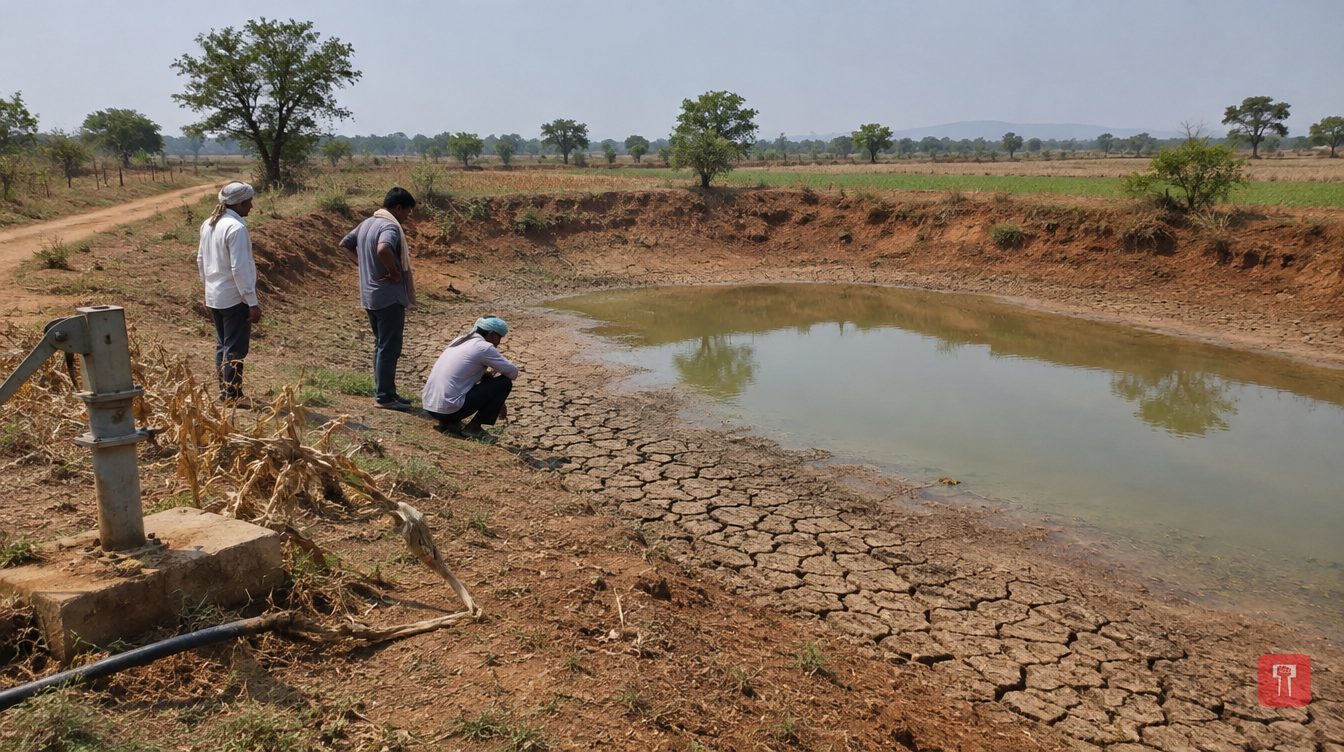 Images are not validated/verified
New Delhi: India and many other countries are closely watching the changing state of El Nino. It forms when the surface temperature of the Pacific Ocean rises abnormally. The weather condition could affect global temperatures, the distribution of rainfall and crop yields in the time ahead. Various weather forecasts say El Nino could intensify further by the end of 2026. This has raised concern in India over water shortage, heat stress and the challenges facing agriculture.
Rather than panic over the possible situation, it is necessary to plan on the basis of scientific information and take protective steps now. Save water, strengthen farming, protect trees and do not ignore weather warnings. This message should reach every citizen.
El Nino is a weather phenomenon linked to the sea water temperature in the equatorial part of the Pacific Ocean rising above average. It can affect winds, cloud formation and the distribution of rainfall across the world.
During El Nino, the chances of the south-west monsoon weakening in India generally increase. Even so, it is not the case that every El Nino year brings drought to India. Changes in Indian Ocean temperatures, monsoon winds, local weather and other factors also affect rainfall.
The India Meteorological Department had forecast the formation of El Nino during the 2026 monsoon. The Union government told Parliament that the condition had reached a moderate level in July 2026. According to the October 2026 forecast of the US National Oceanic and Atmospheric Administration (NOAA), a strong to very strong El Nino is likely to persist until early 2027.
It is important to note that "super El Nino" is not an official category set by the India Meteorological Department or the World Meteorological Organization. Instead of spreading fear about its effects, people should rely on official weather forecasts.
India could face several challenges. The first threat is heatwaves. The combined effect of global warming and natural weather variation could raise temperatures in some areas. If heat stress increases, the health of the elderly, young children, farm labourers, construction workers and people who work outdoors could be at risk. Caution is needed to avoid problems such as heatstroke, dehydration, dizziness and fatigue. How much temperatures will rise in any part of India will become clear only from the official forecasts at that time.
The second challenge is water shortage. If rainfall is low, dams, ponds, wells and groundwater reserves could come under pressure. Accounting for water for drinking, farming, livestock and industry will become even more important. Preventing water wastage in cities, harvesting rainwater in villages, building farm ponds and taking groundwater recharge measures are needs of the hour.
The third challenge is the impact on farming and farmers' incomes. If the monsoon rains are disrupted, sowing, crop growth and yields could be affected. Rain-fed agriculture in particular may face water shortage. Farmers should therefore choose crops and plan sowing as advised by the local agriculture department, expand drip irrigation and conserve rainwater. They can also consider low-water crops and ways of retaining soil moisture.
The fourth challenge is for forests and wildlife. Lower rainfall and higher temperatures could put pressure on natural water sources in forests. If wildlife gets less water, they may be more likely to come near human settlements in search of it. How often such incidents occur will also depend on local conditions. In forest areas such as the Tadoba-Andhari Tiger Reserve, protecting natural water sources, preventing forest fires, managing waste properly and monitoring the movement of wildlife will be important. People should avoid setting fire to forests, throwing combustible waste and polluting water sources.
For the government and administration, it has been suggested that water availability be assessed village by village, city by city and district by district, and water arrangements planned accordingly. Heatwave action plans should be kept ready in line with the weather department's warnings. If drought-like conditions develop, farmers should be given timely guidance and necessary help. Awareness should be spread through schools, health centres, gram panchayats and local self-government bodies. Priority should go to forest water sources, vegetation and measures to prevent forest fires.
Farmers are advised to adopt more water-saving methods such as drip and sprinkler irrigation. They should build farm ponds and take other water conservation steps to store rainwater. Sowing and crop management should follow weather forecasts and agriculture department advisories. Proper mulching should be used to retain soil moisture. Clean water and protection from the sun should be arranged for livestock.
Ordinary citizens have been asked to save water at home by stopping needless use and to arrange for rainwater harvesting on rooftops. If the local weather department issues a heatwave warning, avoid going out in the harsh afternoon sun. Drink water at short intervals, wear light clothes and stay in the shade if possible. Take special care of the elderly, young children and people who work outdoors. Plant trees, look after them and protect trees of local species.
In Maharashtra, farming, village water supply and urban water management are directly tied to rainfall. It is therefore necessary to plan by taking together the condition of reservoirs, groundwater levels, forecasts of further rain and district-wise needs. In the Tadoba area of Chandrapur district, wildlife tourism, local employment and the forest's biodiversity are of great importance. In such areas, water conservation, protecting forests, preserving wildlife habitats and raising environmental awareness among tourists are the shared responsibility of local administration, tourism operators, guides and villagers.
The conclusion is that preparation, not fear, is needed. The possible effects of a super El Nino should be seen not merely as a weather crisis but as an opportunity to strengthen water management, changes in farming, environmental protection and preparedness before disaster. If every drop of water is saved today, every water source protected, farmers given timely guidance and forests conserved, the strength to deal with tomorrow's challenges can grow. Nature keeps giving us warnings from time to time. Instead of ignoring them, adopting science-based planning, participation by all and an environment-friendly lifestyle is the need of the hour.

Comments
No comments yet. Be the first.