

Diwali begins with Vasubaras, when the cow and calf are worshipped
 Images are not validated/verified
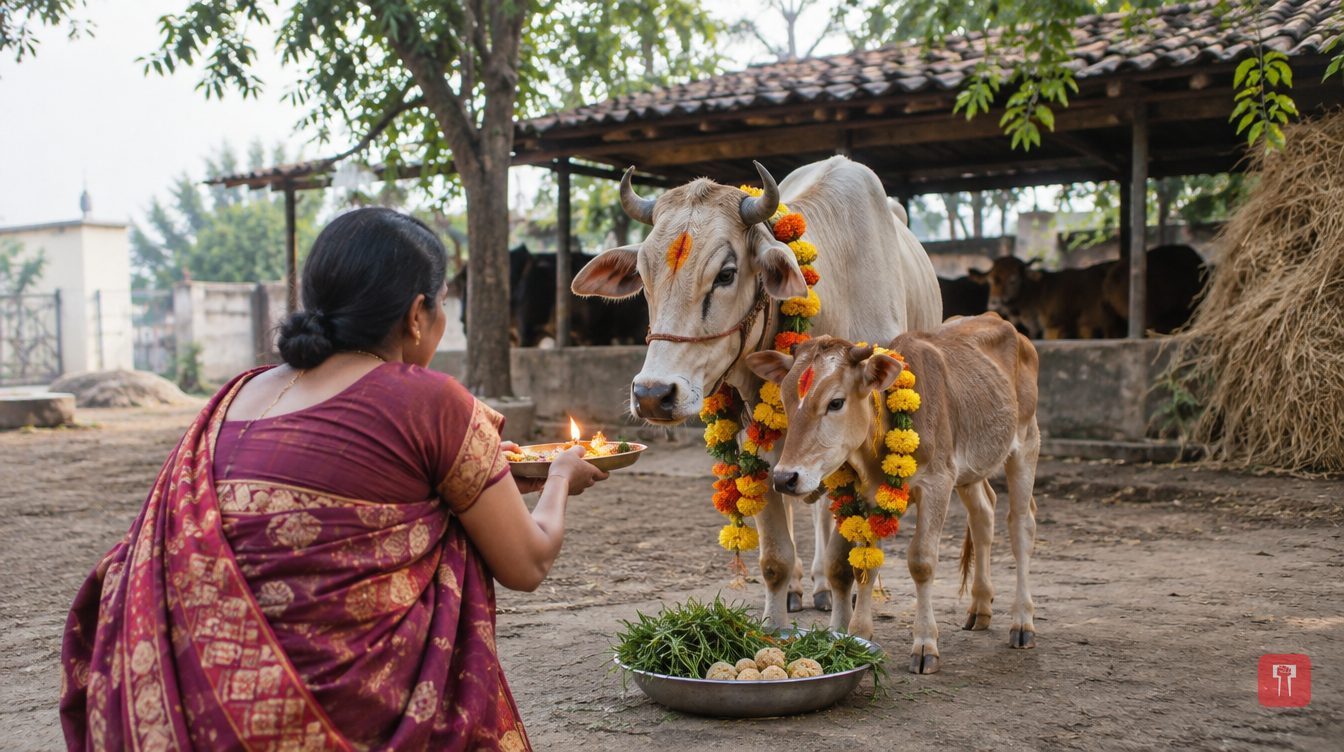
Vasubaras, also called Govatsa Dwadashi, is the first day of Diwali and is marked by worshipping the cow and her calf in gratitude.
The Diwali festival begins with Vasubaras, a festival that symbolises joy, enthusiasm and auspiciousness. On Vasubaras, it is traditional to worship the cow and her calf. In Hinduism, the cow is given the status of a mother. For this reason, the day is regarded as a symbol of gratitude, prosperity and the worship of Gomata, the cow mother.
Vasubaras is considered the first day of Diwali. It is observed on the Dwadashi tithi of the Krishna Paksha in the month of Ashwin. The day is also called Govatsa Dwadashi. "Go" means cow and "vatsa" means calf. Gratitude is expressed to the cow and calf by worshipping them on this day.
In Hinduism, the cow is regarded as sacred and worthy of reverence. There is a religious belief that many gods and goddesses reside in the cow. Cow's milk, curd, ghee and dung are used in religious rites. Hence, on Vasubaras, Gomata is worshipped and prayers are offered for happiness, prosperity and the well-being of the family.
The prescribed method of worship is to wake up early on the day of Vasubaras and clean the house. The cow and calf should be washed with clean water and decorated. Haldi-kumkum is applied on the cow's forehead and a garland of flowers is placed on her. The cow and calf are then offered a sweet dish, green fodder or their favourite food. After that, an aarti is performed and prayers are offered for the happiness and prosperity of the family. If possible, one should serve Gomata and feed animals in need.
On the traditional lore, the worship of the cow and calf on Vasubaras is linked to religious faith and ancient traditions. According to Hindu belief, the cow is not merely a means of livelihood but a nurturer like a mother. Her milk nourishes people, and the cow also holds great importance in farming and village life.
Some popular tales describe the devotion to Gomata and the merit earned by serving her. For this reason, the tradition of worshipping the cow and calf on Vasubaras, and expressing respect and gratitude to them, has continued.
Worshipping Gomata on this day, giving her fodder and food, and serving her are considered auspicious. If worshipping a cow is not possible, fodder or other necessary items can be donated at a gaushala (cow shelter) in her remembrance. One can also resolve on this day to treat animals with kindness.
Vasubaras is not only a day of religious rituals. It is a festival of gratitude towards nature, animals and the things that sustain our lives. The auspicious festival of Diwali begins with the worship of Gomata.
Reach readers on the ward they actually live in.
Advertise with Prime Time 24Reach readers on the ward they actually live in.
Advertise with Prime Time 24Reach readers on the ward they actually live in.
Advertise with Prime Time 24Reach readers on the ward they actually live in.
Advertise with Prime Time 24
Comments
No comments yet. Be the first.