

Cigarette butts recycled into asphalt to cool city roads, study finds
Australian researchers have developed a way to mix treated cigarette butts into asphalt, cutting waste and reducing urban heat.
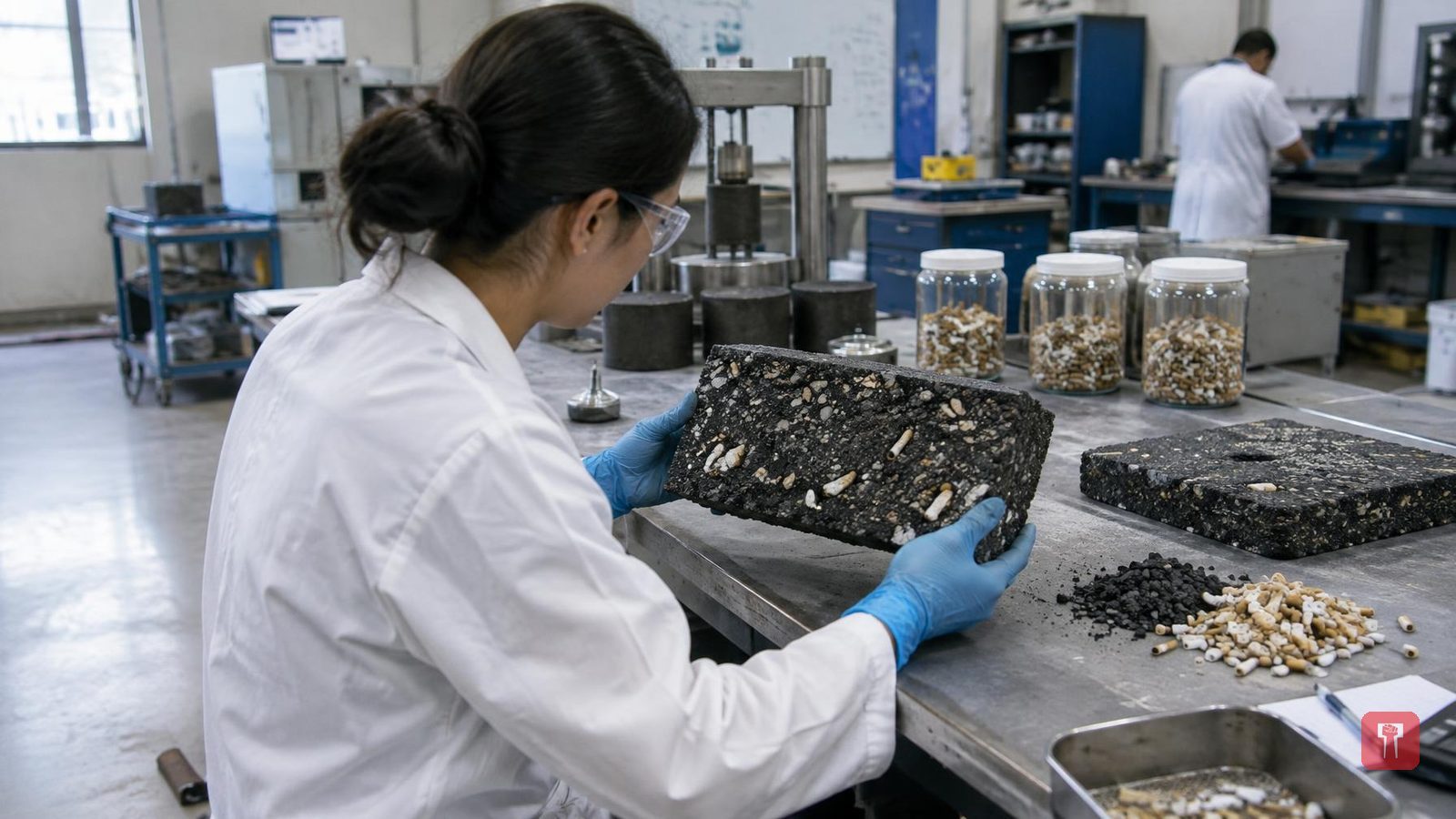
Billions of cigarettes are smoked around the world every year, and their butts are routinely thrown onto roads, footpaths and open ground. Though small in size, this waste is highly damaging to the environment because the cellulose acetate plastic in cigarette filters does not break down easily and can remain in the soil for thousands of years.
Engineers at RMIT University in Melbourne, Australia, have found a creative and environmentally friendly solution to this problem. They have shown a new way to protect the environment by using cigarette butts as a material in road construction.
According to the research, the cigarette waste is not mixed directly into asphalt. It first undergoes a specific process. Cigarette filters accumulate residues of nicotine, heavy metals and several other toxic chemicals. If they come into contact with rainwater or other liquids, there is a significant risk of these chemicals leaching into the soil or water. To prevent this, the researchers developed a technique to coat the butts with bitumen or paraffin wax, fully encapsulating them. This protective layer stops the chemicals inside from escaping.
Various laboratory tests showed that asphalt made with correctly coated cigarette butts can easily withstand heavy traffic loads. The biggest advantage of this experiment is that the thermal conductivity of this new asphalt is considerably lower than that of conventional asphalt.
According to a report published in the international journal Construction and Building Materials, adding cigarette butts reduces the density of asphalt and increases its porosity. These physical changes significantly reduce the asphalt's ability to absorb and spread the sun's intense heat.
The growing share of concrete and asphalt in large cities has created a serious problem known as the urban heat island effect, where city temperatures rise much higher than in villages and open areas. Conventional asphalt absorbs the sun's heat and releases it into the air at night, adding to urban heat. This new asphalt made from cigarette butts reduces this heating effect, helping to keep city temperatures under control.
Cigarette butts are the most littered item of waste in the world. This waste reaches rivers, drains and eventually the sea, causing serious harm to aquatic life. Against this backdrop, the method discovered by RMIT University professor Dr. Abbas Mohajerani and his team is being seen as highly significant.
This experiment could address two major global problems at once: the elimination of plastic and toxic waste, and rising temperatures in cities. The initiative is expected not only to improve the durability of roads but also to serve as a milestone in maintaining ecological balance and making modern cities more liveable.
