

Choosing a specialisation after MBBS and how many hours medical students should study daily
MD/MS clinical specialisations are the most sought-after route after MBBS, and many students find daily self-study of three to five hours useful.
 Images are not validated/verified
Just as computer science (CS) is considered the most popular stream in engineering, MBBS holds that place in medicine. Among students who go further in medicine, clinical specialisations in MD/MS are the most preferred. But a medical career is not just a matter of choosing one subject. It involves several years of study and clinical training.
In India, NEET-UG is the main national entrance examination for admission to undergraduate medical courses. According to the National Testing Agency (NTA), NEET-UG is the best route for admission to undergraduate medical education at the country's medical institutions.
Once admitted to a medical college, students have to study many subjects. In the early years, subjects such as anatomy, physiology and biochemistry form the foundation of medical science. After that, pathology, pharmacology, microbiology, medicine, surgery and other clinical subjects are taught.
After MBBS, the race for specialisation begins in earnest. Among MD branches, general medicine, dermatology, paediatrics, radiodiagnosis and psychiatry are popular with students, and among MS branches, general surgery, orthopaedics and obstetrics and gynaecology.
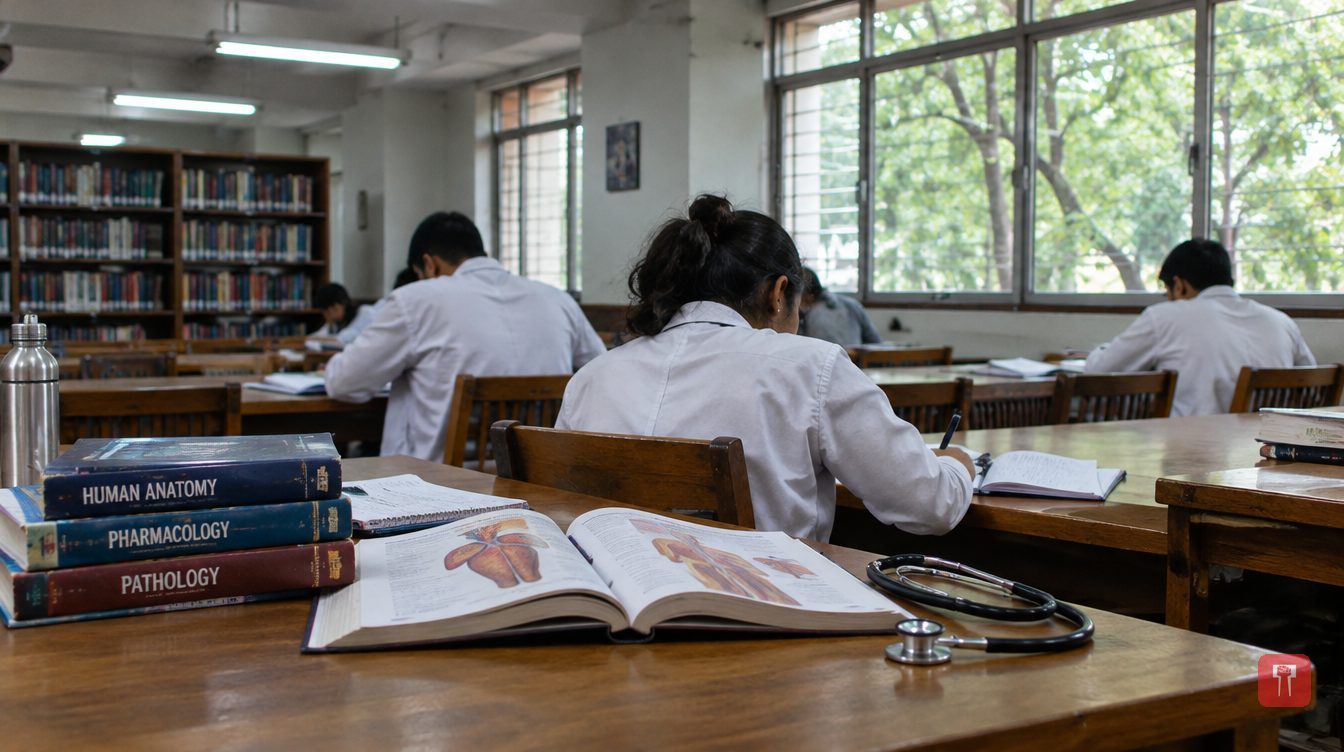
Now to the question of study hours. For a student preparing for NEET, aiming for 6 to 8 hours of study on ordinary days is beneficial. In MBBS, reading books alone is not enough. Besides the college's academic activities, 3 to 5 hours of self-study a day helps many students. Increasing study time during examinations or professional exams can be even more beneficial.
Medical study is not just rote learning. Clinical application and practical skills are also extremely important.
The scope of the medical field is not limited to MBBS and becoming a doctor. After MBBS, students can, depending on their choice and rank, go on to specialise in subjects such as medicine, surgery, paediatrics, dermatology, radiology, psychiatry, orthopaedics, and obstetrics and gynaecology.
Career opportunities can also be built in areas such as medical research, public health, medical education and healthcare management.
