

China's gold reserves hit record 2,410 tonnes as central bank buys for 23rd straight month
The People's Bank of China added 23 tonnes in September, its biggest monthly purchase since October 2023, as Beijing works to reduce reliance on the US dollar.
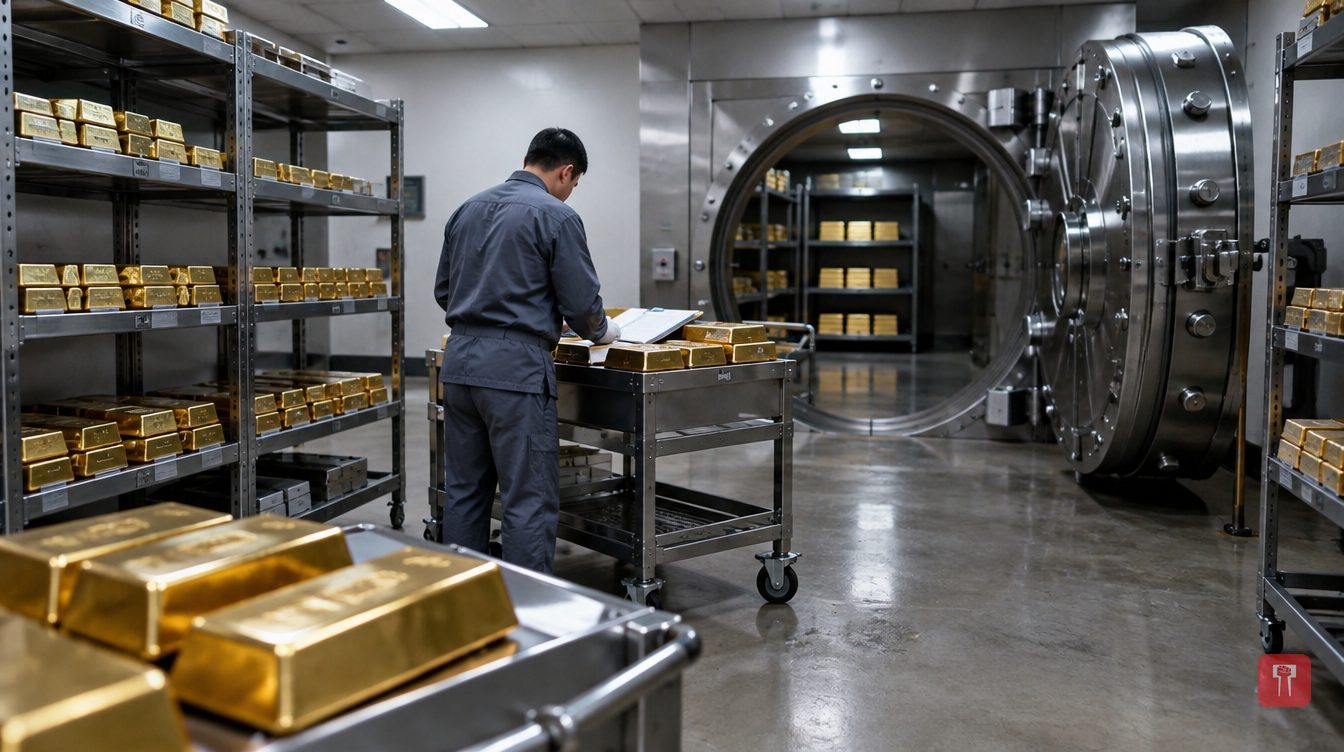 Images are not validated/verified
China's central bank, the People's Bank of China (PBOC), has been buying gold continuously for the past 23 months. According to the latest report of the World Gold Council (WGC), the country's gold reserves rose to 2,410 tonnes in September, the highest figure on record.
In September alone, the Chinese central bank bought 23 tonnes of gold, its largest purchase in a single month since October 2023. In the first nine months of this year, China has added a total of 103 tonnes to its vaults. In the third quarter, from July to September, it bought 63 tonnes.
Gold currently makes up 8.5 per cent of China's total foreign exchange reserves. Fluctuations in the value of the US dollar and a fall in foreign assets brought China's foreign exchange reserves down 2 per cent to $3.8 trillion in September. Even so, the gold holdings have given the economy a strong safety cushion.
Financial analysts say the most important reason behind the buying is to reduce dependence on the US dollar in stages. In their view, gold is a global asset that is not a liability of any other country's government or financial institution. If foreign reserves are held in US dollars or US Treasury bonds, their value depends on American economic policy and political stability.
The United States currently carries heavy government debt, and its budget deficit is also growing. This has raised concern worldwide about the future of the dollar. If countries around the world cut their investment in US bonds, borrowing would become costlier for the United States and the dollar would come under heavy pressure. China has chosen gold as a safe alternative to guard against this possible risk.
China's strategy is not limited to the central bank's vaults. It is trying to make Hong Kong the world's largest centre for physical gold trading and payment settlement, and gold storage capacity there is being expanded. A modern futures market system is also being developed so that gold can be traded in the Chinese currency, the yuan.
So far, the price of gold in the international market is set mainly in dollars, and transactions are also made in dollars. If international trade in gold begins in yuan, the importance of the Chinese currency in global trade will grow considerably. Other countries would get a new and secure route for trade without depending on the banking systems of the United States and Western countries.
Not just the government and the central bank, but ordinary citizens and retail investors in China are also investing heavily in gold. Uncertainty in the local stock market and falling returns on government bonds have pushed them towards gold exchange-traded funds (ETFs). In September, 11 tonnes of gold were added to Chinese gold ETFs. As a result, total ETF holdings reached a record high of 304 tonnes in the third quarter.
On the other hand, soaring gold prices have cut wholesale demand for jewellery. In the third quarter, wholesale demand for gold jewellery in China was 234 tonnes, 21 per cent lower than a year earlier. Even so, overall demand for gold remains strong because of the central bank's continued buying and investment in ETFs. Experts say the dollar's dominance will not end immediately, but China's aggressive policy has begun to change the shape of the future global financial system.
