

Buldhana farmers rush soybean harvest in harsh sun, await return rains
With rainfall well below normal and temperatures rising, Buldhana farmers are harvesting soybean quickly and hoping return rains will allow rabi sowing.
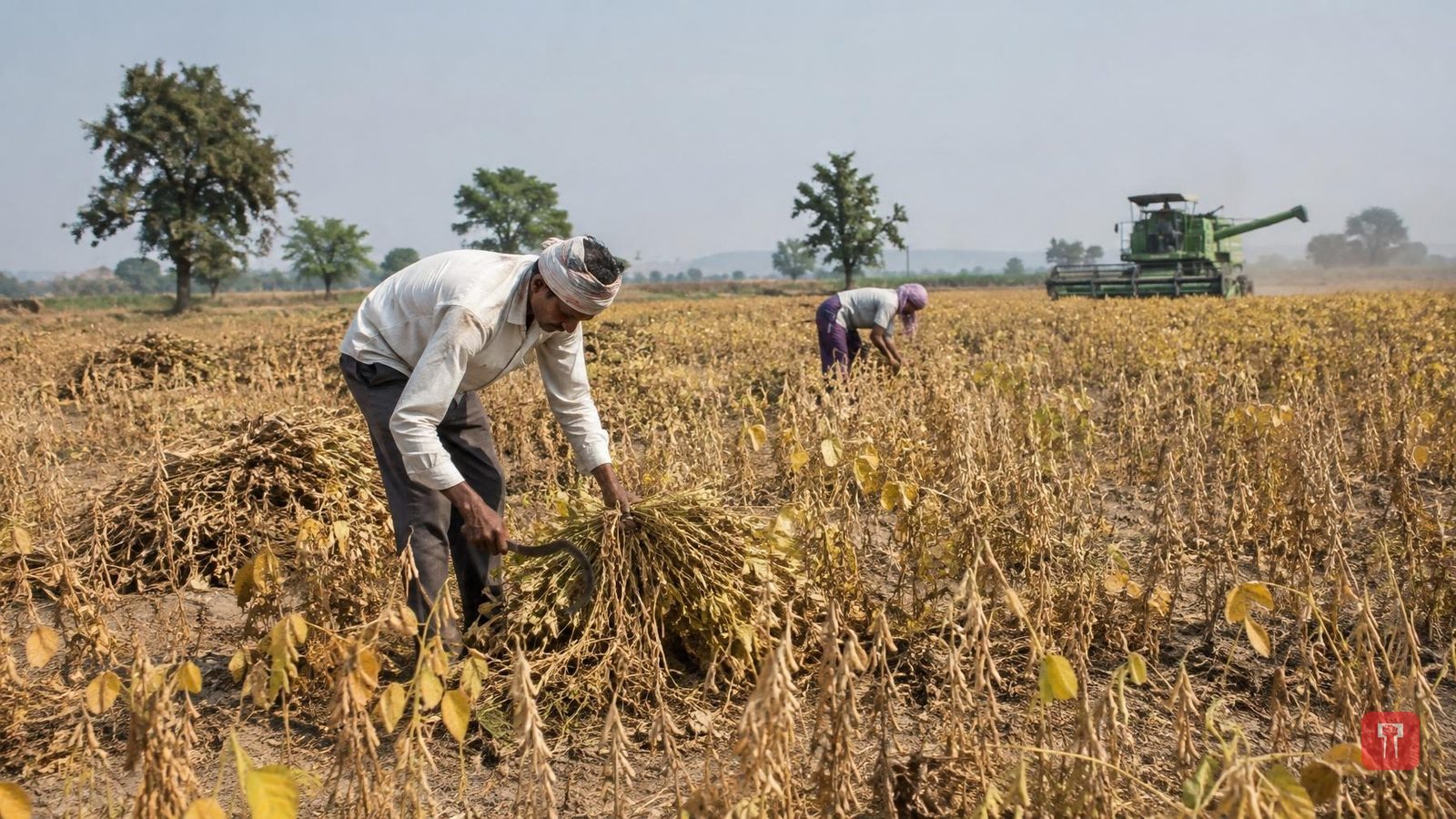
The sun has turned fierce in Buldhana district at the very start of October. Farmers face scorching heat on one hand and a struggle to save the crop in hand on the other.
The soybean crop is ready for harvest. Across the district's villages, farmers can be seen harvesting despite the harsh sun, so that the pods do not burst and the grain is not wasted. This year's kharif season did not go as hoped, and farmers are now looking to the return rains.
In this monsoon, the rain failed at the start, and the rain that came later was not consistent either. This has hit kharif crops badly. The district normally receives 750 to 810 mm of rain on average, but only about 450 mm has been recorded so far this time. As a result, crop growth stopped in many areas.
Soybean grains have remained small, so farmers fear a big drop in production. Temperatures have also been rising steadily for the past few days, and the soybean crop is drying fast.
There is now a fear that pods will burst in the strong sun and the grain will scatter in the field. For this reason, farmers have stepped up the pace of harvesting. Labour is scarce and wages have risen, so in many places soybean is being harvested by machine. Some farmers are finishing the harvest with the help of family members alone.
The irregular rain has also affected groundwater levels. To make up for the kharif losses, farmers want at least the rabi season to go well. For that, return rains are essential.
Rabi crops such as gram and wheat can be sown only if the return rains arrive on time and in fair measure after the harvest of soybean, maize and jowar. Farmers are worried about low kharif rainfall, reduced yields and rising heat. Across Buldhana district, they are now watching whether the return rains will bring life back to the parched fields.
