

BMC rolls out e-office system across civic body, about 14,000 users to be added in phases
Municipal Commissioner Ashwini Bhide said file handling, correspondence and approvals in the Brihanmumbai Municipal Corporation will move to a digital system.
 Images are not validated/verified
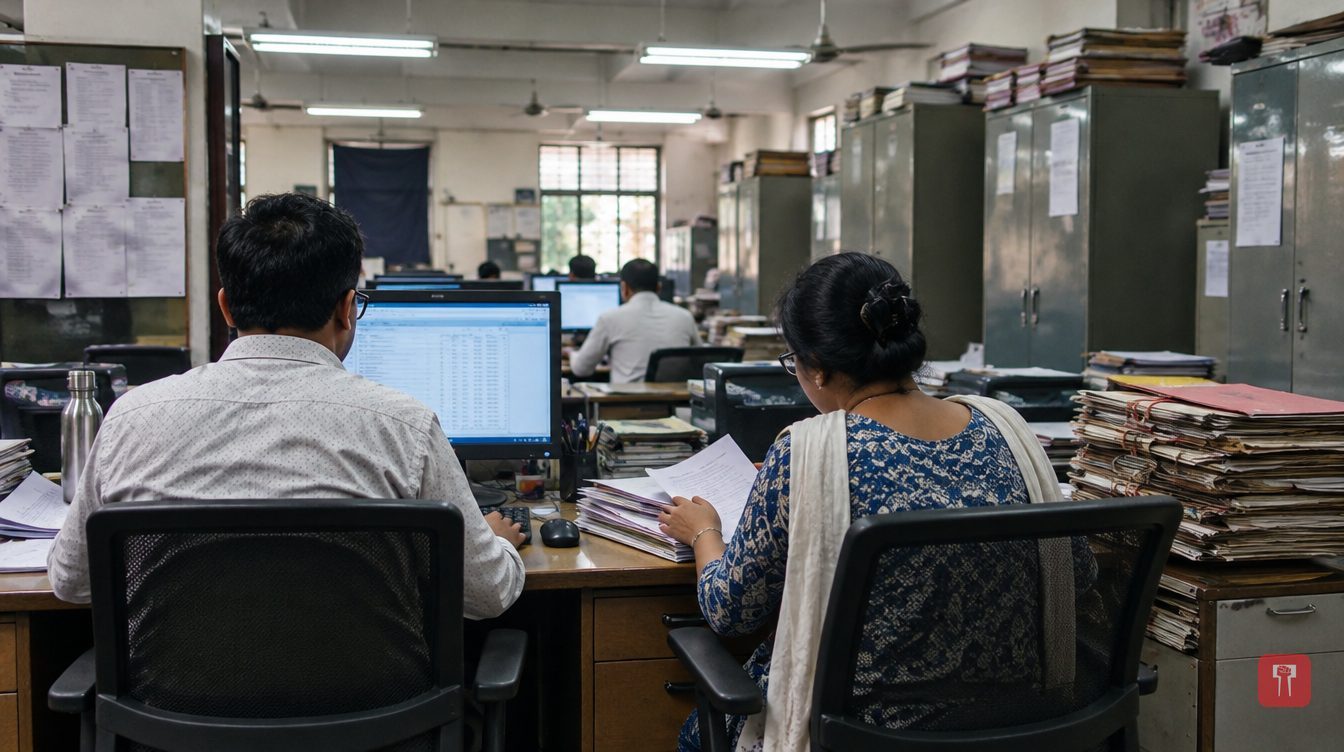
The Brihanmumbai Municipal Corporation (BMC) has decided to implement the e-office system across the civic body to bring speed, transparency and efficiency to its administrative work. Management of office files, correspondence and approval of proposals will now all be done digitally, Municipal Commissioner Ashwini Bhide said.
About 14,000 users, from the civic headquarters to the ward offices, will be brought onto the system in phases, Bhide said. The system will not start for everyone at once but will be extended to employees in stages. Files and correspondence will be processed online from now on.
The monthly review meeting of civic departments was held at the Command and Control Centre in Worli. The meeting reviewed the preparations for e-office and its actual implementation, and Bhide was speaking on that occasion. Additional Commissioners Dr Vipin Sharma, Abhijit Bangar and Dr Avinash Dhakne were present. Joint commissioners, deputy commissioners, assistant commissioners and heads of departments also attended.
To ensure smooth use of e-office, the civic body's information technology department will organise "training of trainers" for nodal officers. A centralised helpdesk is also being set up to resolve technical problems that arise during actual work.
The system has been developed by the National Informatics Centre. It will end the use of traditional paper files in the civic body. The system will make it possible to create electronic files, send them to the officers concerned, keep a record of inward and outward correspondence, and grant approval on them with a digital signature.
Another benefit is that senior officers will be able to directly track at which desk a file is pending and for how long. They will also be able to track the stage the approval process has reached. As a result, delays in decision-making can be avoided and administrative accountability can be fixed.

Comments
No comments yet. Be the first.