

Bhaubeej: Coconut and kargota given to brothers in many parts of Maharashtra
 Images are not validated/verified
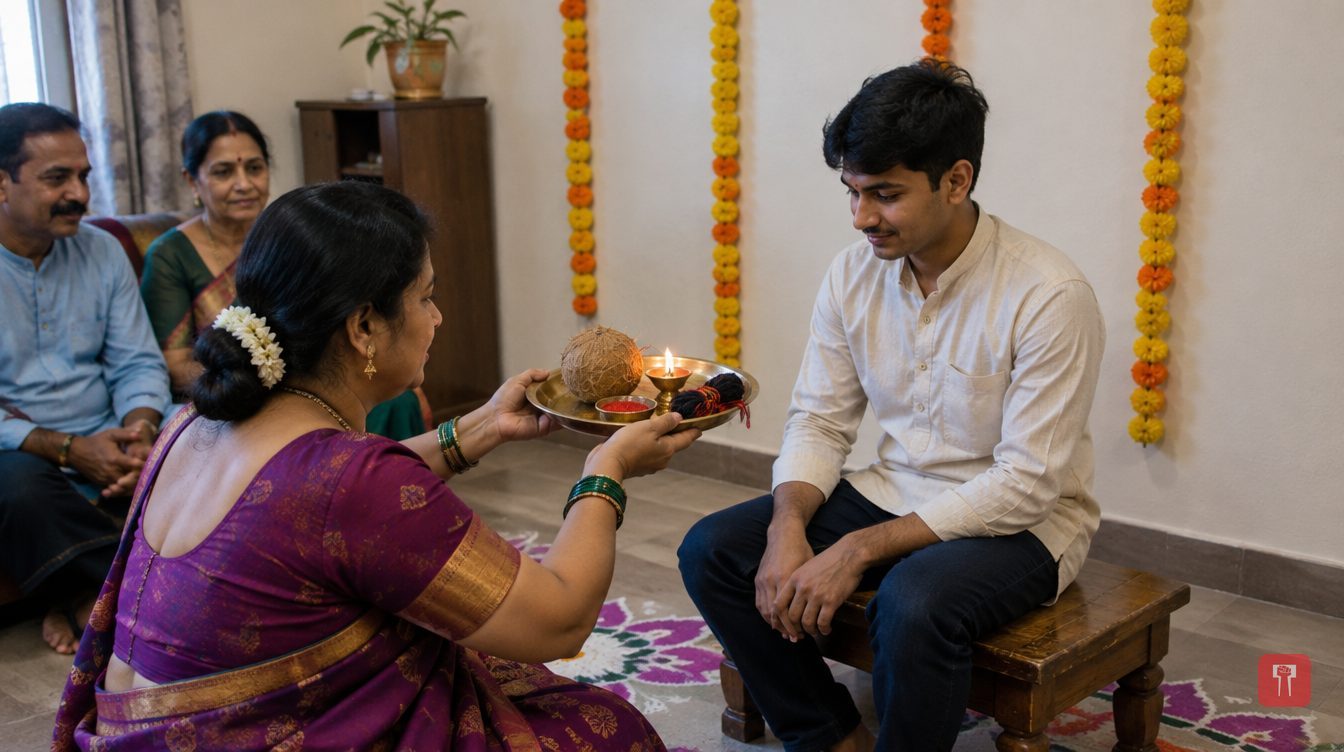
On Bhaubeej, sisters in many parts of Maharashtra give brothers a coconut and a kargota, each carrying wishes for long life, health and prosperity.
Mumbai: Bhaubeej, a festival that doubles the joy of Diwali and strengthens the bond between brother and sister, is being celebrated with enthusiasm everywhere on November 11.
On this day, the sister performs aarti for her brother and prays for his long life, good health and happiness and prosperity. The brother, too, gives his sister a gift and promises that he will always stand by her in joy and in sorrow.
In many parts of Maharashtra there is a special tradition of giving the brother a coconut and a kargota on Bhaubeej. Families have followed the custom for many years. The question is what belief actually lies behind giving a brother a coconut and a kargota, and what significance is attached to it from a religious point of view.
First, the coconut. In Hinduism the coconut is regarded as highly auspicious and sacred. It is traditional to offer a coconut at the start of any auspicious undertaking. The coconut is seen as a symbol of auspicious occasions, prosperity and good fortune.
When a sister gives her brother a coconut on Bhaubeej, it means she wishes happiness, peace and prosperity to remain in his life. The sentiment behind the custom is that the difficulties in the brother's life should go away, that he should find success in every field and that his health should stay good. Giving a coconut on Bhaubeej is therefore considered not merely a tradition but a prayer offered with love for the brother's bright future.
Now, the kargota. In some parts of Maharashtra it is the custom to give or tie a kargota on the brother on Bhaubeej. A kargota is a traditional thread tied around the waist. According to folk belief, the kargota is a symbol of protection, good fortune and long life.
A sister gives her brother a kargota so that his life may be safe, healthy and happy. The way the kargota is given differs in some places according to family tradition. Even so, the main purpose is the same: to offer good wishes for the brother's well-being.
The aarti also has its own significance. On Bhaubeej the sister performs aarti for her brother, applies a kumkum tilak on his forehead and prays for his long life. The feeling behind this ritual is an expression of the love, closeness and attachment in the bond between brother and sister.
While the sister prays for her brother's happy life, the brother resolves to stand firmly behind his sister. On the occasion the two exchange gifts and celebrate together. Bhaubeej is therefore not only a religious festival but also a day that renews family ties.
Reach readers on the ward they actually live in.
Advertise with Prime Time 24Reach readers on the ward they actually live in.
Advertise with Prime Time 24Reach readers on the ward they actually live in.
Advertise with Prime Time 24Choose primetime24.com as a preferred source on Google Google shows more stories from your preferred sources in Top Stories.
Reach readers on the ward they actually live in.
Advertise with Prime Time 24
Comments
No comments yet. Be the first.