

Bhaubeej legends: Yama and Yamuna, Krishna and Subhadra, and why the day is Yama Dwitiya
 Images are not validated/verified
Observed on Kartik Shukla Dwitiya at the close of Deepavali, Bhaubeej is tied to legends of Yamraj and Yamuna, Shri Krishna and Subhadra, and a Jain tradition.
Bhaubeej, also called Yama Dwitiya and Bhai Dooj, is the festival of the bond between brothers and sisters in Hinduism. Observed on Kartik Shukla Dwitiya, it falls at the close of the Deepavali festival of lights. The mythological tale of Yamraj and his sister Yamuna is most often cited as its origin. The story of Lord Shri Krishna and Subhadra is also linked to the festival.
The most popular legend is that of Yamraj, the god of death, and his sister Yamuna (Yami). Both are believed to be children of the Sun god. According to the legend, Yamuna lived happily in her marital home after her wedding but missed her brother Yamraj greatly. She invited him to a meal at her house several times. Yamraj, the lord of death, was always occupied with his work and could not visit his sister.
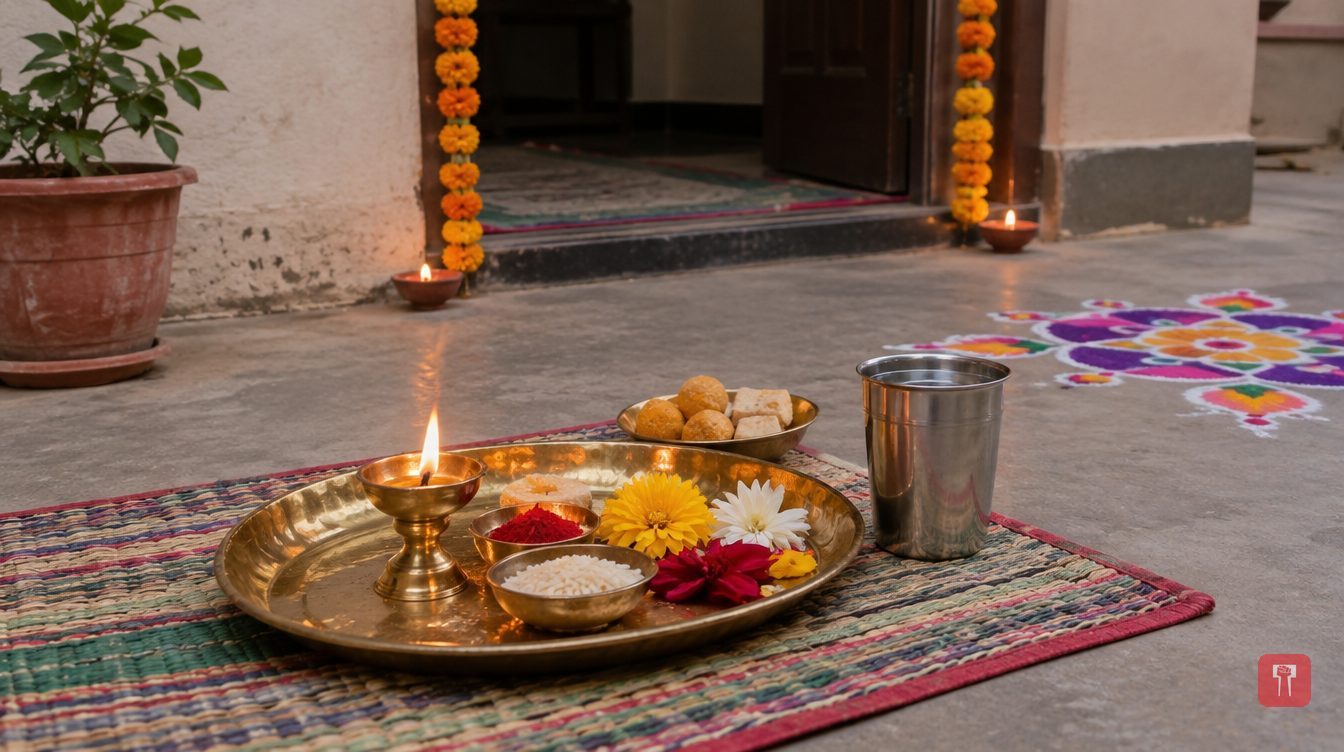
On Kartik Shukla Dwitiya, Yamraj suddenly decided to visit his sister. Yamuna was overjoyed to see her brother at her door. She welcomed him warmly, performed his aarti and applied a tilak on his forehead. She then served him a sweet, delicious meal she had made with her own hands.
Pleased with his sister's affection and hospitality, Yamraj asked Yamuna to seek a boon. According to the legend, Yamuna wisely asked: "Brother, come to my house to eat on this date every year, and let the brother of any sister who performs his aarti and feeds him on this day never have fear of you, that is, of death, and let him have a long life." Yamraj granted the wish and gave Yamuna clothes and jewellery. It is because of this legend that the day is called Yama Dwitiya. It is believed that bathing in the Yamuna river on this day and eating at a sister's house frees one from the fear of Yama.
The second important legend concerns Lord Shri Krishna of the Dwapara Yuga and his sister Subhadra. According to the legend, Shri Krishna slew a tyrannical demon named Narakasura, who tormented his subjects and held 16,000 women captive.
When Shri Krishna returned to his sister Subhadra after ending Narakasura, it was Kartik Shukla Dwitiya. Seeing her brother back after victory over a fearsome demon, Subhadra welcomed him joyfully. She performed his aarti, showered flowers on him and applied the sacred victory tilak on his forehead. She also fed him many sweets. It is said that the custom of a brother visiting his sister's house to have his aarti performed, and of the sister praying for his long life, has been widely observed since then.
The festival also has a reference in Jain tradition. When Lord Mahavira, the 24th Tirthankara of Jainism, attained moksha on Kartik Amavasya, the day of Diwali, his brother King Nandivardhan was plunged into deep grief. Distraught at the separation from Mahavira, Nandivardhan was taken to her home by his sister Sudarshana, who consoled him and eased his sorrow by feeding him. That day was Kartik Dwitiya, which is why the day also holds special significance in Jain culture.
Brothers and sisters who live in separate homes after marriage come together on the occasion and relive old memories. On this day the sister prays to God for her brother's happiness, prosperity and long life.
Women who have no brother of their own regard the moon god, Chanda Mama, as their brother and perform his aarti in the evening when a sliver of the moon appears. This is why children have long been shown the moon from infancy and taught to call it "Chanda Mama".
Reach readers on the ward they actually live in.
Advertise with Prime Time 24Reach readers on the ward they actually live in.
Advertise with Prime Time 24Reach readers on the ward they actually live in.
Advertise with Prime Time 24Choose primetime24.com as a preferred source on Google Google shows more stories from your preferred sources in Top Stories.
Reach readers on the ward they actually live in.
Advertise with Prime Time 24
Comments
No comments yet. Be the first.