

Why money is placed in the aarti thali on Bhaubeej, and what the tradition means
 Images are not validated/verified
Placing money in the aarti plate is seen as an expression of gratitude, charity, respect and prosperity, not merely a transaction.
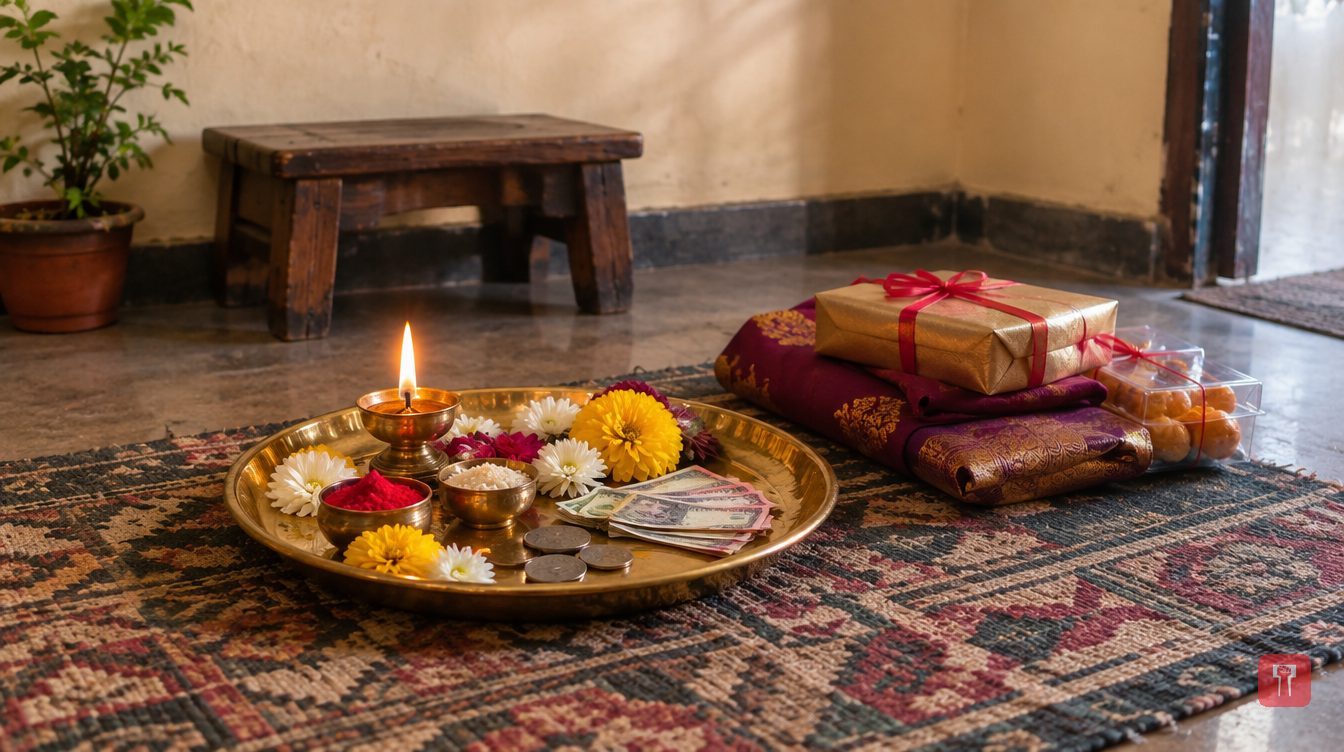
On Bhaubeej, a sister performs aarti for her brother and prays for his long life, happiness and prosperity. The brother then gives her a gift. Placing money in the plate after the aarti of a deity, putting money in the plate after aarti at festivals, and a brother placing money in the plate on Bhaubeej are practices still seen in many homes.
The question is why money is placed after an aarti or a gift, and whether it is merely an exchange or has a religious and spiritual significance too. In Indian tradition, money is not regarded only as a means of economic exchange. It is seen as a symbol of Lakshmi, prosperity and generosity. For this reason, the practice of placing money in the plate brings together feelings of gratitude, charity, respect, affection and prosperity.
Aarti is an important way of expressing reverence and devotion to a deity. It is performed after puja. Placing money in the plate at this time signifies gratitude for the happiness, contentment, health and prosperity the deity has granted. It is believed that whatever a person has received has not come from their own effort alone. It also reflects the support of many people, the company of nature and the grace of God. Giving away a part of one's earnings, or placing it at the deity's feet, is therefore considered an expression of gratitude. A deity does not need money, but the idea behind the practice is that a person uses the occasion to give part of their earnings for others' needs.
Charity holds a special place in Indian religious tradition. It means not merely giving money to someone, but voluntarily giving a part of one's earnings for the good of another. The 17th chapter of the Shrimad Bhagavad Gita describes three kinds of charity. Describing sattvik charity, Lord Shri Krishna says that a gift given out of a sense of duty, without expecting anything in return, at the right time, in the right place and to the right person, is considered sattvik.
The same spirit of charity is seen in the practice of placing money in the plate. Each person places an amount according to their means. This builds a spirit of renunciation and teaches people to reduce pride in wealth. Charity does not help only the recipient; it brings contentment and generosity to the giver as well.
The practice of performing aarti has a special place in Indian families. Aarti is performed for a person's success, health, long life and well-being. Performing it with the light of a lamp signifies that auspiciousness and positivity should remain in the person's life. It is customary especially to perform aarti for small children, newly married couples or people who arrive at the home on an important occasion. In some places, the money placed in the plate after aarti is used in the ritual of warding off the evil eye. The lamp, turmeric-kumkum, akshata and coins in the plate are considered to have special religious significance. In some practices, the money is waved over the person and then donated or kept in a particular place. The idea is that the evil eye is removed from the person and they prosper.
In Indian culture, wealth is regarded as a form of Lakshmi. Lakshmi is not merely the goddess of property but a symbol of opulence, good fortune, prosperity and auspiciousness. Placing coins or notes during puja reflects respect for wealth and a desire to use it properly. Earning money is important, but spending it for the right reasons and devoting part of it to the good of society is considered equally important. Worship of wealth is significant in festivals such as Lakshmi Puja on Diwali, Akshaya Tritiya and Dussehra. Worshipping money then means praying that wealth is not seen merely as a means of indulgence but is put to good use.
The tradition is not limited to worship of deities. The ritual is also used to express affection in relationships. Aarti is performed on Raksha Bandhan, Bhaubeej, birthdays, weddings and other auspicious occasions. On Bhaubeej, a sister performs aarti for her brother and prays for his long life, happiness and prosperity, and the brother then gives her a gift. The gift may be money, clothes or presents. It is not merely a financial exchange. It carries respect and affection for the sister and concern for her happiness.
In earlier times, dakshina and donations were an important means of livelihood for temple priests, purohits and those who conducted religious rites. It was customary to give dakshina after a puja, abhishek, homa-havan or religious ceremony was completed. Dakshina is an amount given with gratitude for the service of the person who conducts the ritual. In some places, money placed in the aarti plate is used for the priest or for running the temple. Such donations may be used for the temple's lamps and oil, naivedya, cleaning, religious festivals and other arrangements. The practice of placing money in the plate is thus also linked to a tradition of giving financial support to religious work.
The tradition of placing money in the plate during aarti or a gift is not merely part of ritual. Gratitude, giving a part of one's wealth to another, respect for relationships, charity and the proper use of prosperity are all contained in this small act. In present times, it has been described as more important to understand the sentiment behind the tradition while observing it. More important than how much money is placed in the plate is the spirit in which it is placed. Whether it is an amount given in gratitude to a deity or a gift given lovingly by a brother, its value cannot be measured in money.
Reach readers on the ward they actually live in.
Advertise with Prime Time 24Reach readers on the ward they actually live in.
Advertise with Prime Time 24Reach readers on the ward they actually live in.
Advertise with Prime Time 24Choose primetime24.com as a preferred source on Google Google shows more stories from your preferred sources in Top Stories.
Reach readers on the ward they actually live in.
Advertise with Prime Time 24
Comments
No comments yet. Be the first.