

8th Pay Commission: Estimate puts arrears at Rs 5.14 lakh for Rs 44,900 basic, decision awaited
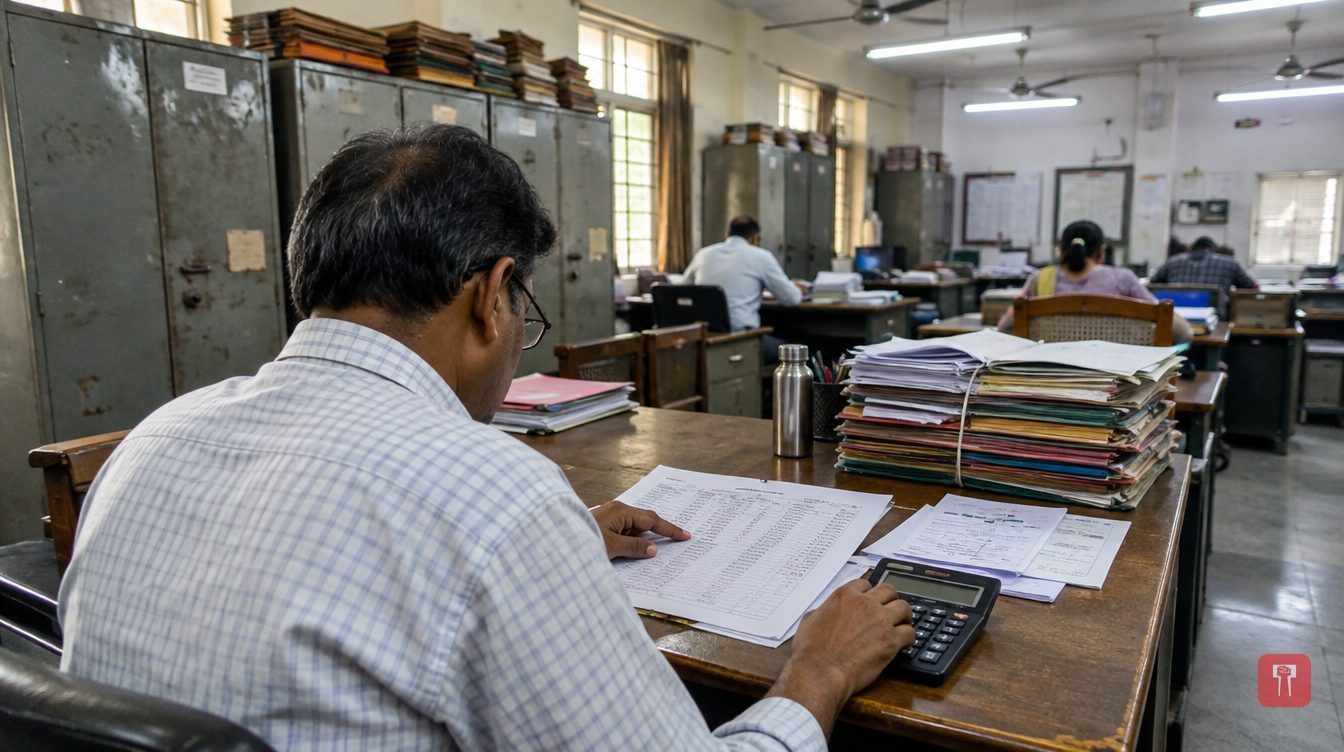 Images are not validated/verified
An illustrative calculation using a possible 2.57 fitment factor is not an official figure; actual pay and arrears will be known only after the Centre decides.
Central government employees and pensioners are watching the 8th Pay Commission closely. Discussion is intense on how much salaries will rise, what the fitment factor will be and how much arrears will be paid. One estimate has been worked out assuming a possible fitment factor of 2.57. It is not an official decision but a figure calculated only as an example. The actual increase and arrears will be clear only after the Centre's final decision.
The Centre constituted the 8th Central Pay Commission on November 3, 2025. Justice Ranjana Prakash Desai is its chairperson, Prof. Pulak Ghosh is a part-time member and Pankaj Jain is member-secretary. The commission has 18 months from its constitution to submit recommendations, so its report is expected by May 2027. The government will then examine the recommendations and decide on implementation, the new pay structure and possible benefits. The commission's meetings were reportedly held in Bengaluru and Mumbai in October 2026.
The 7th Pay Commission's recommendations took effect from January 1, 2016. On that basis, January 1, 2026 is being treated as the likely effective date for the 8th commission too. But this is not a firm official date. The increase will depend on the date the government fixes after approving the recommendations. If the government implements the new pay with retrospective effect from January 1, 2026, arrears could be payable from that date. There is no official announcement yet on the arrears period, the method of calculation or payment.
There has been no official announcement on the fitment factor either. The estimate is based on a possible 2.57. For instance, take the current basic pay of a Level 7 employee in the 7th Pay Commission pay matrix as Rs 44,900. Multiplied by 2.57, the possible new basic comes to Rs 1,15,393, an increase of Rs 70,493 in basic pay. This should not be read as the rise in take-home pay. Actual salary will differ depending on dearness allowance (DA), house rent allowance (HRA), other allowances and the final pay structure.
The 12-month arrears estimate rests on certain assumptions: a 2.57 fitment factor, 60 per cent DA for January to June 2026 and 63 per cent DA for July to December 2026. These DA rates are assumed only for this example and should not be taken as official rates.
For January to June 2026, 60 per cent DA on a basic of Rs 44,900 is Rs 26,940, making basic plus DA Rs 71,840. Against the possible new basic of Rs 1,15,393, the monthly difference is Rs 43,553. The difference over six months is Rs 2,61,318.
For July to December 2026, 63 per cent DA is Rs 28,287, making the total with basic Rs 73,187. Against the new basic of Rs 1,15,393, the monthly difference is Rs 42,206. The six-month difference is Rs 2,53,236.
Adding the two periods, the possible 12-month difference is Rs 5,14,554, which means this particular calculation points to arrears of about Rs 5.14 lakh. This is not an official arrears calculation. The actual arrears will depend on how DA is applied on the revised pay, how the existing DA is adjusted and how other allowances are counted.
Actual arrears will be determined by four factors. First, the fitment factor: how much the commission recommends and whether the government accepts it. Second, the effective date: whether the increase applies from January 1, 2026 or another date is fixed, which will determine the arrears period. Third, DA and other allowances: the method of calculating them can change the final amount. Fourth, government approval: the picture of revised pay and arrears will be clear only when the Centre approves after the commission's report.
The report is expected by May 2027, but submission of the report and actual implementation of revised pay are separate processes. Studying the recommendations, getting government approval and issuing the necessary orders may take extra time. It would therefore not be right to take a new basic of Rs 1.15 lakh or arrears of Rs 5.14 lakh as certain. The 2.57 fitment factor and the Rs 5.14 lakh arrears are figures from a possible calculation, not official announcements.
Reach readers on the ward they actually live in.
Advertise with Prime Time 24Reach readers on the ward they actually live in.
Advertise with Prime Time 24Reach readers on the ward they actually live in.
Advertise with Prime Time 24Choose primetime24.com as a preferred source on Google Google shows more stories from your preferred sources in Top Stories.
Reach readers on the ward they actually live in.
Advertise with Prime Time 24
Comments
No comments yet. Be the first.