

Pune traders ask RBI for fresh small notes as soiled, taped notes spark counter disputes
A Pune-based traders' body has petitioned the RBI to put new Rs 10, 20 and 50 notes into circulation and withdraw worn ones, as arguments over dirty notes spread.
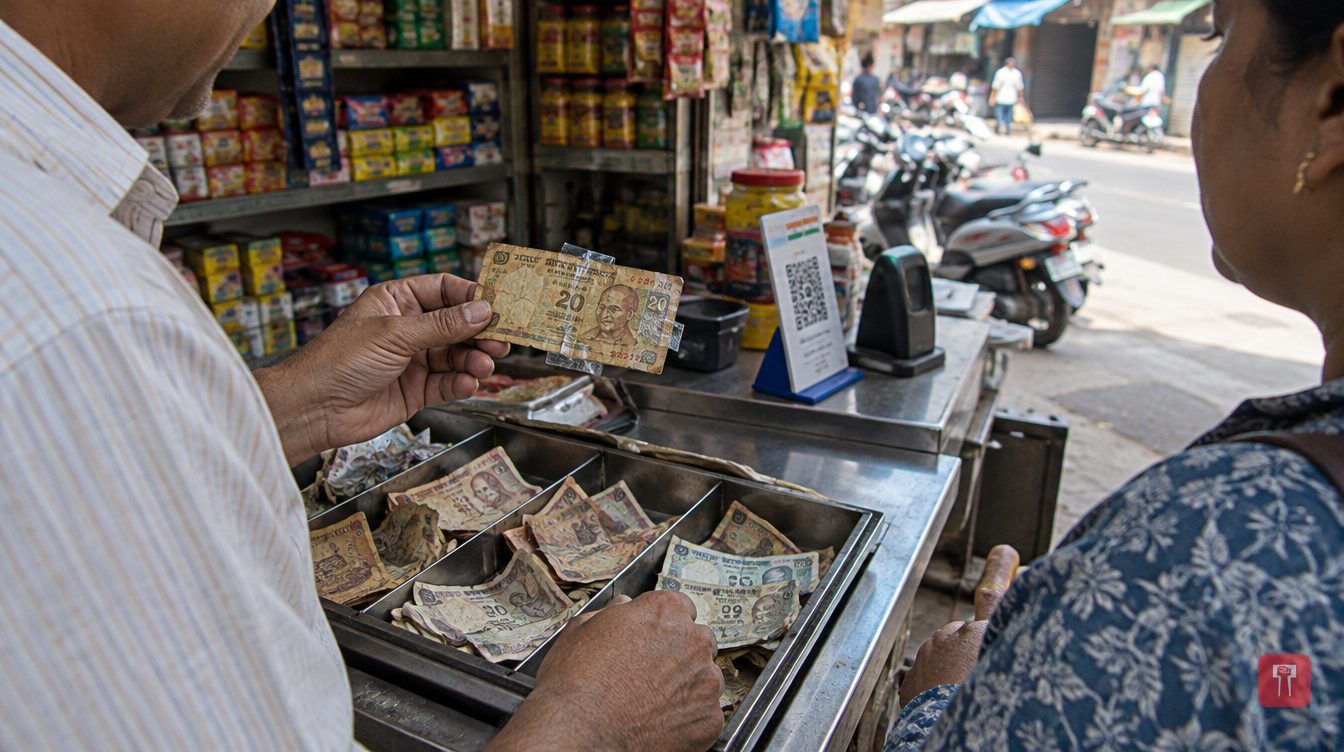 Images are not validated/verified
Tempers are rising in Pune over dirty Rs 10, Rs 20 and Rs 50 notes. Arguments are breaking out at shops, malls and petrol pumps, and also between commuters and those who run public transport. The Vyapar Vikas Mandal (VVM), a Maharashtra traders' body headquartered in Pune, has submitted a formal memorandum to the Reserve Bank of India (RBI) demanding that new notes be put into the market and decrepit notes withdrawn from circulation.
New notes of small denominations are no longer easy to find. The notes in use have passed through thousands of hands and have become greasy, worn scraps. Nobody wants to be left holding a note that "will not be accepted". The situation is not much different in other cities of Maharashtra, and cashless transactions are even rarer in villages.
Despite UPI and digital scanners, cash remains the backbone of the economy. Across the state, handcarts, grocery counters and ticket windows are full of dirty, torn and, in many places, taped notes. Even small daily purchases are turning into heated arguments.
Manoj Shinde, who runs a CCTV camera and surveillance equipment shop in Pune's wholesale market and is a VVM member, said the search for change affects his business every day. "Every morning begins with an argument over a crumpled Rs 10 note. Customers flatly refuse dirty Rs 10 or Rs 20 notes and say we are handing them garbage. But when they pay, they hand over notes stuck together with three layers of Sellotape. Just yesterday, after a bitter quarrel over a taped Rs 50 note, a customer walked off leaving a full bag of milk and vegetables. We are shopkeepers, not experts at examining notes. Half our day goes in deciding the condition of a note," he said.
Altaf Shaikh, a salaried employee, said he recently had an argument with the person at the counter of a well-known sweet shop in Wanowrie. According to him, the employee refused the note he offered, saying customers do not accept "bad" notes.
Dinesh Chaudhari, who runs a stationery shop, said the shortage spreads through the entire supply chain. He said public transport, shared autorickshaws and goods tempos run entirely on cash. When conductors and drivers refuse dirty Rs 10 and Rs 20 notes, passengers protest, traffic is held up and trips run late. Drivers return to depots with bundles of rejected, crumbling notes that even local petrol pumps will not accept. "When the basic legal tender in your pocket is treated like waste paper, we cannot run transport," Chaudhari said.
Kunal Sonawane, a senior citizen from Raviwar Peth's Rasta Peth area, asked, "Is the government deliberately not printing notes to promote cashless transactions?"
Semi-urban and rural areas, where digital networks are weak, there are workers without bank accounts and daily wages are paid in cash, have been hit hardest. The VVM memorandum says local bank branches are not giving traders clean small notes and are also turning away people who come to exchange dirty ones.
VVM president Kamlesh Dilip Mutha said the banking system is hurting small traders. In his words, "Cash is the lifeblood of retail and small-scale business. Small notes are vanishing or turning into useless rags, and in this way the banking system is choking small businesses. We have submitted a formal memorandum to the RBI demanding immediate intervention."
The Mandal wants the RBI to ensure an uninterrupted supply of crisp Rs 10, Rs 20 and Rs 50 notes to public sector bank branches, cooperative banks and ATMs in rural and semi-urban areas. It also wants commercial banks to be firmly told to accept soiled notes without turning customers away and to withdraw them from circulation. Trade bodies say that unless the RBI acts against sluggish bank branches and puts new, clean notes into circulation, this daily tussle at counters will only grow.
An RBI official said the central bank does not print these notes on a fixed date. "The decision to print is made through the annual indent placed with the currency presses, which depends on economic growth, inflation, GDP projections and the demand for cash. Public demand will certainly be looked at and the authority will act accordingly," the official said.
According to the official, RBI rules say that bad money should not remain in the public's hands. "Notes that have become dirty, limp or split into two pieces, provided the cut does not pass through the portions bearing serial numbers, are treated as soiled notes," the official said. Such notes should be exchanged across the counter at any public sector bank branch, a private bank's currency chest or an RBI issue office, without any form or application.
Notes with missing portions, notes torn through key security features such as the Ashoka emblem or the signature, or badly damaged notes can be exchanged under the RBI's note refund rules. Citing the RBI rulebook, the official said, "Badly burnt or crumbling notes can be handed directly to an RBI issue office or deposited through a Triple Lock Receptacle (TLR) drop box."

Comments
No comments yet. Be the first.