

IISER Pune removes Umar Khalid's book from library after online criticism
The institute withdrew a copy of the jailed activist's book after a social media backlash, and the in-charge chairman of its board said action had been initiated.
 Images are not validated/verified
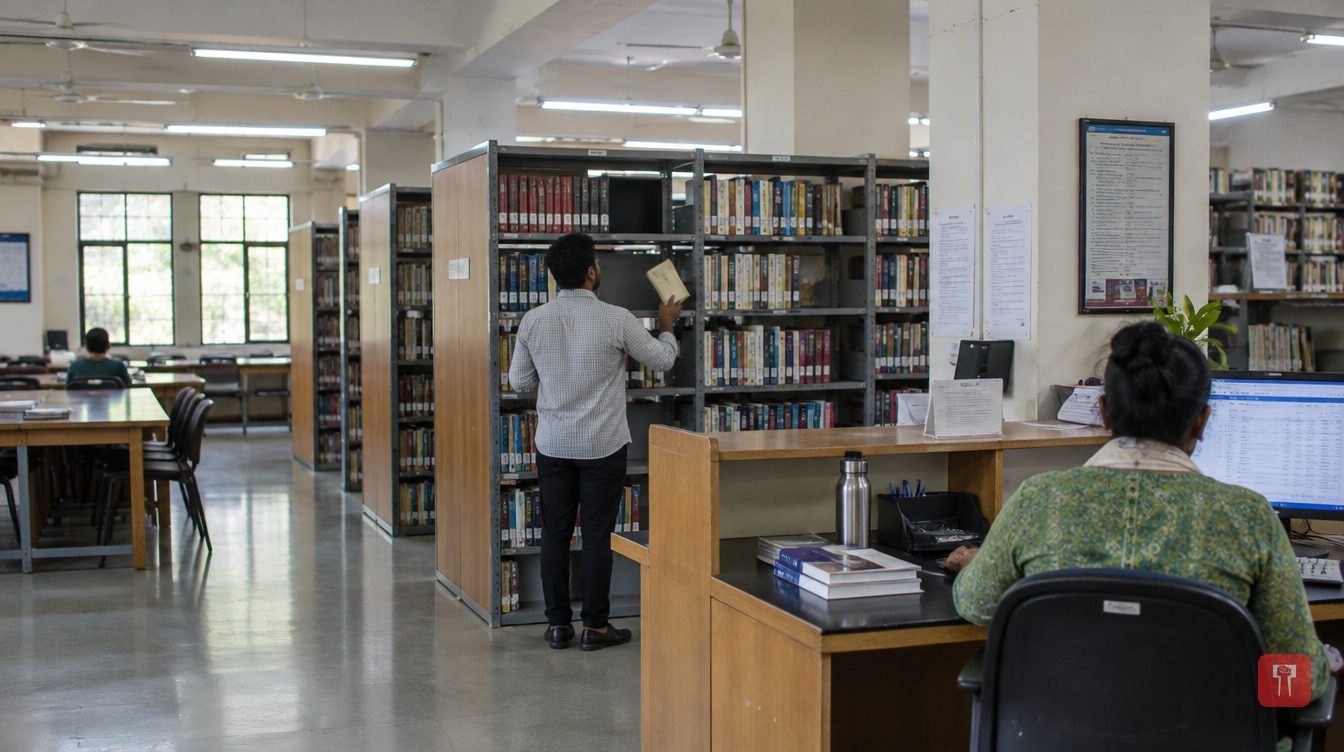
Pune, October 25, 2026: The Indian Institute of Science Education and Research (IISER) Pune has removed a copy of a book by jailed activist Umar Khalid from its library. The step followed heavy criticism on social media after the book was added to the library.
The book is titled "Fractured Communities: Adivasi Histories and the Politics of Power" and is published by Juggernaut. It is based on Khalid's 2018 PhD thesis, done at the Centre for Historical Studies, Jawaharlal Nehru University. The research examines the colonial and post-colonial history of Adivasi communities in the Singhbhum region of present-day Jharkhand.
Khalid has been in judicial custody since September 2020. He faces a case under the Unlawful Activities (Prevention) Act (UAPA) and related sections in connection with the 2020 north-east Delhi riots. He has not been convicted so far.
On Saturday, a social media post went viral saying the book was held in the library of this centrally funded science institute. It drew sharp reactions. Critics asked why a book by a person facing serious charges related to national security had been placed in a reputed science research institute.
Madabhushi Madan Gopal, in-charge chairman of the IISER Pune Board of Governors, responded on X that the institute had acted immediately. He wrote, "As incharge Chairman, BoG, IISER Pune, I am shocked to know this this is retracted last night & action is initiated on those who played this mischief. I assure such things will not happen again in IISER Pune. Prof. Sunil Bhagwat Director has taken immediately steps we need to be alert."
Gopal then said the Board of Governors looks after the finance committee and board meetings, while the director handles day-to-day administration and academic matters.
He also wrote, "Unfortunately mischief happened & corrected immediately." He added that the institute is "aware and alert" and that "suitable remedial measures" should be taken.
The institute's director, Prof. Sunil Bhagwat, is said to have taken immediate corrective steps. The institute's official social media handles have so far issued no detailed official statement.
The episode has revived debate on academic freedom, on the policy for buying library books at publicly funded institutions, and on the presence of politically contentious material on a science campus. Some former students and commentators demanded an inquiry into the library committee and the faculty member who recommended the book. Others said the book is not banned and is available in the market.
Historians have praised Khalid's thesis earlier. Ramachandra Guha had described it as among the best doctoral research he had read by an Indian scholar. The work rests on archive-based research on colonial rule, the structure of communities, and the relationship between the state and Adivasis, not on present-day politics.

Comments
No comments yet. Be the first.