

Pune slips from 8th to 12th in Swachh Survekshan, wins no award despite Rs 3,500 crore spend
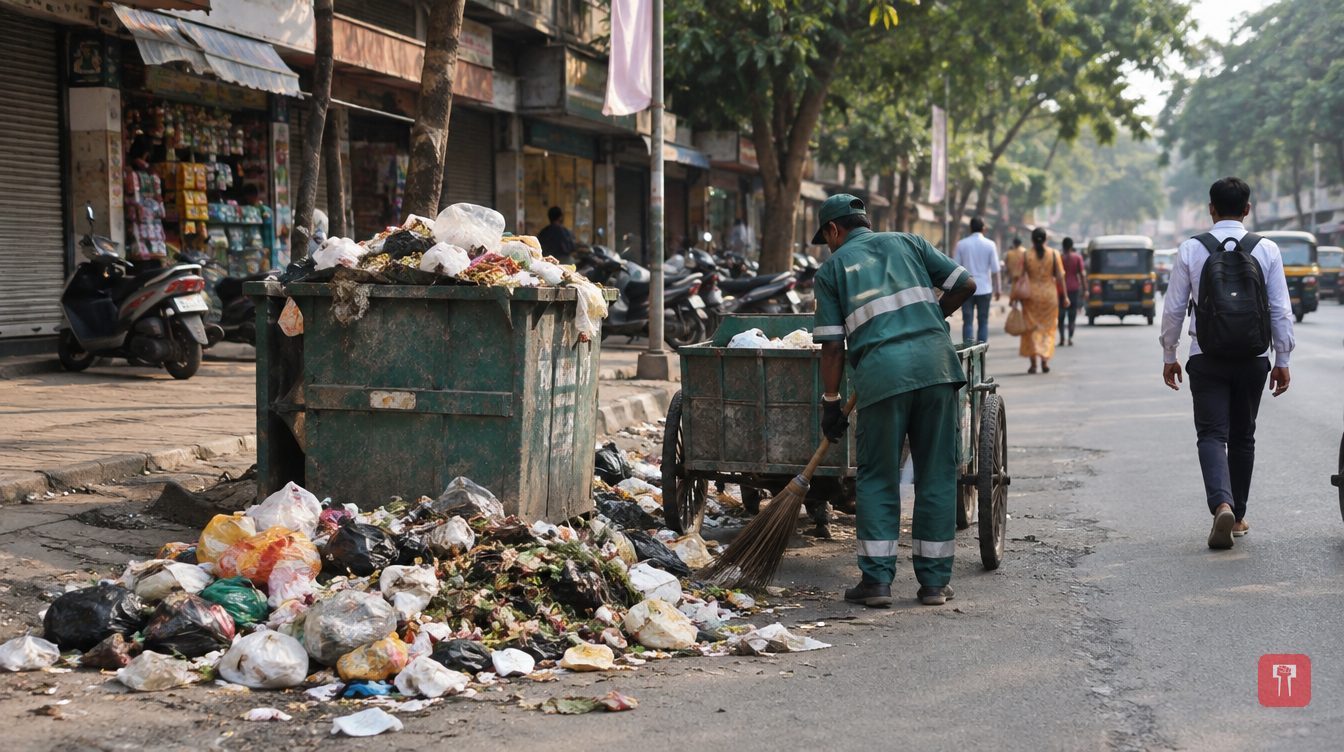 Images are not validated/verified
Pune ranked 12th among cities with over 10 lakh people in Swachh Survekshan 2025-26, down from eighth, and got no national or state award; the opposition has attacked the civic administration.
Pune has taken a heavy blow in the Centre's Swachh Survekshan 2025-26 rankings. The city fell behind despite spending Rs 3,500 crore on waste management and recruiting 3,500 sanitation workers. Pune was eighth last time. This time it ranked 12th among cities with a population of over 10 lakh.
The Pune Municipal Corporation (PMC) wanted to be among the country's three cleanest cities, but it did not win a single national or state-level award. Having dropped out of the top 10 in the million-plus category, Pune's rank among all cities with a population of over one lakh fell to 27th.
President Droupadi Murmu presented the awards at Vigyan Bhawan in New Delhi on Wednesday, November 11. Pune returned empty-handed, while neighbouring Pimpri-Chinchwad and the Navi Mumbai Municipal Corporation were honoured.
After the eighth rank last year, Municipal Commissioner Naval Kishore Ram had expressed confidence that Pune would be in the top three next time. He had said the administration was working to reach that mark with citizens' participation and the available resources. This time Pune did not even figure in the list of those honoured.
City experts and political leaders have listed several unresolved problems behind the poor showing. The biggest is the 28 lakh metric tonnes of legacy waste at the Uruli Devachi depot, which the PMC is still struggling to process scientifically and dispose of safely. The target of scientifically treating all the sewage generated in the city has also not been met. In air quality, Pune slipped to 18th in a list of 50 cities, having earlier ranked sixth and eighth. This has raised questions about the corporation's environmental initiatives.
The opposition has attacked the administration and the ruling Bharatiya Janata Party. Chandu Kadam, leader of the Congress group in the corporation, alleged that instead of focusing on ground-level cleanliness through the year, the administration was busy with paper and virtual campaigns.
Raising the issue at a Standing Committee meeting, committee member and former Pune city Congress president Prashant Jagtap said Pune was dirty and highly polluted even though the BJP was in power from the corporation to the Centre. He called the decline, after the recruitment of 3,500 sanitation workers and spending of Rs 3,500 crore, a result of the ruling party's indifference and inaction. Citing recent findings, he also asked what the answer was to reports that Pune was among the country's most polluted cities and that its air was not fit to breathe.
There is also talk in administrative circles about whether delays in the assessment affected the final score. Three central inspection teams were due to visit the city, but only the first came, in June-July, and the city kept waiting for the remaining inspections.
Responding to the criticism, PMC Additional Municipal Commissioner Prajit Nair spoke of corrective action. "Pune's cleanliness drive will be reviewed in full. We will find out exactly what went wrong and where the shortcomings were, and further steps will be taken accordingly," he said.
Among the reasons cited for the poor performance is the roughly 28 lakh metric tonnes of legacy waste at the Uruli Devachi landfill site. Cities ranked high in Swachh Survekshan earn good marks for complete biomining and clearance of old dumpsites, and Pune fell behind here. The second reason is incomplete sewage treatment. The PMC could not achieve 100 per cent sewage treatment across the city. Untreated water flowing into rivers such as the Mula-Mutha directly affects the scores for "Water Plus" and ODF++ certification, which carry considerable weight in the survey.
The third reason cited is the gap between spending and implementation on the ground. Crores of rupees were spent on solid waste management contracts and cleanliness drives, but experts and opposition leaders pointed to overflowing roadside bins, old garbage blackspots and weak waste segregation. The fourth reason is uneven coverage. Cleaning drives and garbage collection were limited to a few select core areas, while waste collection remained irregular and sanitation infrastructure inadequate in the newly added outlying villages and crowded old neighbourhoods.
The fifth reason cited is delay in coordinating the assessment and administrative laxity. Field inspections by the central teams were delayed and held in parts. There was a gap after the first inspection in June-July. Critics said that instead of short-term cleaning at survey time, there was no sign of continuous monitoring through the year. The sixth issue is the credibility of citizen feedback. Reports said PMC staff were instructed to enter responses during the feedback campaign, raising concern about the scores for genuine public participation and satisfaction.
Reach readers on the ward they actually live in.
Advertise with Prime Time 24Reach readers on the ward they actually live in.
Advertise with Prime Time 24Reach readers on the ward they actually live in.
Advertise with Prime Time 24Choose primetime24.com as a preferred source on Google Google shows more stories from your preferred sources in Top Stories.
Reach readers on the ward they actually live in.
Advertise with Prime Time 24
Comments
No comments yet. Be the first.