

Pimpri-Chinchwad wins Maharashtra's top Swachh Survekshan spot among big cities, gets national award
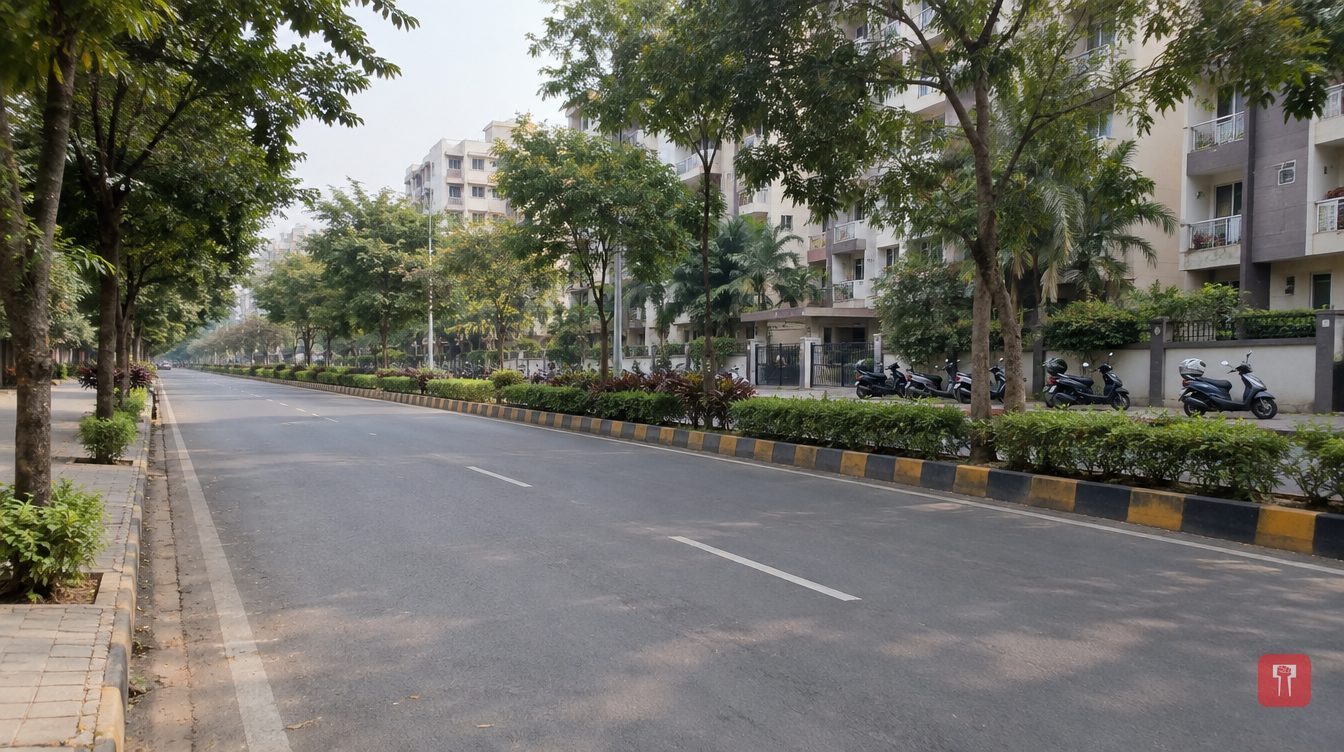 Images are not validated/verified
Pimpri-Chinchwad Municipal Corporation topped the 10 lakh-plus population category in the state, and President Droupadi Murmu presented the award in New Delhi.
The Pimpri-Chinchwad Municipal Corporation (PCMC) has come first in Maharashtra among cities with more than 10 lakh residents in Swachh Survekshan 2025-26. That makes it the cleanest large city in the state. The civic body also won a national award for its work on cleanliness and its waste management system.
President Droupadi Murmu handed over the award on Wednesday at a function in Vigyan Bhawan, New Delhi. Mayor Ravi Landge and Commissioner Dr Vijay Suryavanshi accepted it for the corporation. Additional Commissioner Kuldeep Jangam and Deputy Commissioner Dr Pradeep Thengal were present as well. Union Minister of Housing and Urban Affairs Manohar Lal, Minister of State Tokhan Sahu, department secretary Satendra Singh and D Thara attended, along with a number of other senior officials of the Union government.
The recognition is for work to strengthen the city's sanitation set-up. The corporation points to better planning, improved handling of waste, coordination between its departments, the use of technology and the involvement of citizens.
According to the corporation, the aim was to turn cleanliness into an everyday habit for residents instead of something confined to occasional drives. In practice, this meant that garbage is separated where it is generated, picked up on a regular schedule, and then processed and recycled in a scientific manner. Public spaces are also kept clean.
Four streams of waste are collected separately: wet, dry, sanitary and domestic hazardous. Each is then treated and disposed of in its own way. The corporation also runs Reduce, Reuse and Recycle (RRR) centres, which urge residents to reuse and recycle household goods and to adopt practices that are kind to the environment. Efforts to make useful articles out of discarded material were also promoted.
Roads, gardens, public places and the surroundings of corporation facilities got particular attention. Housing societies, non-governmental organisations and community groups joined awareness campaigns that asked people to dispose of their waste responsibly.
The exercise did not rest with the health department alone. The drainage, water supply, civil engineering, electrical, environment and garden departments were all involved. Their combined work helped keep public infrastructure in order, improved civic amenities, protected the environment and kept public places in good condition.
At the ward level, assistant medical officers of health, chief sanitary inspectors and sanitary inspectors drew up the cleaning plans and monitored how they were carried out. The work on the ground was done by sanitation workers, who kept roads, residential areas and public places clean.
Corporation officials gave much of the credit to these workers, who go out through the year, in every season and in difficult weather, to keep neighbourhoods tidy. The administration said the workers' sustained effort, together with planning and effective execution, raised the standard of cleanliness in the city.
Officials also described citizen participation as a major factor in the result. Residents were asked to separate waste at home, avoid littering, hand over recyclable material in the proper manner and take charge of the cleanliness of their own surroundings. By working with housing societies, voluntary organisations and social groups, the corporation sought to present cleanliness as a civic duty shared by everyone, and not a service that depends solely on the municipal administration.
Mayor Ravi Landge said that first place in Maharashtra acknowledges the combined effort of the city administration, sanitation workers and citizens. "Cleanliness plays a fundamental role in a city's development, and the active participation of citizens is as important as the administration's efforts. This award, won through the hard work of sanitation workers and public participation, is a matter of pride for the city. We will keep working to set higher standards of cleanliness and to retain this position," he said.
Commissioner Dr Vijay Suryavanshi said the honour reflects the positive changes that sustained effort and systematic planning have brought to the city's sanitation system.
Additional Commissioner Kuldeep Jangam said that the sanitation system could be improved only if planning and day-to-day implementation on the ground worked in step. He also spoke about the sanitation workers who keep roads, public places and residential areas clean even in hard weather.
Jangam said, "The national award is a tribute to the hard work of every sanitation worker and the municipal administration. It has given fresh motivation to improve the city's cleanliness further."
Deputy Commissioner Dr Pradeep Thengal said the success of any sanitation system depends on how efficiently the staff on the ground perform and on how far citizens cooperate. He said the health department has worked without a break on proper segregation of waste, collection on time, upkeep of public places and public awareness.
The PCMC administration said it would continue to work on cleanliness, strengthen sustainable waste management and hold on to the city's place in future cleanliness rankings.
Reach readers on the ward they actually live in.
Advertise with Prime Time 24Reach readers on the ward they actually live in.
Advertise with Prime Time 24Reach readers on the ward they actually live in.
Advertise with Prime Time 24Choose primetime24.com as a preferred source on Google Google shows more stories from your preferred sources in Top Stories.
Reach readers on the ward they actually live in.
Advertise with Prime Time 24
Comments
No comments yet. Be the first.