

Pune Opposition Leader Urges Smaller Tenders for Drainage, STP Works in Merged Villages
PMC Leader of Opposition Nilesh Nikam has asked the municipal commissioner to split drainage and sewage plant works in merged villages into smaller tenders for competition and transparency.
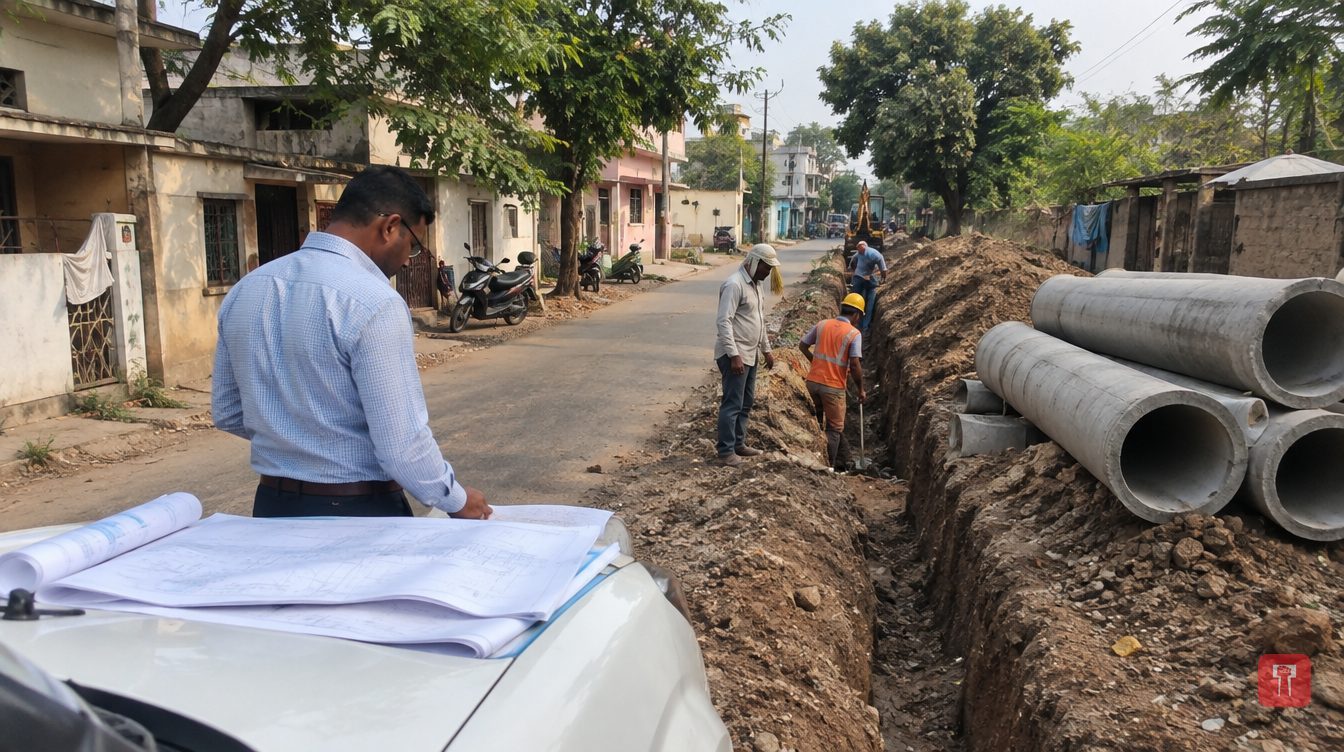 Images are not validated/verified
Pune: Leader of the Opposition in the Pune Municipal Corporation (PMC), Advocate Nilesh Nikam, has demanded that drainage network and sewage treatment plant (STP) works in the villages merged into the city limits not be bundled into large contracts worth hundreds of crores of rupees. He said smaller tenders should be floated village-wise or according to natural basins.
Nikam has submitted a memorandum on the matter to the municipal commissioner. In it, he has sought greater competition and transparency in the tender process. He has also sought safeguards for quality of work, public safety and administrative accountability.
Large tenders for drainage networks and STP projects in these villages are expected to be issued soon. However, the development plans for these areas are still stalled. Nikam said the corporation should first survey natural streams, drains, existing roads and the flow of sewage. The survey should be based on natural drainage basins, and works should be planned only afterwards. He said that instead of one large tender, separate packages should be made according to technical requirements, which would benefit the corporation itself.
Nikam has objected to a proposal to combine projects into a tender of about Rs 300 crore to Rs 350 crore. According to him, such contracts could reduce the opportunity for capable local contractors to bid. He alleged that contractors who win large projects keep their profit and subcontract the actual work at lower rates. He said this could worsen construction quality.
He has also asked the PMC to look at the Central Vigilance Commission guidelines, so that overly strict eligibility conditions do not kill competition. He said that with smaller packages, work could begin at many places at once. According to the memorandum, projects could then be completed in nine to 12 months, whereas they may now drag on for three to four years. In Nikam's view, a shorter timeline would reduce the extra cost caused by price escalation, and roads could be repaired sooner after digging.
Nikam has also listed the dangers of roads remaining dug up for long periods, such as traffic jams and accidents. His memorandum mentions an elderly man who allegedly fell into a pit dug for drainage work on October 18, 2026 and died. Citing this, he has sought a time-bound construction schedule in which public safety comes first.
He has also proposed that contractors be made responsible for obtaining the necessary approvals from the traffic police, railways, the National Highways Authority of India and the electricity department. He said no extension or additional payment should be granted on the ground of delays in these approvals. The memorandum also suggests that engineers assigned to the projects not be transferred until the work is complete, since continuity of supervision is essential for effective monitoring.
Nikam has demanded that complete details of every drainage line, including its length, depth and manhole locations, be geotagged and made publicly available through GIS. He also said the vigilance department should check the quality and measurement of at least 25 per cent of the completed work before bills are paid. The memorandum seeks penalties for delays and proposes withholding the project consultant's fee if quality shortfalls are found.
Citing Sections 73 and 74 of the Maharashtra Municipal Corporations Act and Section 4 of the Right to Information Act, Nikam has asked the administration to include these conditions in the tender documents to ensure proper use of public money. He has warned that if the demands are not met, he will file a public interest litigation (PIL) in the Bombay High Court to stop what he allegedly describes as a waste of public money.

Comments
No comments yet. Be the first.