

PCMC waste segregation awareness campaign cost rises from Rs 20.49 crore to Rs 108.18 crore
Repeated extensions to the contracts have pushed up spending on the Pimpri-Chinchwad campaign, and questions are being raised about its impact.
 Images are not validated/verified
The Pimpri-Chinchwad Municipal Corporation's (PCMC) awareness campaign on waste segregation is now under scrutiny. The tender was originally priced at Rs 20.49 crore, but repeated extensions have taken the spending to Rs 108.18 crore. The campaign was modelled on Indore's waste management system and aimed to prepare people to separate wet and dry waste.
Questions are being raised over why the same agencies have been working for so long, why a new tender was delayed, and how much impact the campaign has had on the ground.
The civic body's health department began the tender process in October 2021 to get wet and dry waste segregated. Private agencies from Indore and Pune were given work in eight wards. The original contract was worth Rs 20,49,50,920. The work went to Basics Municipal Waste Ventures, Janwani, D'Vine and the All India Institute of Local Self-Government. The original contract term ended in November 2022.
A fresh tender was expected after that, but the administration kept extending the existing contracts. The agencies were allowed to continue on the condition that further extensions would be considered if their performance was good.
According to sources, the contracts have been extended nine times and work is now under way on a tenth extension. Total spending has reached Rs 108.18 crore. A new tender was started at one point, but it was withdrawn after objections were raised.
The scheme was drawn up in 2021 by the then municipal commissioner Rajesh Patil. He wanted to introduce some parts of Indore's approach to waste segregation here. Four private agencies were engaged for an initial two years to teach people to separate wet, dry and hazardous waste. Critics say that, because of the repeated extensions, the same model has run for years and there has been no clear public assessment of its impact.
Extensions continued even after elected corporators returned following the administrator's tenure. This has raised the question of why the corporation could not complete the tender process and put a long-term arrangement in place.
The corporation pays the agencies Rs 24.15 per household every month. Given this spending, the administration is expected to give a clear account of the campaign's reach and results. This includes how many households were reached, which awareness activities were held and how often, what change there has been in people's segregation habits, and what measurable effect there has been on the city's waste system. Without this, it is difficult to say whether the results match the spending.
Pradeep Thengal, deputy commissioner of the health department, said awareness programmes are necessary and that the existing agencies were given extensions because the new tender was not completed. Thengal said, "It is necessary to spread awareness among citizens about segregating wet and dry waste. The new tender could not be completed, so the agencies were given extensions from time to time. When the new tender for waste collection and transport is issued, the awareness component will also be included in it. For now, work is going on under the extensions given."
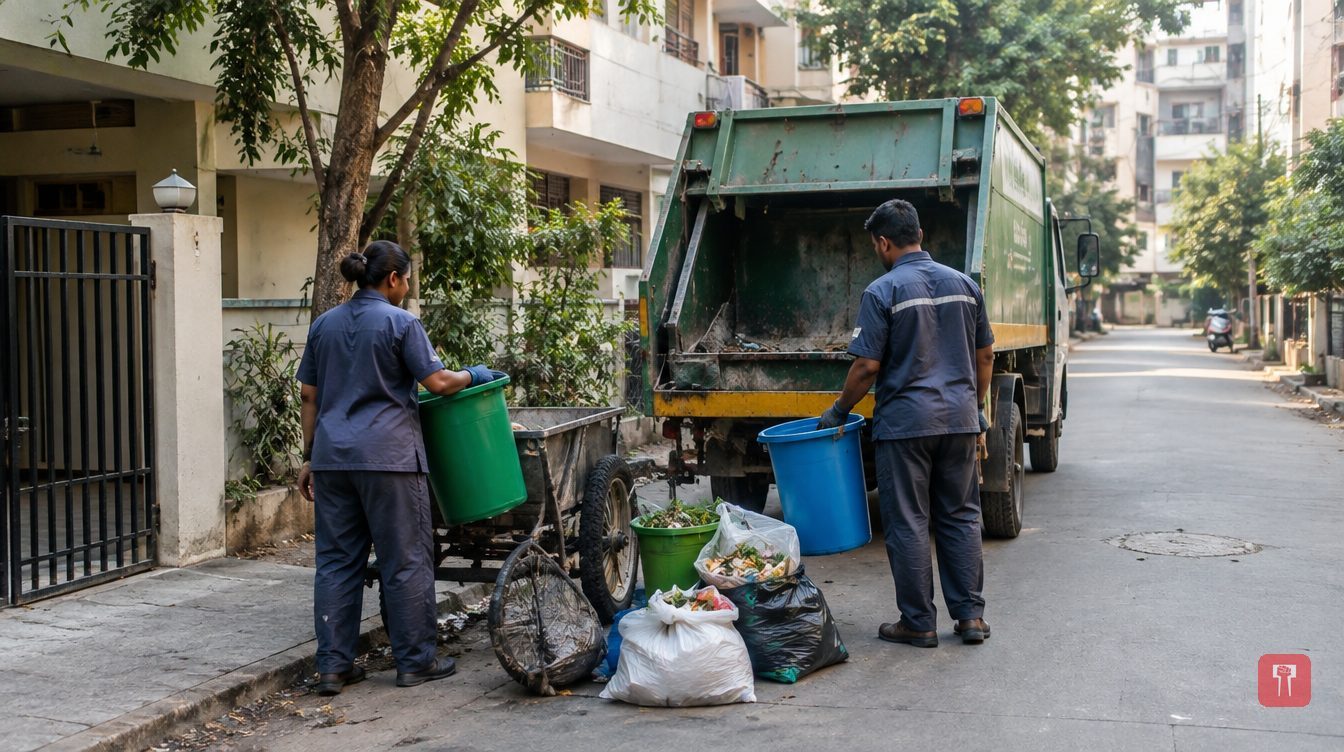
Another allegation is that people generally hand over wet and dry waste separately to the garbage vehicle, and the contractors' staff are expected to keep it separate. But it is alleged that the waste segregated by residents is sometimes mixed in the same large container on the vehicle. If this practice is widespread, it undermines the purpose of the entire effort to get households to segregate waste.

Comments
No comments yet. Be the first.