

Wildlife board clears eight projects in Sanjay Gandhi National Park eco-sensitive zone, 468 trees to go
 Images are not validated/verified
The Maharashtra State Wildlife Board has approved eight projects in the eco-sensitive zone around Sanjay Gandhi National Park, drawing criticism from environmentalist D. Stalin.
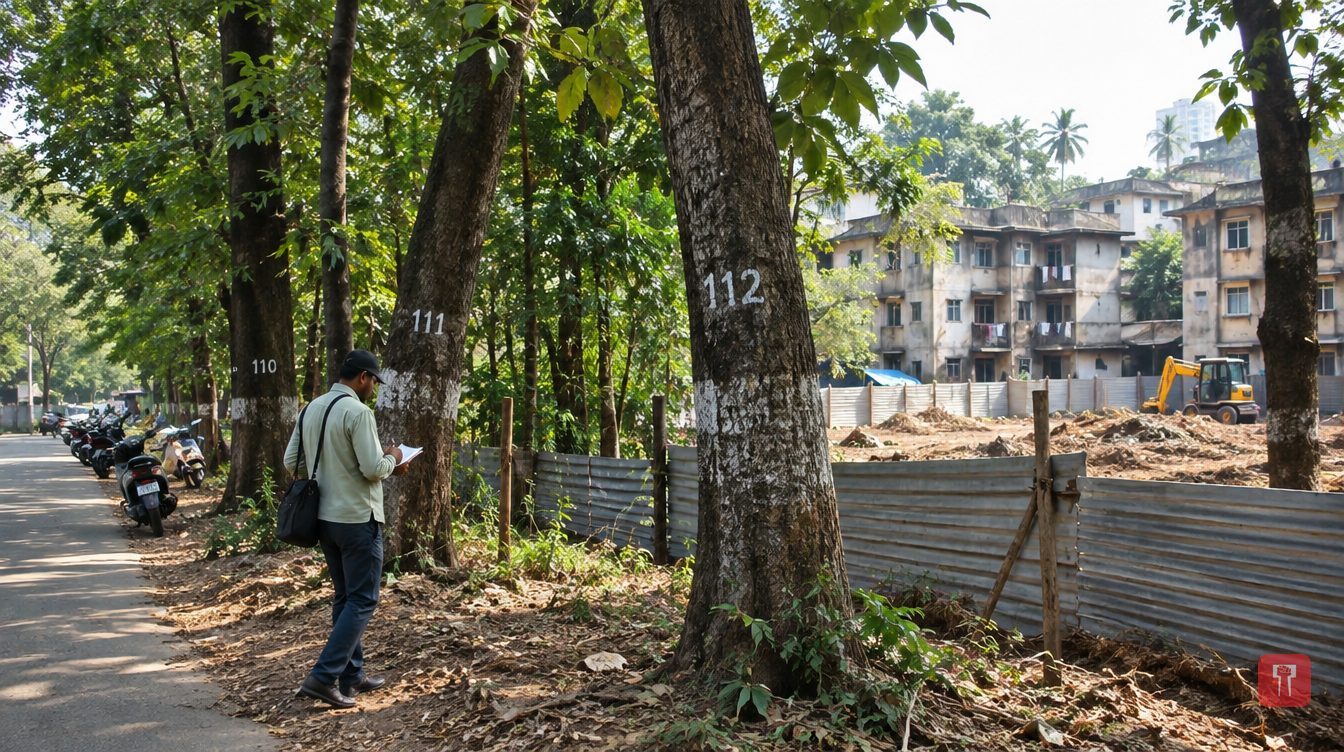
The Maharashtra State Wildlife Board has cleared eight projects in the eco-sensitive zone (ESZ) of Sanjay Gandhi National Park, which borders Mumbai and Thane. A total of 468 trees will be felled for these projects.
The approval comes at a time when the government has, after strong opposition, put on hold for now a proposal to cut more than 32,000 trees for a power project in Karjat. At the same time, tree felling for development work in the eco-sensitive area of Sanjay Gandhi National Park has been cleared.
The largest number, 236 trees, will be cut for a private real estate project at Majiwada in Thane. In this project, 476 trees will be retained and 372 trees will be replanted.
At the Khatau Mill site in Kandivali, 228 trees will be felled for a private redevelopment project and 92 trees will be replanted. The wildlife board has said the site has old chawls, which makes their redevelopment necessary. Three trees will be cut for a Slum Rehabilitation Authority (SRA) project at Devipada in Borivali, while one tree will be felled for a housing project at Kavesar in Thane.
The board has also approved the redevelopment project of IIM Mumbai near Vihar Lake. The institution is only 530 metres from the national park boundary and will be renovated at a cost of Rs 306 crore.
A residential and commercial project in Bhayandar and a project at Kolshet in Thane have also been cleared. It has been said that neither project will affect trees. A MHADA redevelopment project, on the edge of the eco-sensitive area in Borivali, has also been approved. The board has clarified that the buildings concerned are more than 35 years old and need redevelopment.
Directions have been issued to install protective barriers at work sites to guard people and wild animals against any danger during construction. Blasting and hill cutting have also been banned in the eco-sensitive areas.
However, the approval of the National Board for Wildlife will also be needed to take these projects forward.
Environmentalist D. Stalin, a representative of the NGO Vanashakti, criticised the decision. He said: "The concept of the eco-sensitive zone has now become a joke. Although the purpose of this zone is to protect the environment, in reality real estate development is being given priority."
Stalin also alleged that every unurbanised area of Mumbai is being readied for development. According to him, instead of expanding the conservation area of the national park, development is being wrapped around it.
The Mumbai municipal corporation has itself admitted that the city does not have enough space for compensatory tree planting. Stalin said on this that cutting even a single tree in Mumbai cannot be justified.
Reach readers on the ward they actually live in.
Advertise with Prime Time 24Reach readers on the ward they actually live in.
Advertise with Prime Time 24Reach readers on the ward they actually live in.
Advertise with Prime Time 24
Comments
No comments yet. Be the first.